Ian Pribyl Podcast
Podcast, Blog, Make Money, Online Business, SEO

How to Start a Profitable Online Business for Under $100- Ian Pribyl Podcast [FIMP]

So I ended up having 2 chats with Ian which has been split into 3 podcasts:

  1. How to Start a Profitable Online Business for Under $100
  2. Scaling your Online Business by Outsourcing
  3. Increasing Your Bottom Line with Conversions

These chats alone pretty much explain how anyone can go from nothing to starting, monetising and scaling an online business. Even if you have no money to your name!
Ian Pribyl Podcast

You probably are aware that any business will cost you money to set up.

But Ian will show you that if you put in the work, everything you need to know to make a profitable online business is provided for free.

Yep, the total investment cost for the business is under $100!

Listen in to hear us chat about:

  • How to tell if something is a scam online
  • The power of SEO and how anyone can get started with it today
  • The one thing your business will need to start scaling
  • Ninja tricks to get more conversions on your site
  • and much much more!

Listen on Apple Podcasts/ Google Podcasts

Ian Pribyl’s Background


3 mins

You will hear that Ian had some very humble beginnings.

He became interested in making money online in his teens.

But it wasn’t easy to do.

There were so many scams and people that just wanted to take his money. And it was hard to keep going after being scammed by online courses and “gurus”.

It wasn’t even like he had the money to throw away on them. He even had to split a course into 2 payments because he couldn’t afford it in one go.

It was $177!

These beginnings give him a great perspective for many people trying to start an online business that cannot afford to throw away money.

A lot has changed in online marketing since Ian started in 2007.

So, maybe you’d like to know the answer to this question…

Is SEO Dead in the 2020’s?


13 mins

In 2007, Ian explains how Internet marketing was very different.

Simple websites with 6-7 pages could get ranked well on Google.

There is no denying SEO (search engine optimisation AKA getting ranked on Google) has evolved and there have been many fads on the way.

Elements of Effective SEO Strategy in 2015

From Visually.

However, effectively SEO has fundamentally stayed the same.

  • Getting links to a website are still super important
  • Creating great content that people want to read still wins

If you hear anyone saying SEO is dead, then chances are they are trying to sell you something or they have their own agenda.

Related content:

From Nothing- Everything You Need to Start an Online Business for Under $100


19 mins

If you are interested in starting an online business but have no idea where to start, then this is the book for you.

It will teach you all you need to know from setting up your website to what to write with step-by-step instructions.

Plus, it will do all of this with everything you need to build a profitable business…

For under $100.

And when Ian says everything, that means everything. There are no little extra bits you need or additional training you’ll need to buy.

The book has it all covered.
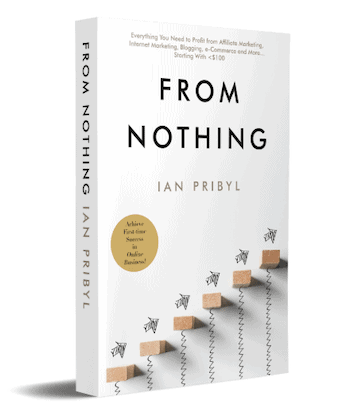
From Nothing- Ian Pribyl Podcast

All that is required is a bit of elbow grease, an open mind and the book From Nothing.

Are You Dealing With a Buying Audience?


37 mins

Ian really shows some of his amazing knowledge for making money online here.

He touches on some of the things he covers in “From Nothing” and FIMP.

There’s really only one question you need to ask yourself:

Is your target reader seeking to make a purchase to answer a question or solve a pain point?

Once you know the answer to this you can work out the next question:

So how do you make money from this niche?

You simply solve their problem.

Make sure it’s helpful, what they are looking for and will solve their problem. Then making money online is simple.

Here are the 3 biggest industries for making money online:

  • Health
  • Wealth
  • Relationships

Important note- they are not niches!

There are thousands of niches underneath these umbrellas.

The reason these are the 3 biggest money-making industries is that they are typically people’s biggest pain points.

How to Monetise Your Website

There are endless ways to monetise your website once you get the traffic.

For example:

  • Sell a product
  • Dropship
  • White list products
  • Affiliate marketing
  • Paid per leads i.e. credit card companies

All of these fall under one of the 4 main monetisation methods:

  1. Advertising
  2. CPA (cost per acquisition- affiliate marketing falls under this)
  3. Dropshipping
  4. Sell your own physical or digital products

The thing is, you really will only get serious about monetising in any of these ways when you get 75-100 pageviews every day.

Now, I can almost hear your mind thinking…

“But how do I get that traffic?!”…

Well, that’s where Ian’s Free Internet Marketing Project (FIMP) and book “From Nothing” comes in!

Related content:

Top 3 Tips if Ian Pribyl Could go Back in Time


If Ian could go back to when he was 16 years old, here are 3 pieces of advice he would give himself:

  1. Focus on your mindset and expectations
  2. Self-care & exercise
  3. Meditation and mindfulness

Are you beginning to notice a trend of what so many successful online business owners are saying?

Full Podcast Transcript


Mike Beatty 0:00
So Ian Welcome to make some online.

Ian Pribyl 0:03
Oh, thank you. Thank you for having me.

Mike Beatty 0:05
It’s an absolute pleasure. I was wondering if you could just let us know a little bit about your background kind of before you got into the whole internet marketing scene.

Ian Pribyl 0:17
Oh man, I was born in the internet marketing. See? It made me it moulded me know, I mean, I mean, when I got into internet marketing and affiliate marketing, SEO, etc. I mean, legitimately, I was just like a really pale, nerdy 16 year old kid. So there’s not much written before I got into internet marketing. As far as a career, of course, kind of, you know, front facing, where I’m helping other people and kind of running my own community, etc. That’s only been the past couple of years prior to that it was, you know, I’ve always had this mentality of, I always knew that I could release a product, I’ve always had the, you know, the knack for training and teaching and understanding, like, Hey, you have to go back and teach way down below. For someone that’s, that’s never done, what you’ve done, you have to think back to what it was like for you in the beginning, not what it’s like for you now, and fill in, you know, build from the bottom up. And I always knew that there was the potential for that. But I also never wanted to be the guy in the internet marketing space, which seems like the vast majority of product publishers, not trying to bash anyone, there are certainly some very legitimate people out there that are awesome that I consider mentors and I look up to as well. But the vast majority of people in this space are just making their living selling their products. And, for me, that was hypocritical. That was an ethical line that I didn’t want to personally cross. And I’ve never wanted to release a training product or community being a teaching position. Until I was in a, I had basically used all of my skills to get to a point financially, that that would not be the majority of my income. And so that was spent, you know, cutting my teeth for years. For basically the first decade on SEO, that I started diving a lot more into pay per click and e commerce, getting more into copywriting, email marketing, conversion, optimization, etc. So pretty much anything, there are a handful of exceptions. Such as I haven’t done a whole lot of Kindle publishing. I do have a book out there now. But prior to that, you know, that’s certainly not what I would consider one of my, my specialties fulfilled by Amazon never done that. But basically everything else under the like the internet marketing umbrella. At one stage or another I’ve done and I’ve typically done it until I cracked it. I was successful with it. And then, you know, took on the next endeavour.

Mike Beatty 2:58
Cool. So how did that’s kind of lead on to the next question. How did you actually get started with this, then? Did you as a 16 year old kid, did you already kind of know that you wanted to get into this? Or was it just one thing kind of led to another?

Ian Pribyl 3:14
You know, I think it’s it’s one of the things that I see resonates with a lot of people that enter this industry. And for me, it just struck a chord from a really young age, I wanted full control of my life. I from a very young age realised and I think it may become baby because I came from a really broken home and a really crappy kind of home situation that I just knew that I didn’t want as as anti authority as this is going to sound I knew I didn’t want anyone else in charge of my life. And I ultimately always saw an employer as that someone who would tell me when I could be sick or not. And when I could take sick days or not. I distinctly remember thinking, I’ve always been a big dog person, my wife and I have three dogs with three miniature toxins. And because I’m just as masculine as they come, and

Mike Beatty 4:08
I think I have seen

Ian Pribyl 4:10
their little Wiener dogs. Yeah, the little miniature dachshund. So yeah, just the the epitome of of alpha. Though, I, I just one of the things I distinctly remember thinking it’s like I don’t as silly as it is, you know, when you’re, you have pets, whether you’re a cat person, or dog person or fish person or a hamster person, you know, whatever you are, when you’re when that if if the the pet really integrates into your family, when they leave, it’s a family member passing and, and it’s it’s a it’s a really painful thing. And I remember distinctly thinking like, I don’t want someone who thinks it’s silly or can prevent me from taking a day off if my pet passes away, because I need to grieve, because that’s something that a lot of employers would not understand. And somewhat granted, but mini wouldn’t. And I didn’t want someone having that level of control over my life. Because at that point, it doesn’t feel like my life anymore. It feels like you know, I’m basically giving someone the vast majority of my time, so that I can have these little slivers of life. And I felt like putting myself in the driver’s seat and getting your business up and running. Ideally, eventually, that could become passive. Something that of course, a lot of product publishers very misleading on in this industry. Certainly, there’s some there’s a lot more flexibility in that department. But it’s far from Guinea, like a lot of them present it to be. But at that time, I didn’t know that I thought, hey, pass in long term passive income, I can work for myself, bootstrap it easier to get up and running. And it just looked like the vehicle to give me control of my life in the way that I wanted to have control of my life. And ideally, never worked for other people or the periods of time where I had to work for other people would be very limited before I could get out on my own.

Mike Beatty 6:02
So did you did someone suggest this kind of thing to you? Or did you read about in a book? or How did you know that that was going to be a potential passive income way? for the future?

Ian Pribyl 6:17
Yeah, you know, I think I started down the path that a lot of people a lot of people start down and that was the kind of get rich quick. Oh, man talk about like, it’s funny, I you know, I talked about it here. Like, it’s, it’s an actual industry, it’s not, it’s just like a bunch of smoke and mirrors here. But it’s, you know, it’s still out there to this day, probably more prominently than ever, as you know, its own umbrella, its own industry, there’s just a, probably thousands of products that fall into that category get rich quick, and it just doesn’t happen. It flat out does not happen. And I think just like everyone else, even though it’s only 16, semi financial resources severely limited. You know, I to say the least, I was buying, you know, dollar ebooks on eBay and, you know, $10 little Warrior Forum products and just crappy little things like that. And I bought into the idea, I think a lot earlier than I bought into any of the execution or the the concept. So nobody ever turned me on to it, I guess as a as a stereotypical millennial, you know, I’m 31 years now 31 years old now, as we record this, but, you know, just hopped on Google and cut myself into a world of trouble. That fortunately, just ended up working out fairly well for me as I stuck with it, because I’m just really stubborn over time until I, I got on the right path.

Mike Beatty 7:46
And so what was that the right part? What was the first thing where you kind of realise you were on the right path? I know, you talked about a lot of different things that you have done online. But can you remember what was like your first one where you realised? Yeah, this is working?

Ian Pribyl 8:00
I do I do. I remember very distinctly. So it actually took me about three years, to get from the point of just buying stuff washing out getting tired, you know, to spinning my wheels, because so much of the stuff you buy, even if it was was effective at one point, it’s not effective anymore. And you don’t know that as a new, like an early stage consumer, you’re just taking their word for it, you’re expecting them to be able to fulfil their their sales promises, and you just spin your wheels for long enough and you end up giving up, you take a couple months off, you months off, hop back in with another product, again, and that’s of course, the cycle. Unfortunately, very few people in this industry ultimately break. Because they it breaks them before they break it, it cracks. And before they crack it. And I do remember, I distinctly remember the exact product, I don’t want to name it by name, because I don’t want people going out there searching for it. And I also don’t want to throw the product publisher onto the bus publicly, just for legal reasons that can get me into a bunch of different headaches. I’ve learned that the hard way multiple times over. But I distinctly remember the product, it was $177 product, and at the time, it was very well supported. And it was it was really helpful. And the product publisher actually had their phone number published on their website to to call them you know, if you had any questions, and which of course is totally unheard of in this industry to this day. And I got on the phone and express my concerns and they said yeah, no worries, you know, no money back guarantee, blah, blah, and, and I said, Okay, I got this person on the phone, I trust them hundred 77 bucks to me was a lot of money at the time. But I, it was so much money for me at the time that I had to split it up into their two monthly payments. And which, you know, I’m grateful for these beginnings because it again, makes my my journey allows me to relate to the people that are trying to get into this and try to get an honest start, say so much better than someone who was just able to come in and buy a $10,000 product and got scammed and oh, well, you know, a year later, I bought another thing that was a few thousand or a few hundred bucks. I mean, I had to split $177 payment into two payments. You know, those are humble beginnings. And, and so, you know, I, I started kind of digging into that product. And of course, that was a much simpler time. So what was that 12 years ago. So we’re talking about 2007 ish. And so it was much easier to gain traction, you know, basic 3456 page websites were still fairly straightforward to get ranked. That’s when I started cutting my teeth on SEO and started to make a full time income I made at that age, a full time income was only you know, like 2500 bucks a month. But I found out, you know, replicable strategy, especially in kind of the review side of things, which is where a lot of affiliate marketers I feel like end up cutting their teeth. And an overtime replicated that across multiple niches, multiple industries and just kind of started building that bankroll. Of course, the the internet marketing climate has evolved ridiculously since then it’s so much more sophisticated, it’s so much more intelligent. Unfortunately, I’ve been with it every step of the way to adapt and evolve to the point, you know, you just get such thick skin, when people are panicking and running around with their heads on fire, you just go well, I survived the other ones. You know, I just pay attention, I’ll study my resources, and keep my head down, keep working. And me and my team and my sites are all going to be fine.

Mike Beatty 11:41
Yeah. And so that kind of leads on really nicely to the sort of things that you are doing now. Just Just quickly, I want to ask you a quick one, because it just popped into my head. I’ve heard it a couple of times recently, and I want to hear your take on this is that some people are saying, you know, SEO is dead now and you know, is is impossible to get ranked? And I just love to hear your thoughts on that. And you know, what, if you think that is accurate or not?

Ian Pribyl 12:09
Oh, so for the record, people have been playing Chicken Little with SEO, SEO is dead, the sky is falling for years now. I mean for years. And one of the things I would I would caution anyone hearing this, immediately when you see someone label something that way in such as sensationalised fashion, immediately put them under a microscope, immediately, because any real SEO authority will tell you what changes a lot. You have to adapt, you have to stay up to speed because it moves very rapidly. But on the whole, especially when it comes to things like links and link building. And you know, no, not necessarily the way it’s done intentionally, but just like what is the foundation of what gets people ranked in SEO? Yes, you have to have on page factors, you have to think about those things, you have to be well versed in those things. But there have been all these fads that have come and gone. The things that have gained Google’s algorithms have, you know, largely a lot of them, not all of them, but a lot of them have been swatted down. And But on the whole, SEO has stayed the same. And the the people that are saying things like SEO is dead links no longer matter, just some of the most ludicrous, those little sound bites of those little snippets and articles are just so ludicrous to me, because even Google, once every couple years, they come out with a statement, it says hey, yeah, we’re still highly dependent on links, and we probably will be for several years to come. So you have you know, straight from the horse’s mouth, you know, it’s like, people make things up to sound like authorities, I guess that’s my take home message here is when you hear things like SEO is, is dead. The reason I say throw those people under a microscope is because they have an agenda of some kind. their agenda is either trying to get you to purchase their product, where they’re going to teach me something other than SEO, or their agenda is to get you to at the very least look at them, and start to see them in an authoritative light. This is something that I’ve seen happen a lot in this industry. And there’s some big names doing it, especially over the last two or three years where they are sensationalising things, and they’re actually publishing things that just flat out art aren’t verifiable. They’re not based on, on data on studies, that can be verified. And they’re just claiming these things. And maybe they do one really loosely thrown together example, some kind of case study that is not if you’re into science, or just like intelligence at all, you could debunk that pretty quickly. And see that’s not statistically significant. That’s a very poorly designed, study or case study. And what I find more and more is that people are saying these things, and they’re just making things up to position themselves to prop themselves up as an authority. Because there certainly is a psychological phenomenon that if if I tell you something, and it gives you a real like, epiphany, a real aha moment, you attribute that time, my credibility, that is just, it’s just going to happen. And up until the last couple of years, I hadn’t ever seen anyone kind of use that as a Oh, I’ll just make stuff up to make just to manufacture these aha moments that people will attribute to me. But the not a whole lot of big names are doing it. But there are certainly people out there there are big YouTubers in this industry, big personalities that I see doing exactly that and SEO as a lite version of what I’m talking about SEO is dead, I should say, someone coming out and saying SEO is dead playing Chicken Little, I think is it, you know, again, just throw them under a microscope because they have an agenda. Anybody who was really telling you the truth would say yes, maybe it’s changed a little bit. But at the end of the day, these are easy to keep up with. And if you’ve been playing by the rules all along, nothing’s fundamentally changing for you, your business isn’t crashing, and the things you’ve been doing for years are still going to be effective. So yeah, my opinion is if you hear someone saying, SEO is dead, really question whether or not you want to give that person your trust?

Mike Beatty 16:48
Yeah, no, I think that, that really answers it so well, as well. Because, you know, I think, for people who are really interested in it, they might be might have been quite a long time, you know, trying to build up their SEO and things like that, and maybe not seeing the results that they necessarily want to see and will straightaway just jump on that one phrase and be like, Ah, this is why, whereas I’ve, personally, I do feel that the more people that can kind of put that message out there, no, it’s not dead, it might be a lot a little bit harder, a little bit different to maybe what it has, has used to be, but as you say, I think, and Google says it themselves, obviously, like if you can get those good links, and people are actually showing Google know, this is a this is a good piece of work or whatever it is, then SEO is always going to be is is is kind of always going to be around as long as the internet is around. So I don’t think it can ever be dead. But I think as you say is definitely has changed from what I understand. It used to be

Ian Pribyl 17:47
100%. Agree. Very cool.

Mike Beatty 17:51
So obviously, your whole thing that you’ve done, I’ve for those that don’t know you and I want I found you through your book from nothing, and is literally a book about your whole life and things and how you started from nothing, basically. And and now you’ve created this kind of online Empire. I call it an empire. Hmm.

Ian Pribyl 18:14
Yeah, I mean, I would I tend to err on the side of caution.

Certainly that, you know, sometimes I have to say, take a step back and realise, like, what is what I’m jaded, you know, on about what I’ve achieved, certainly is in veal enviable to a lot of people and certainly would be enviable to me. Back when, you know, I was I was just getting started, you know. So I personally wouldn’t refer to it as an empire because I think it’s a tad bit absurd. But I’m very fortunate to have have built the skills over the years that have allowed me to build the business assets across multiple different areas that I have now. Yes,

Mike Beatty 18:54
definitely. I’ll call it an empire. So your, your, your business empire Online Business Empire that you managed to create, and it is, I just think it’s incredible, it’s like, just not even $10 is it is such a cheap book that anyone can pick up. And basically, as you say, very early on, and as you continue to prove throughout the book, everything that you pretty much need to start an online business is within that book. So for those people that are kind of out there and saying, Oh yeah, but I don’t have the money to get started, or whatever it is, whatever the reason is, I think your book alone pretty much shows everyone, this is how you can get started, could you just let us know how you decided to, or why you created the book, and, and kind of what your vision is for the future.

Ian Pribyl 19:45
Yeah, I mean, um,

how it ties back to again, man, I was just screwed over by so many product publishers, I was taken advantage of, by so many people, I had the best intentions, and they had the exact opposite, all they wanted was to get in and get my money get out, and they didn’t care about me after the sale. Many of them made that very apparent, and I’m sure people, you know, hearing this have experienced something similar. And so I kind of had this idea over the years, as my knowledge continue to build even just on the SEO side that I would like to eventually someday make this make this industry a lot more approachable a lot more palatable. Just something that was much easier to break into where people wouldn’t have to go and get ripped off for hundreds, if not thousands of dollars, they could get a really high quality education in the time tested, you know, age old, medium for education. And that’s books. And I couldn’t believe I mean, even over all the years, I checked every once a while because I had this this concept, this idea, oh, at least six or seven years ago before publishing from nothing. And I would check occasionally and just be amazed that like stuffs just not coming out. Yeah, their their books on social media marketing their books on, you know, Google AdWords, they’re, they’re in some really good ones through their books on email marketing, etc. But there was nothing that would teach people how to go from absolutely nothing, virtually no budget, and take them from that, that starting point and carry them all of the way through to profit with just you know, a lot of elbow grease, a minimal investment minimal capital required. And, and so that’s of course, but from nothing was written to be yes, there’s, you know, a little bit in there about me and how I started again, you know, as someone who was buying 99, Cent $10, ebooks on eBay, etc, Warrior Forum. And the first product that I bought that was have any sizable investment, just 177 bucks, I had to split into two payments. But I wanted something that was super high quality and front to back so that people didn’t have to, because that’s another thing, this industry is so bad about it, oh, by this tool, and that tool, and this tool, and that tool on this premium theme, and all these different things you need. And once you’re all in, you’ve spent a grand two grand if not more, that’s not even including the training. And it’s just like, it’s considered acceptable practice. It’s considered best practice as an affiliate marketer, if you’re an affiliate marketer publishing a product, about affiliate marketing you, you damn well better be linking people to stuff that you know, every chance you get through your affiliate link. But I don’t really think that’s fair to the the customer, I don’t think that’s fair to the aspiring online business owner that’s starting where so many of these people started, they’ve just instantly forgotten what it’s like to have, or they never experienced, to have so few resources to invest not only in the training, but also in the tools they need to build that business. So I wanted something that someone for less than 100 bucks USD, you know, of course, the books less than 10 bucks USD, the digital version, but all in once you’ve you’ve got everything you need to build a profitable internet business with less than 100 bucks. That was the vision of the book. And, you know, I take issue I take issue just a tad when you like it pretty much has, because that book is very specifically designed to have absolutely everything you need. So

yeah, no, you’re fine, you’re fine everything? Well, because it’s, you know, it’s certainly there. And I make that clear in the introduction in the book, there are certainly other paths to successfully building an internet business that’s profitable their infant, I feel like there’s probably an infinite amount of ways to build, you know, to carve out a profitable internet business, and people are still discovering new ones every day, every week, every month every year. But as far as you know, the most capital friendly one, that’s going to be like, hey, you have barely any startup investment. But if you can put in 10 hours a week, give it some time, be consistent, follow these steps closely, and you’re going to have a profitable website, it’s good to start off making, you know, a few bucks, and then a few hundred bucks. And if you stick with it, and you’re in the right niche, and you follow the training, you know, it could get you to a few thousand bucks and be you know, a full time income replacement, which you can then use as a platform to start building out other properties and, and hiring team members etc, to help you kind of build your quote Empire ahead. And so, certainly there are other approaches, but I have never seen anything that is as comprehensive and as mindful of keeping startup investment low in this industry, because everyone’s just in it for the money grab as far as I’ve seen. And that’s all fine and dandy, but it was it was the impact I wanted to have whether or not that gets the right exposure. And if people end up finding it, who knows, because certainly people aren’t people in this industry aren’t incentivized to share it, because it’s going to get that person the same level of education that people are charging two grand for, except if they recommend that product, they’re going to get commissioned 1000 bucks, if they recommend from nothing, they’re going to get commissioned like 7% on Amazon, you know. So that’s been kind of the really disappointing part of this whole process is, is, you know, you push so hard to get something of incredible, immense value out there. And then it doesn’t get the exposure that it deserves. Because it just says, you know, it’s such a low price that there’s, you know, nobody’s going to promote that when their livelihood depends on continuing to make those $50 hundred dollar $500 thousand dollar commissions. So that’s I found, I should have seen it coming because I’ve been in the industry long enough to know. And usually I’m pretty decent foresight after being you know, an entrepreneur for so many years. But this one just totally blindsided me. And, you know, the alternative was the people that are impacted by it, you know, sharing it enough getting the word out. But that didn’t happen either. So you just end up with this product. And certainly, it’s impacting lives. And I’m like, what I told myself from the beginning was if I put in, you know, these hundreds of hours to basically distil my 15 years of experience into something very affordable, and it only changed one life, it would totally be worth it, you know, if it gave one person complete control of their life, it would totally be worth it. And it’s done that, I would say dozens if not hundreds of times over. Because what I’ve been amazed by now that it’s been a couple years since I started some of these efforts, is I hear from people that I’ve never heard from before, and they’ve been successful now for over a year. And they say, Hey, I forgot to drop the lie, you know, but it was because of, you know, your, your help your assistance along the way.

And, and so, but even again, even they’re not really throwing, throwing the, the getting the word out there. And so that’s been the The tricky thing is, here I am, you know, as a person who’s very committed to not make my full time endeavours and my full time, you know, the majority of my income from publishing products in this industry, but at the same time, you almost have to give it that much attention, to give it the, to get the exposure, it needs to compete with everyone else, because they are certainly making that their full time business. Even if you’re handing you know, you’re building a team and doing the best you can, you know, my main efforts personally are put in a startup that I run all of our marketing, digital advertising, getting ready to really expand heavily into our sales efforts, etc. And certainly, that’s why I want most of my time ago, because I don’t again, I don’t want to be one of those publishers that just makes my living. In theory, teaching people the stuff that got me to where I am, I want to continue to be in the trenches and make the majority of a living there. So it’s been an interesting journey. Certainly we’re not, I’m not throwing in the towel by any means. But I should have seen it coming. And I didn’t so work the wise for anyone that’s trying to do something that’s really affordable, and or free. You know, just because couple of things I’ve learned are just because you go way out of your way to help someone else does not mean they will go way out of their way to help you. That’s one thing that it’s been a really painful lesson for me to learn. Because I won’t say by no means is my faith in humanity destroyed. But I would say it’s certainly changed my perspective, a lot. And certainly reflected back a different world than I personally felt, I guess maybe I had on some some rose tinted glasses. But, you know, that’s one thing. And the other thing is, I found no matter how high quality your stuff is, if you sell it at a price that things or you give it away for free, it gets associated with all those other things that are really low price, or that are free. And people just automatically assume like as low quality or even if they dive in and they start going through it, they don’t take it very seriously. And they’re still just super eager to give someone else hundreds or thousands of dollars, even though you just gave them the blueprint that they needed that they’ve been searching for. But because they only pay 10 bucks for it or because they got access to it on a website for free. They don’t they don’t see it as valuable. Which is an interesting psychological phenomenon as well.

Unknown Speaker 30:29
Yeah. Well,

Mike Beatty 30:30
I mean, I’m sure you already know so much about the psychology behind selling and things like that. But that is one of the one of the massive things, isn’t it the the higher the price tag that you put on something, the higher perceived value it has to people. And so I mean, I can see exactly what you’re saying how that can happen. But I think it doesn’t get away from the fact like the whole mission and everything behind the whole, obviously, like the free internet model projects as well, which you have, which is kind of linked on from from the book. And it goes into a lot more detail and things like that. I think the whole point behind there, though, is so amazing. And it is so you know, it could be absolutely massive, if that got into the hands of the masses, you know, if everyone could access this information, which actually is I mentioned to you briefly before we start recording, that’s the one of my big like, you know, future big goals sort of thing is, I’m currently a teacher, well, I’m actually just finishing teaching. So I was taking a year out, as some people may call it. And but my big vision is that, you know, there’s so many things within education, where people are not necessarily getting the best support and things from just standard education. So I have some sort of impact on the education system, even if it is small scale it is even if it’s just affecting a few people or whatever. But something along that lines where it does is not an affordable, it is available for two people if they want to access this kind of thing. But yeah, no, I just think that it is definitely not something that Well, I think it is definitely something that so many people would really like if they just understood the value behind it. So what what are some of the things like if I’m just thinking back to work before I ever started out on this whole online marketing stuff, if I was listening to this podcast, just to briefly summarise your book and like the whole project, and just, you know, it’s basically pick a target niche as target as you possibly can write a lot of content around that sort of stuff and find SEO, and you go into a lot more detail about how to find the key words and things like that. But then how would you? If I was like, as if I was listening to this? How would you start monetizing it? I think some people would understand like the whole SEO concept and that if you write specific content, you can get people to search for it on Google, and then they find the content. And that kind of all makes sense. But then the question that I still get a lot today is, but how do you make money from that? And I was just wondering if you could explain that side of it a bit.

Ian Pribyl 33:33
Yeah, of course. So and you know, of course, the funny part is people start seeking that answer, often way too late, you know, they’ve built up but they’ve chosen a niche, they built an audience, or they’re in the process of building an audience. They go, Okay, once I get there, or now that I’m there, how do I make money? How do I monetize this audience? And, you know, if you’re asking that question at that stage, you’re asking a question too late to, you know, there are a number of people out there certainly that will look out and be in a niche that doesn’t meet the right criteria that can be monetized effectively, and very lucrative Lee, and you know, that’s why originally, like in, in from nothing, and in the free internet marketing project, and in the video version of the training, the first time internet marketing profits, there’s, there’s literally three and a half video, or three and a half hours of niche selection training. Whereas usually like in a product, it’s like it’s a 20 minute video at most, or maybe it’s like a 1500 word article. And it’s because, you know, I’m backtracking and answering kind of a prerequisite to your question here. Because niche selection really plays a big impact on how effectively you can monetize a niche. And one of the key factors of the multiple I talked about in all of my niche selection training is, is it a buying audience? And a lot people have heard that before it, they’re like, Okay, well, what that F does that mean? Like, that’s, that’s great. Like, it’s like, when you hear, you know, people talking about searching for your, your why, what makes you what makes you tick, you know, you hear your why should make you cry. And it’s like, well, that’s fantastic, but how do I get them? So, you know, the criteria that you know that the simple test, I teach for that aspect of? are you dealing with a buying audience is the stuff they’re searching for the questions, they’re asking the the keywords, they’re searching online, whatever it is, are they willing to make not only willing, even better? Are they seeking to make a purchase? to either answer their question, or solve their pain point. That’s a buying audience. And so if you if you’ve chosen a niche with that criteria, that piece of criteria in mind that the the question of how do I make money from that niche is pretty straightforward. You solve their you answer their question, you solve their pain points, by referring them to the people’s ethics very on this, but personally, I’ve always made sure that I direct them to something that I personally verified is really high quality. It’s exactly what they’re looking for, it’s helpful to them. And, and I’m going to refer them through to that product, because it’s going to answer that question or solve that pain point. And certainly, that’s, that’s what makes a lot of the Evergreen niches, you know, health, wealth, and relationships are kind of the top three, evergreen umbrellas, as far as niche selection goes, just for the sake of clarity for people listening, that is not a niche, none of those are niches those are industries. But and you know, there are hundreds, if not thousands of niches underneath each. But you know, the reason they fall so well on, quote, evergreen niche, evergreen industry umbrella, any niche that’s chosen out of those, is because people are very often seeking to solve their pain points, or answer their questions by making a purchase. And every single one of those, the greater the pain point, the more likely they are to pay amount of money to solve it. And so, you know, there are a number of ways you can do that, you know, to get more direct to your to your answer, you can manufacture your own products, you can drop ship, someone else’s products, you can white label someone else’s products, all three of those are very different routes, even though in a lot of people’s minds, they’re very similar. You know, the more the most straightforward way is through some form of CPA marketing. And for anyone unfamiliar, CPA stands for cost per acquisition. Affiliate Marketing certainly falls under that category.

There are a number of ways to monetize traffic through CPA marketing, whether you know, the most traditional one is pay per sale, every time you make a sale of a product, you’re going to get commissioned a certain percentage of that sale, whether it’s a physical product or a digital product. But there are a tonne of a tonne of them that people don’t know about as well, either. And that is, you know, pay per download pay per lead, if you’re just sending companies leads, you know, credit card offers, for example, a lot of people don’t realise that every time you know, you see nerd wallet, you see credit cards calm you see Credit Karma, all of these people are providing these services. But every time they refer you to a credit card, or they refer you to a mortgage lender, or just a home equity loan, or a car loan, they’re probably getting commissions somewhere in the neighbourhood of 75. To north of 250 500 plus dollars. You know, there used to be back when it’s been a long time since I looked at that niche. But I’d say a few years ago, when I look that referring people into as mortgage leads, you know, if you got someone to fill out a full mortgage application, which is a very involved thing, but they submitted it online, it paid north of a grand, you know, for for someone that was approved, because that’s a very valuable thing for that business. So there are a number of ways to do it, you know, through. And of course, I covered this very early on and from nothing in free internet marketing project in first time, internet marketing profits. And all of them, it’s it’s an essential early lesson of, you know, I talked about the four business models that any online businesses going to fall into under one of these for business models. And then people finish that they go, Well, are you going to talk about affiliate marketing? And it’s like, well, yeah, because you know, the concept of affiliate marketing falls under a much greater a much broader umbrella. And so people are, people just get so caught up in, in the tactics, they don’t realise that the real value is in the concepts. And then the tactics are just, you know, test level, you know, things that you execute, and you just see what works best once you get there. But if all of the fundamentals and all the concepts leading up to that point are executed correctly, monetization is not going to be an issue, you’re going to have multiple options, just get the traffic First, make sure it’s in an audience, it’s a buying audience and meets other, you know, criteria that qualify them as a really good niche. And monetization is, is, is going to be a walk in the park, it’s going to be, you know, just a matter of throwing links on things and seeing what’s working and iterate as time goes on. I think people are made very uneasy by that, because I understand psychologically, it’s, you want to know from the very start that from the starting point, like how am I going to actually make money. But like, that’s one of the things that I realised and why I talked a lot about mindset and stuff like that is, you know, people’s expectations of this industry going in, or just shooting themselves that straight in the foot, you know, and they’re just they’re hacking off their legs at the knee at the starting line, because they don’t think about things from the right perspective. And then of course, they hop it and they go, Oh, this is, you know, this isn’t what I was, this isn’t the box, I expected these, this training to fit in these, you know, these concepts to fit in, well change the box, then, you know, don’t try and force this into the the narrow view you have as someone who’s never made, you know, millions of dollars in this industry. Because I promise you the overarching concepts are what actually, the fundamentals are what actually going to make you wealthy or successful in this industry. And, you know, just getting so honed in on these things that don’t really matter. Because your mindsets not quite right are going to harm you a lot along the way and make you a lot more susceptible to getting scammed.

Mike Beatty 41:55
Honestly, I think that is as possible, possibly the best way of ever heard anyone put it like as in rather than focusing on the exact nitty gritty, specific money making things is figuring out the concepts, figuring out the specific niche and thing that you’re actually working on first, spending the time on those areas, and then monetizing it, you were like you say you don’t want to start thinking about ways to monetize it too late, you want to already have an idea of your concepts and things to do that. But I do I really like the way that in the book as well, the way that you do break it down into the for business models, and rather than, you know, his affiliate marketing or his advertising, you know, he is I just like the way that you’ve put it in the book is possibly the best way I’ve actually, like seen it written down before, because it’s just so much easier than to be like, okay, you know, I’m going to go after this business model, or this business model could work well, for me, and I’ve never actually thought of it like that before. And it’s such a such a simple way to actually put it.

Ian Pribyl 43:07
Yeah, well, absolutely. And thank you, that’s a very, very kind compliment coming from a teacher at that National Teacher. I mean, you know, that’s one of the things is you also, people don’t realise getting into this industry, that is if you see a lot of traction, for example, being an affiliate marketer, whether that’s for a digital offer, or a physical product, if you’re doing really well, the easiest lateral move for you, or vertical move for you, rather than somebody people try to move laterally, they go into a totally new niche, or they go into a totally different area they become they go, Oh, I have money, now I get to try all these other things, you know, the way you could probably double or triple your income is by creating some form of that digital product or physical product yourself. And now you’re not affiliate marketing, you’re you’re either that, you know, publishing your digital products are your manufacturing and managing inventory for your own physical products. And you’re building your own brand. And certainly, there’s a threshold that you have to surpass before, like so many people try to put the cart before the horse. But if you get into something, you see a lot of traction, you resonate with your audience, you know, your message resonates. And your approach resonates very, very well with your audience, you know that the next move is, Hey, if you’re so caught up on affiliate marketing, you’re going to miss the whole ticket, you know, you could double triple your income, by now stepping into that ring yourself improving on everything that you currently see in the market based on the expertise you developed to get that platform and, you know, kind of put yourself on that stage, give yourself that megaphone with that audience. So make something better, and then release it now you can recruit your own affiliates. And you know, and and it we’re talking about a whole other level, then and people just get so caught up on these tiny details that are just, I understand why it happens that it happens largely because that’s the state of mind that product publishers put people into because it keeps them consuming. Because it makes it sound like there’s a silver bullet for affiliate marketing, there’s a silver bullet for trick shipping, there’s a silver bullet for e commerce websites. But you know, again, if you learn the fundamentals, if you build the skills, you can, you know, kind of pick one up and and set the old one down and you know, pick something else up and put the other one down. And that’s what really makes you a very successful, very well rounded internet marketer. And that’s true for a lot of these product publishers, they’re just not they’re giving you a sliver of the pie instead of actually teaching you the stuff that actually matters. It makes you a really holistic, professional at the end of the day.

Mike Beatty 45:54
Yeah, hundred percent policy, and I could talk to you about this all day,

Unknown Speaker 45:59
I can see they’ve just got

Mike Beatty 46:00
so much knowledge in your brain. They need to someone needs to invent some sort of extraction device. But I, what I would love to kind of wrap it all start to wrap it up with a little bit is

Unknown Speaker 46:17
how has

Mike Beatty 46:19
this whole online adventure and stuff for you? How is it kind of changed your life realising? What are some of the best experiences you’ve had? Because of what you started doing? And what you’ve created?

Ian Pribyl 46:32
That’s a good question.

If I forget, I’m going to answer your question, if I forget, remind me to tell you about the bad too, because I think that’s where the bad da da the bad. Because I think that’s where a lot of people, you know, certainly internet marketing and running, running digital businesses, internet businesses has allowed so much freedom. I mean, it was funny recently, my wife and I had our our pet sitter come to her house before we left for New Zealand for two weeks. Oh, yeah. And, and she, you know, she said, Oh, you guys travel a lot. And I said, Oh, you know, not as much as, as we used to, because I had this startup that’s really, you know, taking off and trying to become a multi multi multi million dollar business. And, you know, I really can’t duck out as often as I used to. So this year, we’ve only travelled two or three times will probably only travel once or twice more this year. And, and I realised what an ass I sounded like, it was coming out of my mouth, because people would kill the travel that much, you know, and it’s not like, these are three day trips, these aren’t weekend trips, usually, especially when we’re taking an 18 hour flight to the other side of the world, we’re going to stay for two weeks, you know, we’re going to we’re going to stay at least probably 710 14 days wherever we travel to. So to save that, we still get to do that four to six times a year, even though I’m, you know, quote pumping the brakes on my travel a little bit. It’s kind of absurd. And so certainly it’s it’s afforded me that opportunity. One of the one of the reasons that I I started doing any of this in the first place was because I knew when the day came, I would want to be able to see my children grow up, I wouldn’t want to be constantly at work, and constantly travelling for work, or constantly stressed about work, or what my boss was thinking, etc. which would cause me to miss a lot of those precious moments. And my wife and I haven’t started a family yet. We just passed nine years of marriage on June 19. Wow. Thank you. But, uh, but we we still had been, you know, we, we’ve still got some travel we want to do, but we’re getting to that point where it’s like, okay, we’re kind of starting to think maybe we, you know, we’re going to start planning for this much too, the excitement of our families and

our parents. And so

Mike Beatty 49:05
do you have a mom? That’s also saying if you go to be grandchildren or no way?

Ian Pribyl 49:10
Yeah, so certainly my mother in law, yeah. But she’s, she’s pretty good about it, she’s, she’s pretty good about it, it helps that my wife’s brother recently had a baby. So it takes some of the bottle some time yet, but uh, but certainly everyone’s still super excited for when that’s going to happen for us. And, and I’m just very grateful that I will have the flexibility and be able to kind of call my own shots. And certainly, I’ll still be working my butt off, you know, again, I’m 31 years old, I’m not at an age where I’m going to start, you know, just hopping in the backseat and enjoying the ride, like, I’ve still got a lot of energy, I’m in good health. And I still have plenty of time to set the stage for my family, and hopefully generations to come potentially. So you know, now’s the time to work hard, especially while we still don’t have kids. So certainly, I’m going to continue working hard, but to be able to place those hours where I want to be able to be totally location independent. Yeah, those things provide a tonne of advantages to be able to show my child the world from a very young age, something that very few of us, myself included, have the opportunity to do, you know, to give them that worldview from a very young age.

And, yeah, I think

I mean, it’s, it’s cool now to that the business has been at the point for the last few years that my wife was able to quit her job. So she actually helps a lot. She’s a, she’s a co author listed on from nothing on the book from nothing, because she’s actually a former English teacher. And which I know is going to sound like an oxymoron since we’re Americans but but right now, so she was a high school, high school English teacher and, and so I was able to, you know, she wasn’t exactly a getting paid very well, or be enjoying it very much at a point. Not because the students just due to the, you know, the the administration, again, it’s the bosses that make life hell yeah. And so, so being able to allow her to take a step back, and now you know, she’s upstairs right now, as I’m downstairs shut in my office, my home office recording this and, and even that, is a very enviable position. And that’s like our baseline now. So, you know, certainly being afforded the opportunity to travel to be completely location independent, to have full control over my life, and where my hours go. And if I take a day off, or if I don’t, and to be around the people I love, whenever I want to be. Those are pretty hard things to put a price tag on,

Mike Beatty 51:51
ya know that that is awesome. And obviously, you said, Don’t let me forget about mentioned Yes. And that’s something that are not allowed people talk about? Yes, it’s something that I do think, is starting to happen a bit more. But yeah, I’d love to know, like what, you know, some of the, just a couple of the bad bits, you know, the, that people don’t always necessarily see or hear about.

Ian Pribyl 52:17
Yeah, and you know, the reason I think this is so important. And the reason I said don’t let me forget, I want to answer your question. But don’t let me forget, is because it gives people unrealistic expectations. And again, when you’re talking about your success largely is going to be determined by your mindset. I’m not talking about a mindset of law of attraction or deep October, totally stuff that personally I do not follow, I do not subscribe to, you know, when you hear mindset so much, people write it off, and they go, Oh, it’s just more of this whoo, whoo, crap. But know, your mindset, especially as a professional as an entrepreneur. I mean, how as a spouse, as a son, as a grandson, and you know, but specifically talking about as a digital entrepreneur is going to determine your success or failure. So if you’re going in, and you’re just expecting all of the glitz and glamour and the advantages, because that’s all you’ve ever heard about. And it’s certainly that’s all the Guru’s ever brag about when they’re trying to sell you a product, you’re going to be disappointed when you get in and you’re you’ve especially if you have very little money to invest, you know, a lot of people think, Oh, I can just go in and start a $5 per day, pay per click ad budget, you know, ad campaign, and I’m going to strike it rich, know, if you don’t have five or 10 grand to lose and pay per click, you have no business stepping into paid advertising, certainly, they’re going to be people that crack it before then, but for probably every 10 people that spend 10 grand, and don’t see any ROI, and still don’t have anything to show for it, except for some skills, and some lessons learned along the way. For every 10 of those, there may be one that cracks it for under five or 10 grand. So you know, but again, that’s something that people don’t share, because they share that they don’t sell products, their their their motivation is to sell you a product. in this industry, it’s just the sad truth. And so, you know, my personal lows have

largely centred around.

feeling like I was spinning my wheels for years. And I mean, this was even true, I had faces this way. I mean, it doesn’t help that I definitely struggle with depression. multiple people in my family struggle with depression, depression, plus entrepreneurial endeavours and desires are not a good combination. You know, it produces a pretty harsh feedback loop. And, and so that certainly, is has been a challenge that I had to overcome in and mindfulness practice in the form of just really secular meditation, and regular exercise have helped a tonne. For me, even though I still have my lows. They’re just not as extreme as they used to be. And so of course, you know, in that vicious feedback loop, I would feel like I was distinctly the thought I had was, I’m going to grind my entire life and have nothing to show for it. I’m going to grind myself into dust. And, you know, is this ever really going to pay off? Is this ever going to be the type of business I got into this industry to build? And it’s only been, I’d say, over the last three or four years, that I realised how much I was just missing the boat there. Because every one of those hard lessons, every one of those failures, every one of those struggles, every one of those algorithmic updates, one of which, you know, Google Penguin 2.0, crashed my business to the ground back in, I guess that was 2012. You know, and going through all of those things. They really they widdle you away, and especially if you’re prone to depression. And now that I, especially now that I run the marketing and advertising, I’m the co founder of a startup, you know, I own close to a quarter of that company. And that company is on track to be worth a lot of money if we can keep doing what we’re doing. Yeah, no, I’m pumped. So I realised now there every day, every week, I realised that all of those dips, all of those valleys, all of those really painful places that put me in a really dark headspace sometime for days or weeks on end, just feeling totally defeated, and like I would never make it. And like I wasn’t ever making progress, every time I made progress, take a step forward, take two steps back. I realised now how valuable all that was. And I was developing skills, the entire, the entire journey. And every time I excuse me, every time I picked myself up, and I dusted myself off, I was better for it. And all of those lessons, all of that expertise, because that’s what you’re doing throughout that process is developing expertise, you’re learning you’re growing. That’s what actually makes the beautiful things that everyone talks about possible. But certainly, if you’re going into this, and you don’t have any money really to invest, you’re not going to be able to do paid advertising, which leaves you with organic traffic. And if you’re doing content creation, even if you’re doing it really well, and you’re doing everything right, you know, I had someone posted my facebook group, like, last week, maybe just like four or five days ago, hey, you know, I’ve published 10 articles, I’ve been publishing content for a month, still not getting any traffic, you know, should I ditch this website. And it’s like, you know, again, a yourself skipped over my early stage training, and nothing is more frustrating for me. It’s like you’re in my community. And you’re you know, you’re following all of these, and you skip this stuff, because you saw mindset, you felt like, this doesn’t really apply, I’m going to go to this stuff, that’s the the nitty gritty, you know, and it’s like, you just built a found, you know, built a frame for a house in the dirt instead of on a foundation, and now you’re experiencing the consequences.

And so

certainly, you’re going to spend several weeks, several months, potentially just throwing stuff into this Dark Void, and just wondering if it’s ever going to come back. And I would say that’s true, probably for entrepreneurship, of any kind on the whole, is you’re gonna you have to pay your dues, you know, there are very few people that are just going to come in, we’re talking about a fractional one percentage, you know, a fraction of a fraction 1% of people are going to come in and just have the natural inclination. You know, we are born star athletes, there’s a lot of practices involved, we are born entrepreneurs, a lot of us are born with the the kind of motivations to kind of authority complex, that that may, you know, kind of draw us to this. But certainly, very, very, very, very few of us are equipped to achieve it from the very beginning. Most of us earn it by paying our dues and learning some a lot of hard lessons along the way. And what I aim to do these days, in the work that I do in the digital marketing education space, is to make sure people learn as many of those lessons from me and learn how to grow from them, and the lessons from them without having to experience them and go through that journey for years themselves.

Mike Beatty 59:56
Yeah, no, I couldn’t agree anymore. And I just think, kind of, like you said, as well about how sometimes it feels like, one step forward, and you go two steps back. And I really do think they’re really the big currency of the future of people’s skills. And it sounds kind of cliche and stuff. But I think the more that you do, and the more that you fail, and there’s like, you know, obviously a lot of talk around at the minute about failing and how that is, you know, people almost go after failure. But I really do think that, particularly young people, like kids and stuff at school, I, I just think the more that they can understand that, you know, you might you don’t always see that almost that delayed gratification, you’re not always going to see instant results. And the more that people understand that the bigger chance they have of success in life. And I just think it’s for all areas of life. It’s not just entrepreneurship and stuff. Ya know, I think is this, such a valid point that you’ve just put there at the end, which is so big that I is really important to people here.

Ian Pribyl 1:01:02
Totally agreed. And I think that it’s a difficult thing to implement in practice. I heard it, I heard it years before, this little kind of token that makes this somewhat tangible, and ties all this together. And I heard it years before I was able to implement implement it myself, but especially as the past few years gone on, and I could see how this took place over that journey. Without me realising it, the more you can focus on the skills you’re building, and how you’re developing personally, and make that your measure of success, versus the traffic coming to your website, or the dollars in your bank accounts or that are coming through and commissions etc, which will come with it. You know, they’re they they’re part of their their part and parcel, you know, they they will come together. But the more you just focus on your development and your knowledge and your experience, and seeing that as your success, rather than dollars or visitors to the website, the better equipped you are going to be to succeed, the the more impervious you are going to be the less susceptible you are going to be to those dips that caused the vast majority of people to wash out when in the pursuit of a digital business, digital marketing business or an internet business, whatever your form of monetization may be. You know, the more you can focus on how you’re developing and the things you’re learning the experience you’re building. Because these days, that’s what I take complete competence in, if you took away every profitable website I had, if my startup crashed tomorrow, I still have all of the knowledge and expertise across wait way broader set of internet marketing skills than most people do. There’s not a college that teaches what I know is that the industry moves too quickly. And so you know, that’s where the real value is, that’s what’s going to determine how much money I make. It doesn’t matter whether it’s through my own websites, or whether it’s through a startup that I co founded. Or if it’s just me going to be the the marketing director or Chief Marketing Officer for a startup or a corporation somewhere else. those skills are incredibly valuable. And as long as you have those in you, you will be successful, whether it’s in your own endeavours, or just by applying them somewhere else. Worst case scenario?

Mike Beatty 1:03:37
Yeah, no, I totally agree. I actually remember saying a few years ago, before Donald Trump was president, if you if you put Donald Trump completely bankrupt, and I was at issues in that sort of stuff before, but if he was completely bankrupt, you put him in the most random city in the world, you could still guarantee within X number of years, he’s going to build property Empire or whatever it is, he’ll have built something again, you know, he has got those skills, whether people like him or not as a person is a whole other thing. But he has got a whole heap of skills that a lot of people don’t, and he knows how to use them to get what you want. You know, it’s kind of the same with a lot of successful entrepreneurs.

Ian Pribyl 1:04:22
I would agree. I would agree. And, and, you know, again, political differences aside, you know, and opinions aside, you know, I think, whether you agree with his methods, whether you agree with his tactics, whether you agree how well they apply to a presidency or not. You know, you could say that about any, you know, put Elon Musk, you know, put someone less controversial, you know, I must now these days, which apparently controversial too, yeah, yeah, there you go. Exactly. Exactly. Richard Branson is, I think, a very good example as well. By the way, his his autobiography, losing my virginity is stellar. It’s a big read. But yeah, for anyone. That’s one of my favourites. Ashley Vance’s biography on Ilan Musk is incredible as well. Yeah. And you’re certainly do see that I mean, across, basically every, you’re talking about a mega successful entrepreneur, they they all at some point, toe the line of bankruptcy or tilt, you know, into the line of filing for bankruptcy of, of having a startup that completely fails. And you’re right, it’s those skills that they developed along the way. You know, I’ve, I’ve read multiple instances of investment firms of venture capitalists, that if they invested in an entrepreneur, that had a startup that failed, if that entrepreneur was communicative and ethical, and kept them in the loop, and just gave it their best shot, they’re actually very often one of the first people at the table when that entrepreneur has another idea, because they recognise that person developed a tonne of, of skills and experience and that failed startup that cost them money. That now Okay, they’ve got it there that much more poised to be successful. And I think that says a lot in and of itself, as well. So you’re absolutely right, you know, you swap any, any true entrepreneur in and out of that kind of debate. And you’re right, the people that develop the skills and kind of battle tested are going to come out on top one way or another.

Mike Beatty 1:06:31
Yeah. So that kind of leads on really nice, then to the final question. And this is the final question. If you could go back to your 16 year old self before you started any of this stuff, what would be three pieces of advice that you’d give to yourself?

Unknown Speaker 1:06:52
Hmm.

Mike Beatty 1:06:54
That’s a good question. The tough question is Sorry, no, you’re fine. Bye, that. No, no.

Ian Pribyl 1:07:03
I’m sure I’ll kick myself for at least one of these answers was I’m going to sleep tonight, but I’ll do my best on short notice. Certainly the first thing that comes to mind, and the reason I emphasise it so much to the people that whether they’re following my free training, or they’ve invested in some kind of community that’s paid with me, is a mindset, I, I don’t think I’ve recognised even tuned into mindset potentially being a determining factor of my success until probably four or five years ago, and I didn’t truly tune into it. Until, I’d say, probably a couple, two and a half, three years ago, that’s when I really started to realise how valuable it was, how much my mindset, again, cut, we will crack just how much confidence I have in what I’m doing in the perspective habits, I go into things and the control I have over my emotions and the way I react, etc. So I would say, you know, I would go back and I’d say focus on your, your mindset before you dig into anything else, before you start stacking on tactics and strategies and all these other things. Make sure you have the right mindset going in the right expectations, the right measure the right metrics, the right measurement process, you know, to for determining your success, because certainly most of us go in with very skewed understanding of what success actually, especially in the early stages, looks like in this industry, or how quickly we get there. So that would be the first one. The second one would be self care. I found in this for me, it’s been within the past couple of years for sure. I’ve always been a skinny guy. Actually, I weigh more now, not than I ever have. But because I’ve been in the gym, weightlifting, that’s my preferred form of exercise. And now starting to get into crowd, my god forms of self defence, etc, just for the social aspect. And that’s been great as well. And certainly a great way to relieve some some tension. But meditation and exercise have given me so much more control over myself and my own brain. And I didn’t recognise the value of that when I was younger, not remotely, not. I mean, I was almost 30, before I even again begin

to tune into it. So

I think people roll their eyes at it, that’s fine. I certainly did. I’m a very sceptical person. But I think meditation and mindfulness practice could help every single person on this planet. And I’m not talking about tying it into some form of spirituality or religion, if that’s what you do, and that’s what works for you cool. But even from a very secular mainstream perspective, check out the book like 10%, happier by Dan Harris, incredible introduction to meditation, audio book is incredible as well, and just start to tune into the fact that, hey, maybe meditation could could be at the end of the day, it’s the practice of tuning into what your brain is doing more and getting more control over it. A lot of people explain it a lot of different ways. But as painstaking as it can be to learn as again, kind of a vicious feedback loop, a lot of people get in and they go all I can’t really think I can’t think about nothing. You know, I don’t want to try to think about nothing. And Dan Harris says in one of his interviews I’ve seen, he says, if you’re thinking about nothing, you’re either enlightened or you’re dead. You know, that’s not the goal. You know, that’s not what meditation aims to do. And most of us that practice metal. Particularly, you know, if you’re not practising it from a spiritual or religious perspective, we’re just practising to, to get better focus, to have more control over our emotions, to be more aware of what our brain is doing. Because our brain does so many things at a subconscious level, and we don’t even realise it. And you don’t even realise how out of control you are, how much your brain is running you, instead of you running your brain, until you really start to tune into mindfulness practice and meditation. And especially if you’re someone who suffers with depression, suffers from depression, like I have, or attention deficit disorder, which I have, many people would probably be able to diagnose that pretty quickly based on this interview. So so those are certainly things that, again, self care, which I define that as some form of mindfulness meditation practice, and regular exercise, find what works for you. I wish someone had told me that from a very young age, we can, it has had a profound impact on my output as an entrepreneur. And just as a as a, you know, loved one, as a general human being, you know, as someone that interacts with other people, I am a much better person.

And

the third one, that takes us down to three

Unknown Speaker 1:12:24
inches be to die. No big ones.

Ian Pribyl 1:12:28
Yeah, I know that probably. I gave two with like six sub steps. You know, I definitely, I mean, certainly there is a third, I’m just trying to think about the things that I okay, the third would be establish a really independent mindset. And certainly, for people that would be listening to this interview, that’s, that’s something that people really need in this industry in particular, you know, learn to Google shit, sorry for the foul language, but that’s just it comes down to it. You know, you’re, I had a lady email me for like, the third or fourth time today, in the past two days, because she hasn’t even made a decision on whether or not she wants to start studying the training, that, you know, the paid the free, the free training, not even the paid training, she’s not even digging in, because she’s trying to decide if 3030 days from now she’s going to regret regretted investing that time. And it’s like, Okay, well, I cannot help you, you are like, there’s nothing I can do for you to make you successful. You have a totally, you know, just skewed mindset. And, and so, you know, there’s a lot in this industry, that is good information. But, you know, certainly, even in the stuff that I put out there as as much as I aim for it to be step by step with no gaps in between, sometimes an interface is going to change on a plug in, and you can Google it and find their knowledge base much more easily, then you can send an email to somebody you can post in a Facebook group and wait around for an answer. You know, people, and it’s an interesting phenomenon as well, it’s almost as you help people more they start depending on you more. And that’s the opposite of what everyone needs in this, in this industry. Don’t be afraid to make, make mistakes, mistakes are how we learn, you’re going to make a tonne of them, embrace that. And, and just keep forging ahead, testing new things, trying new things. And as long as you don’t give up, as long as you keep, you know, seeking as long as you keep searching, and you keep trying, because you have that independent mindset, you’re not just waiting for this golden ticket or this silver bullet that someone is going to give you that’s going to make you fantastically rich for the rest of your life, then you are going to be successful. But it requires that independent mindset. And that commitment to just pressing forward getting up dusting yourself off and understanding. As long as I keep doing that I’m already successful. Whether or not I have the product of that success for most people, that’s money in my hands or in my bank account yet. If you’re just not giving up, and you continue to press forward and develop yourself every way you can you are bound, you are destined for success. Just keep going.

Mike Beatty 1:15:17
Yeah, I think if people just heard those three things that could be life changing, if they just took all of those three things, and did those three? I want and certainly going to make sure I keep coming back to those three, that sticking out my wall right now. And always the massive, so good, yeah, no, thanks so much. So if you last thing, if people do want to contact you, how what’s the best way for them to get in touch?

Ian Pribyl 1:15:48
Yeah, I mean, the best thing to do would probably be to get plugged into one of my communities, whether you want to jump into free internet marketing project and start studying there and start digging in. Or if you just want to jump straight into the video version of that, where you kind of over the shoulder, and you’re seeing everything step by step in real time in video form a lot more, you know, visual help, certainly, certainly a lot of advantages there and even more content to dig even deeper. And then on top of that a community where I’m really active myself, then that would be first time internet marketing profits. And if you’re just kind of hesitant about either, and you just kind of want to go back and want to load up something on my Kindle. You know, I want to just kind of pull a book up and and take a look at it and learn from that then the the book from nothing on Amazon would be the good starting point. But, you know, I’m very swamped. But at the same time, I’ve always have a bleeding heart for people in this industry. And for anyone that’s working hard to help themselves, I am willing to do whatever I can to help. So my email address personally is Ian at stopping scams. com. It’s something that I have a lot of processes in place. And like I have an assistant that helps me out with but I catch up with that at least two to three times a week with the help of my assistant. And again, if you’re working hard to help yourself, I’m going to do everything I can even though I’m working hard for myself and my family, I just have such a passion for people that are truly devoted to changing their lives and willing to do what it takes and willing to take instructions and listen and, you know, take action. So if that’s you, you feel free to reach out to me anytime I can’t help you overcome, you know, whether that, you know, you should make a decision on starting a product that’s free like that, you know, don’t email me about stuff like that. But if you’re stuck on something, you know, feel free to drop me a line and and I’ll do my best to to carve out some time to help out.

Mike Beatty 1:17:49
I think that is completely 100% evident from this interview. And I really do appreciate so much for your time and wisdom. And like I say I could literally talk all day every day. There’s endless knowledge in that brain. So yeah, no, thank you so much.

Ian Pribyl 1:18:08
Well, thank you very much. I really appreciate the time, Mike and, and I hope you and your audience, find it helpful and maybe we’ll do it again sometime.

Ian Pribyl 0:00
All my content writers used to be, they did all of the keyword research themselves. I trained them how to do it gave them really extensive training. So they did all the keyword research, they did all of the research on the article, they did all of the writing, they inserted a table of contents drafted up on WordPress, and started all of the images from royalty free image websites, and scheduled it for publishing in front to back. So it’s not impossible to do that yourself. It’s just you’ve got to put together a little bit more customization a little bit more training yourself. And that certainly is something that you’re never gonna get, you know, out of the agency as front to back. Hey, guys, it’s Mike from Make Time Online and today we’re joined by Ian pribyl from the free internet marketing project.

Mike Beatty 0:52
So Ian has been on the podcast before and I just found it was such a good episode. I didn’t actually really

realise how good it was until I listened back to it actually funny enough but he got in touch recently just because he had been wait base been making some ads from the content from that podcast. And he just kind of got in touch and I figured it’d be really good to get him back on the show and kind of dig in a bit more because in his first chat if you go back to if you just type in in private as P r IBYL. into the whatever platform you will listen to the podcast on you’ll find his chat and just go back it would be one of the earlier ones. It is such a good chat about how anyone can kind of get started with a internet marketing business that pretty much gives you all the information and which is what his whole free internet marketing project also does. And you can get that completely for free. Online, just type in femp if you want to find out a bit more about that and his book from nothing, which again explains everything is just giving away so much value, what people will charge hundreds, if not thousands of dollars for in other courses and things like that. Anyway, the chat today is all about scaling, I figured it’d be really good. Like I said before in the podcast, I’d like to get people on the show that can kind of relate to where I am as well with the whole internet marketing, business and everything. The situation I’m currently at is where I’m getting traffic to my site, but I definitely know I need to scale and monetize things a bit better. So if you’re interested in hiring writers, particularly if you’re looking at the difference between hiring your own writer or using like a Content Agency, he’s got some really good thoughts and opinions on that. And just so many little useful tips as well. It’s a two part episode. So there will be a little bit next week because it ended up being a really long one. So I just ended up splitting it into two parts. This one is all about outsourcing. Scaling next week will be more About monetization strategies and conversions basically, if you just want to get the main bit summarise gets last few minutes or summarise it then but if not enjoy this one guys. So Ian, can you tell me we’re just having a bit of a chat there? Can you just tell me a bit more about how a site started to die? Like once you stopped giving it momentum and stuff? Can you just give me an example of a time when that happened?

Ian Pribyl 3:33
Hmm, yes, absolutely. Uh, so the first time it happened, did sadly This shouldn’t have happened multiple times. But the first time it happened was when I started my journey in this industry when I was 16 years old, and beat my head against the wall for about three years before I finally broke through, so to speak, and started being really profitable and I am As a 19 year old started, I had a site that was making between 20 $503,000 a month, which of course was especially not coming from money was quite a bit of money for me. And then I decided to go back to college. And I went back to college and of course, got wrapped up in coursework and got wrapped up in social life and went to a public university. So probably did a lot more drinking than I should have done. And, you know, it’s just enjoying, you know, this incredible passive income I’d read so much about online. Yeah. And yeah, it doesn’t work that way. For three years that I you know, between when I restarted college and when I graduated, slowly, but surely that website just went down and down just slowly died. I mean, it’s the you could if you pulled up the Google Analytics on the site, you would be able to see over that a couple three year span, a very distinct pattern of that traffic slowly going down, down down. This was back in like 2010 or 2011, when Google was even less aggressive about these things, and less focused on how recent and updated content was. And so that’s certainly one instance where it the first instance, I should say, what happened to me. And then even later in my career, I’ve had websites where I just build them up because they were interests of mine. They were really exciting to me at the time, and they started to get some traction, they’re getting a couple hundred or 300 or 400 visitors a day. So they’re really showing those signs wanting to be a very successful website. But for whatever reason, I was too busy, I was too occupied with other projects, I moved on to some other shiny object, because that was a huge weakness of mine for many years. And looking over those analytics, you’d see the same thing before you know over the course of a year, two years, three years without content Didn’t we, you’ll slowly see that traffic begin to die down. And I’ll say I’m, I’m not at all completely immune to this because even with stopping scams calm, which is a current website of mine, I ended up parting ways with one of my writers on very amicable terms, but my main writer for the website at the time, and I was just so absorbed in my startup that it was so demanding, and I was working so much over there that I didn’t have time to plug in another writer. I just didn’t want to take my focus away even though I have all of the training set aside and all that stuff. I just didn’t want to deal with it. And I would say we went probably somewhere around six to eight months without a writer and we’ve got another one in there now. But we are we are seeing that on our current Google Analytics for that website that the trend has started to you know, slowly, you can see the signs Have a site beginning to die off. And I’m not to panic by that, because I know now that we have a full time writer in place, we’re putting out really high quality content there again, it will, it will reverse the trend. But that’s the scary thing. Of course, once you begin to see that trend, you have to understand you’ve got a several month journey ahead. It’s not like you start publishing content again. And boom, you’re back. It takes just as long to reverse that trend as it took that trend to start. So I think long answer, but I hope that’s

Mike Beatty 7:33
Yeah, no, this is a really good answer. I stayed given a few examples, which is amazing. But I think a lot of people would kind of hear that, you know, if if they’re not at that stage yet where they’re getting that, you know, to $2,000 a month plus income before they get into that stage and probably hearing that and thinking what’s the point then if I’m gonna have to keep on going you know, it’s supposed to be this like passive income, you know, and stuff that kind of just keeps coming in. Each month, so they’re probably a bit worried a minute, well, is there any point in actually carrying on and that probably leads on really nicely onto a bit I want to talk a lot about in this podcast, actually, which is outsourcing. And you mentioned it there. It was one of your writers were your main writer that stopped writing on your website, and we’re about six to eight months, and you’re starting to see a reversal. So, obviously, you’ve got right back in now. But that is, that’s quite a scary thing for a lot of people outsourcing their precious baby that they’ve worked so hard on to someone else, some random person to start doing. So. I want to dig in a lot more into like how we actually go about that process. And we were just chatting actually, before we hit record publisher to hit record earlier. But you were speaking about your process and stuff like that. So I was just wondering if you could share. First of all, what is the right stage to even think about outsourcing and

Ian Pribyl 8:58
how do you even go about it? Hmm, very good question. So it really depends on your your budget, right? There are people I have worked with in the past who start outsourcing from the very beginning because they’ve got the budget for it, especially if they’re outsourcing to another country like the Philippines, there are other other job markets as well where their cost of living there’s a significant difference between their cost of living and a lot of us in the US, the UK, Australia, etc. And, and they’ll just from the very beginning with the right vantage point and the right perspective, start outsourcing from day one, and just having someone kind of build that site for them. That’s typically hard to do, especially if you don’t know what you’re doing yourself. And so I would say for most people, unless you have access to, you know, a bundle of someone else’s training or something like that, what some of those people did, then you, you probably need to at least figure it out yourself, you need to do it long enough to get in a rhythm and know what needs done so that you can clearly train and manage someone else. And at that point, if you’re working a full time job, and you’re managing your budget well, and you say, Well, I have, you know, 600 or $700 a month so that I could really consistently and reliably hand this off to a writer in the Philippines, for example, that you could maybe take five to 10 hours a week max to manage, but then you have a full time writer on your site. And you say, Well, I’m, I’m busy working your career, and I’m making 75,000 or $100,000 a year, maybe more, maybe slightly less. And you say I could just continue focusing there so that I can I can, you know, do that and then I can come home and spend time with my family and know that my website is building in the background. For a lot of people that’s worth six or $700 a month. You just wouldn’t Want to make sure not to take your hand off the wheel too much, because we can talk about that later. But that’s something I found too is I’ve gotten way too hands off in the past with my team. And now I make sure to have weekly meetings with new team members. And even for established team members that really know what they’re doing. I still have at least a monthly meeting, to to make sure everything’s staying on track, make sure they don’t have any questions, etc. So the the for the vast majority of people that are hearing this, they’re probably going to realistically start looking at this whenever they have enough income being generated from their blog or affiliate marketing website, or whatever online endeavour they’re working on. And they’re going to wait until they get enough revenue coming in that they can at least bring that person on and still be breakeven. They don’t have a higher burn rate than they have revenue and And I would say that’s certainly, in my opinion, the latest, you should think about doing that. Because As tempting as it is

to want to you go all this way and you push so hard and I know what you said earlier, you’re absolutely right. There are going to be people that hear this and they go, Well, what the heck is the point then? What am I doing, you know, you push so hard and you start getting that income. And that what you what you really will want to do is just enjoy that income because it’s cool. It is so cool to have an online business that’s that’s generating some form of income because you push so hard you dreamed about it for so long. And here you are. And here I am now telling you, okay, take all of that fun and just swallow it. just stuff it deep down and turn it into hatred so that you could you know, go and instead of spending it on yourself and add in maybe getting a new car or something with the $500 a month. You’re your website’s creating and really enjoying that money, you’re now being told the best thing to do the most responsible thing to do if you want a long term career in this industry is to reinvest that into your first team member. And probably that team member for most people running blogs is going to be a content writer. Yeah. And, and you would, the reason I say to do that is because then you can continue focusing on the business and doing everything you’re doing. You can continue writing articles, but more importantly, you can then shift your focus to things like monetization, looking at your analytics and finding out what your your highest traffic landing pages are, and find out what your highest value pages are and making sure those landing pages are funnelling over correctly. They’re converting correctly, you know, from that landing page that maybe doesn’t make you a whole lot of money, but it you know, making sure people are trickling over at a high percentage into the pages you want them to see on your website because they are Making money, you can shift your focus and your hours to things that are much higher leverage opportunities in your business and a much better use of your personal time, when rather than just continuing to write content that realistically you can get off of your plate for four or $5 an hour. And what that’s going to enable you to do is grow dramatically faster. So instead of you know, spending that money on a car payment and needing to just keep writing yourself for a number of months, if not yours, you can get that off your plate. And now you’ve taken your website from the point of, hey, it’s going to take you know, 12 months 24 months to double and triple your income, you might be able to hit that now in four months and eight months instead because you’ve you’ve really gotten time leverage on your business, which is something that most small business owners never achieve.

Mike Beatty 15:00
Yeah, I’ve got so many questions that are just what you said, there’s a tonne of stuff, though to dig into. And But first of all, I just want to say that I read it work less, make more, I think it was the book. And he talks a lot about being efficient rather than productive. And exactly like what you were just saying there rather than spending your time being busy and productive, which is kind of like the content writer really when you think about it, because Sure, that’s, that’s the drive that you’re going to need to do that start like you say, if this is your first go at doing this sort of stuff, just you can understand the process, you understand what content is actually ranking for you and like doing well for you and things like that. I think a lot of people kind of overlook that part. But then once you’ve got that coming in, then it’s more a case of like you say, focusing on the monetization and I mean, this is the stage I’m at right now. I’m not gonna lie. I tell a lot of people this on the podcast when when oma chats is obviously too help a lot of people as well with the with the podcast, but it’s kind of like free consultation for Mike. Yeah, it’s a just like you were saying. So that’s something that I’m definitely I know I need to improve on. And I want to dig into the monetization shortly. But before we get to that you just say in about how content writers should probably be the first person that you hire. Which Yes, you know, kind of makes sense it so it kind of is someone that’s going to keep producing the content for you, which is going to always be the main part of your business, especially if it’s like a blog or niche website on something like that is is so important, whether it’s YouTube channel, everything podcast is content is the thing that’s always going to be what keeps bringing people back. So you’re always going to need content. But how do we go then from hiring one content writer? What would be like the next stage would you say what’s the next thing that you should be? Looking for do hire to content writers? Or would you say it’s more important to start thinking about SEO person? Or maybe you know someone that can write sales copy for you? Or would it even be something like a editor. And I’ve actually heard this before an editor is actually way harder to hire than a content writer,

Ian Pribyl 17:23
because the command of the English language or whatever language you’re producing content in, needs to be so much higher, it needs to be so much higher.

Mike Beatty 17:31
So what would you say would be the next step to think for someone if they’re growing their business?

Ian Pribyl 17:37
Hmm, that is such a good question.

Unknown Speaker 17:42
So

Mike Beatty 17:44
Oh, wow. We just while you’re thinking of it as well, um, the next bit that I sort of want to get into as well as like that, building a team and you were saying before we started pressing record as well, about maintaining your team and things like that. So I’m guessing it kind of relates to that as well. But

Ian Pribyl 18:04
I would actually say no. So bring me back to retention down the road. Okay? Because it would actually, I don’t think it would be super super tied to this, believe it or not, because the things I do for retention really don’t have a whole lot to do with. They’re not directly related to exactly how I, I mean, they’re not directly related, when you initially think about it to how I scale, right? Certainly, you just apply logic to the situation, if you retain your best talent a lot better, you’re going to scale more and scale more rapidly and scale more reliably, with a lot less stress and a lot less headaches. Because you’re retaining the talent that you’ve taken the time to train, rather than just constantly having turnover and having to find new talent, source new talent and train new talent over and over and over again, which is the same concept that’s really in corporate America and like that’s one of the reasons Facebook and Google and all these tech companies now work so hard. To take care of their talent and pay so well and have all these perks and they have on site dinner and lunch, etc. It’s not because it’s you know, not exclusively because they they care about their employees, some could speculate that they don’t care about their employees at all. It’s just this cold arctic cold hearted corporate move because they they recognise, the more you give your employees, the more you take care of them, the more you you demonstrate that you care about their quality of life, and their work life balance, the more likely you are to retain them. And in that act of retention, even though you’re paying more than you initially would have set out to where your competitor may have set out to you are actually saving money in the long run because of the reduced turnover by keeping those people on board. So it’s the same the same principle applied to to outsourcing and building a virtual team. So let’s definitely come back to that if we can, if we can bookmark that and dig into that some more. When it comes to it. One of the challenges to answering this question is there is or specific answering the question about what should your next hire be, is because it’s going to, it’s going to be very different for each not only each business model, but also, it’s going to be different for every person depending on what they moved into and their own business because that’s what interested them. And that’s where they saw the most opportunity for growth. So, for example, if I didn’t move into the data side and the conversion optimization optimization side of my business after I started hiring writers, then that absolutely would have been the side that I would have needed to, you know, kind of the little the little Dutch Boy that would have needed to go plug the hole in the dam there because that once you once you’ve kind of started to scale your business, that is a huge leverage point in any online business. I don’t care what you’re selling, whether it’s digital, whether it’s physical, whether it’s yours, whether it’s someone else’s You know, if you’re not paying attention to conversion optimization and what your traffic’s doing on your site, you are losing a tonne of money if you’re not getting really deep into that. So I feel like I just preached a little bit and passionate about people, because I see it all the time in this industry. And I’ve seen it many times over the years where I will be working on a website, and I will have you know, I’ll be at a conference or something with a kind of a colleague or counterpart in the industry, oftentimes a friend and we’ll be talking shop and their website will have five times the traffic of mine, but we’re making the same amount of money or close to the same amount of money because I’m so much more focused on conversion optimization.

Mike Beatty 21:41
Yeah, I mean, so that is I’m gonna hold my hands up straight away. This is 100% It sounds like you’re talking about me, because that’s exactly how I feel right now. I’m starting to get pretty good traffic and two different websites. And I know I’m not making the money that I should be making and you know, like Make time online by itself is getting upwards of, you know, 50,000 session 50,000 sessions just from SEO. So, like, you know, it’s that with that, with those kind of numbers and things that I’ve heard from other people, it should definitely be doing better than it is. But like I was saying to you before, as well, a big focus of make timeline is not necessarily always the monetization is also to help people as much as possible. And then is the other projects that I want to be putting my time into, to, to make the money and stuff so yeah, anyway, yes. sytraco.

Ian Pribyl 22:34
And, and, absolutely, and, you know, something that I would, you know, challenge you on there too, is, let’s certainly have a private chat or something if we need to. But I would challenge you also to recognise that it I’ve learned this the hard way through all of the free online education I’ve done in this industry. You always Have to recognise that revenue is is lifeblood for your purpose and for your mission. And I feel like for too long in especially on the marketing side of the things I do the marketing education side, I have gone underpaid in my mind for the and in my mind under the guise of all altruism, not the guys publicly but the guys to myself, I’ve been able to tell myself, Well, I’m making less money, because I’m doing good work for other people. And those things should not be mutually exclusive. Certainly, if you’re getting the traffic and the traffic is hungry for a solution. You should have no qualms or no guilt about directing them to a good solution where they’re going to be well taken care of and getting compensated for making that connection as an affiliate or, you know, eventually in your own products. Because it’s what’s best for To them, and it’s also what’s best for you and your mission, and it will fuel the mission and allow you to scale and do more, if nothing else. So I’ll get off that that’s

Mike Beatty 24:12
how powerful was in that way. So this was a neat to hear as well. So thank you.

Ian Pribyl 24:17
Well, of course, you’re you know, and and you do great work. And I mean, you extract so much value out of your interviews, I can tell you because, you know, I kind of wake up from the trance after we get off these calls, and I hear it back later. And I go, oh, holy crap. Wow, we really talked about some high value stuff. So certainly you should be getting compensated for the contribution you’re making to the community. And so now that where it really gets it, you know, going back to the question, it really gets tricky is like, say you have an e commerce business. And your monetization method is not is not content at all. It’s not it’s not written content at all. Your monetization method is or excuse me, your traffic method I should say is Facebook ads? Well, if that’s the case, you know, you’re probably hiring first more than anything like a customer service person and someone to fulfil orders, etc. And then your next hire maybe is someone to help with your ads. So, I would say the best answer for this that’s going to be universal is when anytime, anytime you’re getting ready to take that next step in, whether it’s your first team member or to second team member, or it’s your fifth team member, you’ve got to take a step back at what you’re and look at what your business is doing. Look at all of the angles. Look at all of the leverage opportunities you have in all the levers you have in your business, from content to data analysis to conversion optimization, and AB split testing, to possibly expanding into another form of traffic. Look at all of those and look at what is the thing that you can consistently and reliably outsource for the lowest cost. And that is the next thing you should tackle. That is going to universally answer that question. Unfortunately, it’s not as specific as I’d like it to be. Because there are so many variables hear that there are probably dozens, if not hundreds of answers to that question. But if you can take some time to step back and reflect and even if you’re just thinking about it from that perspective, and giving it your best guess that is always going to be ultimately your highest leverage opportunity in your business, no matter what your business model is, no matter what you’re doing, what your monetization method is, whether you’re selling your own products or someone else’s products, that is always going to be the biggest opportunity in your business for bringing on another team member.

Mike Beatty 26:53
Yeah, and I think someone said to me, actually, as well before, before I hired my writer that I currently have, they they also said, Well, at the end of the day, you can always not, you can always like let them go sort of thing. It’s not like it’s a lifelong contract or whatever. And obviously you want it to be and you want to bring in the best person possible when you want to have a long term relationship and you know, really help them. But it’s it doesn’t have to be like this legally binding thing, which actually kind of leads on to the next question, which is, what kind of legal things do you need in place to hire someone contracts and things like that? And how long would you normally give them on the contract and things to kind of test the waters and everything like that?

Ian Pribyl 27:40
Very interesting question. I think this varies a lot culturally, because in the United States, the land of the free Wi Fi or anyone in a lot of states whenever we want without any obligation, you know, but I was I was just talking to my old college roommate in Germany, who is his fiance. is working for a firm. And she, you know, is in kind of a probationary period where, right now I think they only need to give each other each other two weeks notice if they’re if they’re going to terminate the employment contract. But once you cross a certain threshold, according to the government, they they’re required to give each other I think three months notice. And I think that’s stuff like that’s more common outside of the United States. And so I’m not super well versed on what those employment relationships typically look like. Of course, I have to say before I talk anything legal that I’m not a legal professional and none of my none of nothing I say should be taken as legal advice. You should consult with an attorney, especially if for no other reason than the geographic differences. But I also know that a lot of my a lot of employment law that may apply to who I would hire in the United States doesn’t necessarily Apply to outsourcing abroad. Yeah. And so that being said, that’s the kind of legal perspective there. Something I will say that I do and I’m very diligent about with my with anyone who’s doing any form of creative work, a lot of people don’t realise and again, this is going to vary a lot region to region. But my understanding and interpretation in the United States is the, the copyright holder is whenever someone does some form of graphic design for you or they write something for you. Technically the person who wrote it is the copyright holder, even if you are paying them in an employer, employee employer relationship or a contractor relationship. Technically, you as the business owner, don’t own that copyright unless you have something in place. That is a copyright Right assignment from that team member to you as the business owner, your business as an entity? Yeah, so that’s a vulnerability that I don’t think it’s going to come up super often. I don’t, you know, hopefully, your team members aren’t going around filing DMCA takedown notices, because they feel like I own the content on your site after you no longer employed them. Yeah. But, but technically, that is a vulnerability that I think most website owners aren’t at all aware of. And, and so anytime certainly anytime I’ve had something that I was going to go, you know, try to go really public with whether it’s launching a bunch of ads or, or manufacturing something, I have made sure that I get those copyright disclosures, but you should really be making sure that you’re doing it are the copyright assignments, I should say. You should really make sure you’re doing that as a blogger or website owner of any kind as well. So now as far as like employment contracts for how long they’re going to work for me with the pays going to be, etc. I very rarely, if ever, personally, I’m not saying this is the right choice, but I very rarely if ever have those in place myself. So I don’t you know, with my team members, I don’t have any minimum notice requirements. I don’t have I’m not committed to keeping them on boards for X amount of months or X amount of years. We don’t I don’t have any any contracts in my business like that. I do have kind of an an unwritten

commitment. Where when I talk to I, when I bring you on a team member, there’s a lot in my interview process that is designed to find out and identify whether this person is a high integrity individual, and whether they’re honest, and of course I’m looking at their past work history for loyalty and tie spent at their previous employers, etc. Like any employer would, and I tell them, my writers, for example, if I’m going to be training you with all of these very high value skills, I would actually encourage you at some point to break out on your own and start your own business because you will have the skill set to do it. All I ask is that you work for me for a minimum of one year, because I’m going to put a lot of time and a lot of effort and frankly, a lot of financial resources as well into training you up. And I would like you to stay with me for at least a year so that my business can recoup the ROI that we invested into you. And I that’s always part of my interview process, which is a little bit hardcore. But especially if you’re not going to have any contracts in place. I think that’s important. Frankly, I don’t want anyone to continue working for me, just because they’re under a contract. If someone is unhappy enough that they want to leave there. They’re not going to do high quality work. For the remainder of their contract from the time they decide they no longer want to be there to the time they’re free, and no get to go find another job. So personally, in that sense, I’m not sure how much I buy into contracts. Yeah. Because and also certainly there’s, I guess, to a degree, there’s, there’s an ethical element there that’s probably worth discussing, but would take us down a whole other rabbit hole of you know, kind of having another human signed into a, you know, an obligation for their, for their life that like I’m just not sure employers frankly should have that level of control over people. other human beings with you know, a life so not to knock anyone who does it by any means. This is just the style that I’ve come to over the years, and I just tried to make sure that I am supportive enough and and provide enough quality of life and enough perks etc. and just have a good enough relationship. With my team members that I retain talent without without any obligation to stay with me, because we have a piece of paper that, especially due to the differences in international law probably wouldn’t even be valid. You know, and certainly if it’s valid, I’m probably not going to take them to Filipino court or they’re not going to show up to court in the United States, you know, oh, so at that point, it’s, it’s all just an illusion anyway. So yeah, I’ll just stick to my style of keeping it to an upfront verbal commitment, making sure I’m hiring hiring people of high integrity.

Mike Beatty 34:33
Yeah, I mean, you’ve pretty much covered a lot of retention and stuff with what you just said, because it’s the hiring process that you put so much effort into, which probably really helps the retention of good staff rather than having to sort of backtrack on bad staff. And also, you know, hopefully, like you say, with those things that you’ve got in the interview process of saying we’re going to give you high quality service. In a minimum of a year would be great if you can stay on board. But yeah, all of that stuff kind of speaks for itself. And I know we’re not going to be able to dig into it too much, because it would just probably be a whole podcast in itself. But I would love to know a little bit more about like your hiring process. I think you said before the chat, you’ve actually got a book that’s coming out. All right,

Ian Pribyl 35:19
yes, I don’t know when it’ll come out. But we’re in the we’re in the we’re still in the planning stages, we’re still outlining everything that we want to put into it. So it’ll probably at least be a few months. But yes, we are going to release a really, really, really high quality book on not only the outsourcing process and how to do that dependably especially abroad because that’s where things begin to get a lot more complicated because then you’re working in cultural differences and, and you really have to have things worked into your interview process to to catch things that you wouldn’t catch. Otherwise, you know, you would catch me if you were interviewing a person in person, but you get a lot fewer data points. When you are interviewing someone abroad and remotely, and so, yes, we will end up ultimately putting that all together and releasing it. But like I said, right now, it’s still a little bit in the planning and outlining stages. But I think it’s, it’s another way that we can throw our brand put something out there that’s of immense value that will crush courses on outsourcing that are 1000 or $2,000. And it’s just going to be there in a book, you know, for 1020 bucks. So, how seriously people take it is up to them. But, but yes, so I guess forgive me if I’ve lost track of the question somewhere in there. But uh,

Mike Beatty 36:47
yeah, I was just saying if you could give us a bit of an insight that obviously you’ve kind of touched hiring Yeah, the hiring process you obviously go for Philippines you kind of mention that quite a lot already. You know how Yeah, and it we spoke about it before as well. It just makes real sense. And, you know, typically is a bit of a stereotype I guess, but typically their English is very good. And the quiet this seems to be very, like honest and have high integrity like you kind of spoke about already. Well, but as that is a very big stereotype, and you know, it doesn’t mean every everyone is or anything like that, but that’s kind of how I’ve, what I’ve noticed I’ve actually been to the Philippines and they’ll kind of notice that just from our trip, they’re

Ian Pribyl 37:33
very interesting. So now I’m definitely going to put my foot in my mouth. So advanced notice to everyone listening, and I certainly don’t want to present my experiences as my general experiences as the end all be all. But I have, of course over the years, outsourced a lot in the Philippines and my first couple of years. Much messier than the hiring experiences I have now due to the exact opposite. Oh really? So, and I find that the reason I have worked so much into my interview process, honesty, transparency, someone who will communicate with candour is because I have had so many experiences of the exact opposite of when hiring out of the Philippines and my understanding speaking to other people who have hired out of the Philippines, of course, certainly, there’s an amount of just statistical likelihood that you’re going to you know, go over there and, and have a really good run the first time. But if you really want to do it consistently in the long term, you want to put a lot in place in my experience to mitigate that during the the application and in interview process. So it begins for me all the way in my job description, where I talk about the number one thing I prioritise. And the number one thing I look for in my virtual talent is I want them to be honest, I want them to have integrity and have character and, you know, just not have a track record of lying to them, their employers. And to give examples of this, I have hired many people over the years who started in the position, and then suddenly they’re having so many issues with their internet and when they’re not having issues with their internet, they’re sick and when they’re not sick or having issues with their internet, someone close to them and their family has died. And they’re only working about 50% of the time that they were hired for because they they are constantly having some sort of conflict that is being presented to me as preventing them from working. Certainly someone could could have a Lemony Snicket life and just really be very very very unfortunate and and not be able to do the work they were hard for I don’t want to present this as though anytime I have a team member give me an excuse that they missed work that that I’m not going to believe them because certainly there have been instances with my team in the past two weeks with two individual two different team members where they told me this happened and I’m highly confident that they were telling the truth and I just adjust and and i don’t give them hell. You know, I don’t I don’t harass him. I don’t need a doctor’s note anything like that. But that’s because we’ve established that rapport and that trust. What hi i the telltale signs for me personally, of someone just making an excuse and not it not being a valid excuse, especially when working with the talent I’ve worked with out of the Philippines. Personally, again, personal experiences, anecdotal, take them for what they’re worth

are consistently, the excuse will come after the absence. So whenever it’s getting to the point that I may notice that their hours that they logged were lower than they were supposed to be. Their output is lower than it was supposed to be. Or I’ve been trying to get in touch with them for two or three days. And I have not heard from them because they’ve just ghosted me. And now I’m getting a Oh, I was sick, or Oh, my internet went out. Because what you’ll find with your honest team members is they almost always have at least a cell phone connection where they can drop you a message on WhatsApp or shoot you a quick email to say, Hey, I’m going through this right now. I don’t know when it’s going to be resolved, but I’m working on it. And then you know, to anticipate that absence, there’s a big difference between the two. So I’m significantly More likely if not guaranteed to believe the team member who gives me notice up front and lets me know as soon as there’s a problem. And, versus someone who is saying after the fact. Yeah, Oh, I missed work because I was visiting my aunt of the hospital. Oh, I miss work because I was I was sick, I was admitted to the hospital myself. I’ve even had team members go far above and beyond what I actually need. Personally, I’ve had team members shoot me images of like the IV connected to their arm in the hospital bed. Because, you know, that’s what that’s the kind of thing their previous employer would have required. And I I’ve just, you know, this person has worked for me for two years. If they tell me they had to go to the hospital and I don’t need picture evidence and photographic evidence that they’re, they’re actually in the hospital. Yeah. So. So, in my hiring process and my interview process, I definitely make very clear up front that I’m looking for Honesty above all else, I value honesty above all else. I even as I go through the interview process and I ask questions, I absolutely. In my email interviews as well as my video interviews, I look for those things as well. And I asked them difficult questions, especially when I have them on camera and I can see their reactions. I asked them things like, you know, have you ever been let go from a position because you missed work without notice, or because you just weren’t doing the amount of work you were hired for? Because you missed work without telling anyone in advance, etc. Because the vast majority of people unfortunately, it’s not foolproof, but if they’re lying to you, they are it’s probably going to be somewhat visually evident if you’re observing in a video interview of someone’s answering those questions. And then in addition to that, I’ve also started checking references as well. I get I get two personal references and two professional references from everyone before they begin working for me now because I think that that gives you a very strong track record as well and is evidence and proof from that from our for that candidate that is not coming directly from that candidate that you’re not having to get from them as an individual you’re kind of going outside of them to to other people, especially past managers are very very valuable for me when I’m checking References

Mike Beatty 44:35
So I do just get like an email from them get their email address.

Ian Pribyl 44:40
Yeah, actually, another little pro tip, man, I hope nobody I interview ends up listening to this madness. This recording is giving away some give it away some some insider tips here. I always ask for both email and phone number I asked for name, email and phone number of all references I have no intention of checking the phone number, I have no intention of calling someone in the Philippines if due to the time difference if nothing else, because for me, depending on the time of year, it’s between 12 and 13 hours, so they’re literally on the opposite side of the clock. So, I, but the reason I asked for that is because it’s significantly less likely. And I’m just going to sound like a paranoid jerk now. But it’s significantly less likely that a candidate is just going to go create a bunch of different free Gmail accounts, Gmail, Yahoo, etc, Hotmail, AOL, whatever the hell are now. And they’re going to reply to those questions themselves a little bit paranoid, I fully admit that. But if you are having them give you phone numbers, you are at least giving the impression that this you know, they’re gonna look at that and they’re gonna go crap, I can’t make up this referral. I can’t make this a friend. This actually needs to be a legitimate business and the legitimate

Mike Beatty 45:59
reference Interesting. That’s a good one. That’s a good tip.

Ian Pribyl 46:02
I know it’s kind of psychological war games that make me feel like a really crappy person. But at the same time, I also know that personally what I’ve arrived at there from an ethical perspective, is that the ends justify the means.

Mike Beatty 46:14
Yeah, I mean, I think that is the thing about the whole interviewing thing is that you do want it to be, I think, if you can put the most time into that process, and then you know, the training process and things like that, then hopefully, the rest of the employment should be much smoother Robin and having to like backtrack on someone that isn’t isn’t great. So it definitely makes sense to me anyway. But obviously, like this can all sound a bit time consuming and a bit overwhelming to someone that’s doing this for the first time. So obviously, you’ve got a process and you’ve said about like your book that will be coming out, which would definitely help. But how do you then go about like, staying in contact with them and just liaising with You’re with your team members. Do you use something like slack? And there’s all these different programmes or do you have your own type of software to, to kind of deal with that stuff?

Ian Pribyl 47:10
Yeah, I’m actually remarkably unsophisticated and I, you know, just like anything else in my business, I will probably add or iterate to integrate a lot more solutions like that in the future. That is the most startup founder sentence I have ever said. iterate and integrate.

Mike Beatty 47:31
You can tell you’re in the middle of doing some serious startup stuff in a moment.

Ian Pribyl 47:35
Yes, I know. I’ll be dropping synergy colloquialisms and no time. Um, so I I’m really unsophisticated when it comes to that personally, right now, there is one team member where I can see integrating something like Asana or Monday into our workloads because and he’s my SEO guy. Because our project is kind of so multifaceted, and long term and there are so many ins and outs, it’s not like it’s doing the same work over and over again. There’s a lot going on there. So I could certainly see needing to do something like that. But other than that I have some form of messenger contact with each one of my team members, where I can send voice memos, because I’m a crazy busy person. Like most startup, or most not only most startup founders, but most business owners period. And I do not want to be stuck communicating, you know, with all of my eight or nine team members, virtual team members through email only, or text message only or Facebook Messenger only. Because sometimes they’re going to ask a question and I’m going to want to answer it with a voice memo in four to five minutes rather than taking 30 to 45 minutes to type an email. Especially when you extrapolate that across a team of multiple individuals. So that’s one thing I do, everyone always has access to me, I always make perfectly clear to all of my team members, if you need anything, contact me. I think that’s a really important from a manager’s perspective, because, in my personal opinion, in my personal view, my job as a manager, is to set all of my team members up for success. If I’m not setting them up for success, and they don’t work out, it’s probably just as much my fault as it is theirs if not more my fault than it is there. And that’s a very important mindset shift to have, in my opinion, that really cripples a lot of business owners. Because anytime something goes wrong with a hire, they go, Oh, it was them. It was the employee it was the contractor. It was the virtual talent over and over and over again and they never learned to change their management style and change their management practices to grow and for example, retain that, that talent that certainly goes into retention as well. And then outside of that I have a video conference with each one of my team members, depending on the complexity of their work once a week, especially when they’re new, I will set time to meet with them once a week. And that can be a little bit daunting. And especially when you have multiple team members, you start to look at your week and you go man, I’m losing eight hours a week, losing 10 hours a week to these meetings. But you really have to get again the correct perspective on that is if you’re meeting an hour a week with eight different team members, you have now taken an hour of your time to get 35 to 40 hours of work out of that person that week and ensure it’s as high quality and on track with the the vision for the project and the coordination with other team members as it possibly could be. You don’t I saw a study recently I’m going to wildly misquote these numbers because I’ve only read them like once or twice. But it was a study that followed. It was by Harvard Business Journal, it followed CEOs around for I think, three months. And they logged in 15 minute intervals, what that CEO spent their time doing. And I want to say it was something like 71% of time was spent in meetings. Well, because when you have someone who their main focus really should be strategy above all else, coordinating team members above all else, mentoring and training and pouring into talent that they’re developing as part of that organisation, it makes sense that the vast majority of their time would be spent in meetings. And so, so you know, just modelling a little scrap of that. If nothing else, you should recognise that a weekly meeting And once your team member is up and running, and they’re doing really consistent work, if their work doesn’t change constantly, you can probably shift that into a once every other week meeting and then into a monthly meeting, even potentially, which is where I, I will probably ultimately end up with most of my writers is a once a month meeting.

Mike Beatty 52:17
Yeah, I was actually just panicking there thinking, Oh, man, maybe I should be doing that. But I do I have, I would say it’s probably more like once a month now. It’s a whereas Yeah, it was once a week. At the first week it was every day, you know, like and so it’s kind of slowly slowly got a bit longer and stuff but I just realised it was kind of a waste of his time and a waste of my time and it was nice to have a chat and stuff but he’s doing great work. So it’s like why do I need to keep pestering him and he was happy with everything that was going head and the same with him. It’s like got any problems let me know straight away and he does is upfront about it. Also, because

Ian Pribyl 53:00
Yeah, it’s working. Perfect. I mean, you’ve hit the nail on the head there, even if that’s not what you intended to do with what you just said, because what you just said is the exact symptom you will experience when you need to start to turn down your weekly meetings, you’ll find that the meetings are wrapping up super, super quickly. You don’t have a whole lot to talk about business wise. They don’t have a whole lot of questions. You don’t have any questions, and you’re just kind of you know, it’s not a productive meeting, frankly, at that point, not from a business perspective. So yeah, you You certainly when you start experiencing that is when you know, okay, I’ve got a I’ve got more time between our meetings, it’s good to know. Anyway,

Mike Beatty 53:44
I know we’ve spoke for ages about outsourcing, but I do think it is, well for me anyway, I don’t know if this is the right mentality to have. But I think to really grow and scale outsourcing needs to be probably the highest priority. Maybe I’m wrong,

Ian Pribyl 54:00
maybe I’m wrong. No, I would I personally I mean, you were one person, I don’t care who you are listening to this right now you are one person and if you are not right the news, so are the psychologist or psychiatrist, you know you are, you are one person you had the exact same amount of time in the day as everyone else has. That is this is one of the universal truths of just being a human being, and being a professional of any kind on top of that. So, you are never going to be able to do everything in your business. If you really want to grow and scale. You will never be able to take on every endeavour and every opportunity for growth that is healthy for your business and point you in the right direction towards whatever your long term goals are. And with acknowledging that is universal and it’s true for every single one of us the obvious logical answer His time leverage is the only solution. And the only way you get time leverage, there are two ways I should say. One is through software and automation, which of course, you can’t do everything. You actually can’t do a lot there software and automation yet, of course, artificial intelligence is reshaping that rapidly, but we’ll see where we end up in a few years. And to is by getting really, really good at systemising your processes that is so essential somebody, somebody people just think like, Oh, I’m just gonna go hire talent, I’m gonna go recruit someone and outsource? No, the prerequisite is, you need to be able to tell that person what to do and and consistently and reliably break that down into a system that produces those results. Otherwise, you know, you, you’re just gonna hire someone, they’re gonna be confused all the time, you’re going to be stressed all the time because they’re never doing what you want them to do. And so you need to get really, really good at systemising you need to get really, really good in my opinion at recruiting. And just you know, interviewing that talent and finding the red flags when they pop up being able to identify them, and listening to your instincts, etc. And, you know, coming up with a really strong interview process that consistently produces the talent, that whatever your culture fit is in your business that they slot in, and they stay for a long period of time. And, and then, of course, retaining that talent, managing that talent, training that talent, even using the systems you’ve put in place. All of that is what adds up to time leverage. And ultimately, time leverage is what helps any business hit the hockey puck growth curve, otherwise, you’re always going to be linear. And at some point, you’re going to hit a ceiling even worse, you know, the linear is just going to hit the linear growth is just going to hit a ceiling where it levels off and you’re never going to be able to do more as a single person. So yes, To absolutely confirm what you said, I agree completely that that is among, if not the absolute highest leverage point in any digital business owners prospective pursuits.

Mike Beatty 57:14
Yep. No, I think that’s absolutely 100% spot on really. But yeah, anyway, I’ve we’ve covered outsourcing, I definitely want to just dive into a little bit I know is this has already been quite long. So I’m very aware of your time as well because

Ian Pribyl 57:31
I’ll, you know, I’ll hang out as much as long as we need to,

Mike Beatty 57:34
but I would, whatever really touching on the monetization and being like, more efficient rather than productive and things like that. But just very quickly, I just want to get your quick thoughts on content agencies, is it worth using any of those content agencies I know I’ve actually just joined a mastermind. We had a call two days ago. Everyone’s really like highly driven and the four of us that will really good Good people in there and everything. And people are talking about content agencies and like someone I think it’s mentioned an agency that does six cents per word is how they how they base their fees and things like that. So you know, they can get 10,000 words a month for $600 or something and they do the keyword research they do like the bass, the bass, they do everything which does sound quite impressive. And I was I was a bit I was like, that sounds interesting. I’ll have to look into that but just wanted your thoughts on using an agency like that.

Ian Pribyl 58:36
Hmm. Very good question. I think it really comes down to if you can be really self aware and honest with yourself. And you look at it you go realistically I’m I am not going to be a person who is going to enjoy or be good at potentially systemising my business myself and Training Centre Someone else and recruiting that talent and managing that relationship. You look at all that and you go, there’s just no way I’m going to be able to do that consistently. And I don’t want to acquire that skill set. One thing I would challenge anyone kind of thinking that right now to recognise is we’re talking right now about one aspect of your business that you will be able to hand off if you choose not to develop those skills somewhat reliably, but there’s going to be more. So it’s not like this is, you know, you’re going to have to acquire these skills at some point. If you want to really grow your business and expand as a business owner owner and achieve the level of success that most digital business owners are striving to achieve. So I wouldn’t, I would encourage anyone to not delude themselves into thinking like, you know, this is the ultimate solution because you’re just, you’re just delaying the inevitable. And my second part of that is you have to recognise if you’re doing something like that You are absolutely paying margins as part of the the relationship, that that’s just the nature of a middleman, middleman is always going to need to mark it up. So what you’re dealing with is someone who has gotten really good at these things. On the other side, they’ve assembled a team. And they’re probably making somewhere between 50 and 100% margins on everything that you buy from them. And on top of that, you’re going to have significantly less control over the quality or the the feedback loop and the direction of the content, etc. Because who knows if you’re even getting the same writer every time for example, and who knows how much you’re going to be able to tweak and give, give constructive criticism and feedback and kind of manipulate that over time into into what’s best for your business and what really consistently without you giving any additional feedback is exactly what you need. So there are certainly pros and cons. You’re going to cut out Some of that front end systemization and training and you know, the daunting tasks of interviewing and everything like that, which really, once you get the hang of them aren’t bad at all. And once you have the training in place, you can you know, let go of one team member or have one team member quit and plug another team member right into the exact same training you used to train that previous person.

Unknown Speaker 1:01:23
But

Ian Pribyl 1:01:25
I would say, can it be a solution? Yes. Would it be my solution? No, because I recognise a, I’m going to get the the lowest cost. If I if I do that myself, and that is what’s best for my business long term. I’m going to need to have a no and utilise the skills for systemising and outsourcing myself for other work in the future. So I might as well break it down for our writing role in my business that at that point, if I’m that blogger, I’m probably intimidate. familiar with, so it’s one of the best best opportunities for me to practice. And, and, and see if I can actually systemize something versus something that’s newer to me. And, and I also, you know, if I’m going that route versus hiring the person myself, I’m going to have to recognise, of course, not only am I paying some form of margin between 50 to 100%, what I 100% more than I would have been paying if I had just sourced this talent myself. But in addition to that, I’m probably going to have dramatically less control over what the initial output looks like. And of course, that has a very large impact on how much work you have to do to that content as a business owner afterwards. And not to mention you could do things like if you were hiring the writer, yourself. Not only would they create the content, but you can also then teach them how to upload it to WordPress, how to insert images, how to insert internal links, how to insert a table of contents, etc, and just have it all done for you. Because certainly I’ve had content writers in the past that all my content writers used to be, they did all of the keyword research themselves, I trained them how to do it gave them really extensive training. So they did all the keyword research, they did all of the research on the article, they did all of the writing, they inserted a table of contents drafted up on WordPress, inserted all of the images from royalty free image websites and scheduled it for publishing in front to back, you know, so it’s not impossible to do that yourself. It’s just you’ve got to put together a little bit more customization a little bit more training yourself. And that certainly is something that you’re never going to get, you know, out of the agency as front to back like he said, yes, there they may do the keyword research. How good is that keyword research and how much control do you have over that is one question as well, what you can control a lot more if you are managing that team member yourself, as you know, their only employer. Same thing with content, is it consistently coming back in the style and in the depth and how extensive is the research for that content versus what you might want in your own business? So, yes, there you know, it sounds like a somewhat viable shortcut, but as with any shortcut in this industry, you probably want to be really honest with yourself about some of the potential shortcomings of that relationship as well.

Mike Beatty 1:04:35
Yeah. Totally, totally agree as well actually. And just what you said there just re emphasise some of the things that I was thinking in my head. And ya know, it, I think is spot on, actually, and like you say is that is the skill of hiring and actually going through that process and interviewing and things like that, which you caught you you will just be bypassing and You’re going to need that at some stage for other things anyway. So yeah, I totally think you may as well just bite the bullet and, and do it yourself. Sorry to cut you off there, I know you’re kind of just getting into the chat. There’s more coming next week. So definitely check out the podcast next week, which is all about conversions, and specifically monetizing your sites. So I’m sure a lot of people gonna be interested in that as well. But I just wanted to summarise some of the key takeaways that I took from this chat, just so it could maybe help you as well just absorb this a little bit better. So number one is the first person you should probably look to look to hire his content writer if your website is based on getting SEO, Search Engine Optimization, traffic from Google and things like that, especially if you’re using that as your main method of traffic, then you 100% want a content writer as soon as possible and You know, he went into so much detail about how to actually do that, and different ways of doing it as well. Number two is that your next hire is going to be dependent on your business. Really, it depends on if you are creating your own products or services and things like that, or if you’re really just kind of going down the affiliate marketing route. So it does kind of depend. But what he kind of said, is to try and work out what is going to be like the best bang for your buck. So rather than just hiring another writer, maybe that it could actually be something that’s a little bit more important. You know, maybe it’s someone that’s designing pins for Pinterest or Pinterest marketing, or maybe there’s like another side of things where you’re starting to see that’s making money, and that’s where it’s probably a good idea to try and hire someone into as well. Number three is he talks about a lot about content agencies compared to hiring your own Writer, we talked about hiring writers from the Philippines. Online jobs.ph, I think is the site that I use to hire my writer and I know end has used quite a lot.

The thing I thought was really interesting is that it is a solution for some people. And it may be a great way to kind of like boost your posts initially. But at some point, you are going to have to hire people, you’re going to have to hire people to do different things, whether it’s a virtual assistant, or someone who can check your emails and things like that. Whether it is a copywriter, whether it is another hire, hire another writer or someone is editing your work. There’s so many different sort of hires that you are going to eventually have to do if you’re planning on turning this into a full time online business sort of thing. So it’s just something to Bear Bear in mind, but yeah, it is you do have to be careful with content agencies, they basically are going to charge a premium number four Is the that he always looks for hot people with high integrity and honesty, from his interview process more than anything else. Those are the two things that he’s always looking for when he’s hiring people. Someone that has can be honest up front. So you don’t want people that are going to be sort of almost telling you lies and things in the interview process or people that kind of challenge you and unit or not challenge you that may or may not be the right word, but someone that already is not hitting some of those things that you’re looking for. So, particularly having a good interview process really saves a lot of time. I found that myself I’ve been very lucky with my writer. But I did use a training to go through how to actually hire someone and I used the interview process was really really thorough and good and I narrowed it down from like 50 writers down to one so that is a huge thing that interview process. Make sure you spend time choosing Who is the right person to hire, and you might not even find them in your first go. That’s okay. Number five is time leverage. He talks a lot about that, you know, soft, there’s basically two types of ways to leverage your own time and that software and automation. And then there’s outsourcing or systemising things. And we spoke a lot about outsourcing and systemising things, but there may well be at all a piece of software that can do something that you need to be done before you even have to think about hiring someone. So definitely do make sure that you are it is a necessary hire. You don’t want to just be like hiring someone for a position that is maybe not even producing any income or actually be any use for your overall business. Anyway, guys, I’m gonna stop rambling. If you do want to get in contact with him, you can contact him on from nothing.com which is his book or in private, which is p r ibyl.com. And you can also even left His email address in the chat next week which has been at stopping scams.com Thanks for listening in to this episode of Make time online. Be sure to subscribe to our podcast so you don’t miss any future episodes. And please take a moment to write a review for our podcast in the App Store. keep changing for the better guys. Take care

Transcribed by https://otter.ai

Ian Pribyl 0:00
So the headline and the body of text are completely different, both of them on each one of those banners, I would make sure those banners had the same design though, because the more variables you change at once the more you’re compromising your test. So you want to isolate the things you actually want to test so once you know hey, this general type of messaging is performing much better than this other type of messaging with this audience, then maybe use split test the background of the banner. Hey guys, it’s Mike from Make Time Online and today we’re joined by improbable from free internet marketing project.

Mike Beatty 0:41
So this is the part two from the chat that we had started last week, but ends up being a really long one. And I think it was just gonna was almost two distinct parts. So part one last week was all about outsourcing scaling your business whether you want to hire someone, some tips and ideas for

doing that and kind of what order you should hire people in and who you should hire first. And then this part today is all about conversion optimization and really monetization. So if you’re at a stage in your business where you are maybe getting traffic to your site, or you’ve kind of got a lot of leads coming in to your email list and things like that, then this chat today is such a good one because this could could just be one tip in here, which could end up making you 10s of thousands of dollars in the future that you just maybe haven’t heard of before. So definitely send out to this because he actually even goes into some like nitty gritty things as well which I kind of wasn’t expecting but he’s given away so much value in this chat. Anyway, as always, you can jump to the last few minutes just to get the summary from me if you are in a rush, but if not enjoy this one.

So I would love to know, you know if you’ve got a niche website so just purely on a niche website because I find that’s kind of easy to kind of talk about, let’s use an example. Have you got any examples of nice websites you normally go for?

Ian Pribyl 3:07
I mean, something that I have that gets traffic and I’m neglecting right now is a virtual reality. Nice website. Oh, nice.

Mike Beatty 3:16
That sounds cool. Right? So let’s say you’re starting, you’ve started a virtual reality niche website. You’re at a stage where you’re getting consistent traffic every month. And you’re you’ve maybe hired your first writer. So content is kind of dealing with itself. Now, what are some of your steps to increase that monetization and make it more efficient on your website?

Ian Pribyl 3:40
So the first thing I’m going to do is I’m going to look at Well, the first thing I’m going to look at is Google Search Console. And I’m going to start shifting my focus to things that I can see that Google is trying to rank me for that I may be with just a few tweaks to on page SEO, some internal links among my you know within my content On my website, I may be able to bump the extra spot or to, you know, the extra ranking position or to, to get a tonne more traffic to that piece of content. So I’m going to be looking at how I can squeeze every drop out of my existing content and SEO. Because although that a lot of people wouldn’t traditionally think about that as conversion optimization, what you’re doing is you’re opening up the flow of traffic to your website, if you do that, which of course is going to ultimately produce significantly higher ROI from any conversion optimization efforts you endeavour to put in place so. So that would be the first thing I would do with my time. After that I would, I would dig into my Google Analytics. And I would begin looking at my top landing pages. And I would run an analysis even if all I did was did it manually. And I think every time I’ve done this, I’ve done it many Because frankly, I’m embarrassingly not good with Google Analytics, I just kind of hack together things I need to do. So I’ll go through, and I will, I will manually put together a report of what are my top landing pages? Of course, I know what my top conversion pages are on my site, besides that the pages on my site that actually make me money, and I will analyse how much of my traffic from those landing pages is going through to those conversion pages. That’s one convert page. You can do that with goals, can’t you in Google Analytics.

Mike Beatty 5:40
I think there’s a section called goals within Google Analytics. Sorry, what?

Ian Pribyl 5:51
What a section where’s my internet broke up a little bit, I think no problem.

Mike Beatty 5:55
So yeah, no, it’s just inside Google Analytics. I think there’s you can do that within gold. You can go Yes. Go conversions to your main converting web pages.

Ian Pribyl 6:07
Yes, absolutely. I just set up a conversion event for basically, if they hit this page, then they count towards that that goal conversion. Absolutely.

Mike Beatty 6:18
Cool. So yeah, that would be so you can see what pages are your most of your traffic is actually landing into and then you see how much they are converting into your conversion focus pages. So would that be kind of like your? I guess it depends what it is like if you’ve if you’re doing like, cost per acquisition. So if you’re doing like affiliate marketing or whether you’re doing selling your own products and things like that, I guess that kind of depends on what those pages would look like.

Ian Pribyl 6:50
Absolutely, yeah. I mean, they’re at least probably going to be some form of bridge page between your content and where you’re referring them out to another, another offer of so Kind. And so that would definitely be my starting point is is understanding what my baseline is there. What what are my conversion metrics looking like there. And after that I would take some time to tweak the places I know beyond a shadow of a doubt from many tests I’ve run over the years are conversion opportunities that are missing on my website, for example, what a lot of people do on their websites, especially when they’re newer to internet marketing is they think the more banners I add, and the more offers I add to my content, the more likely I am to make money and you are absolutely incorrect. If that’s what you think, you know, you’re doing the exact opposite. There have been many studies on this and all you have to do is reflect on a little bit of human experience to understand the what’s at play here psychologically. So if you ever, ever if you’ve ever gone to a candy aisle in a supermarket, and you don’t really know what you’re wanting, you just know you want something sweet or if you’re more of a savoury salty person and then the chip pile, what we call in the United States this chip. Sorry, that’s not gonna be universal crisps, I guess. Yeah, that’s what we say. So. So you know, one way or the other, you’re, you know, you’re, you’re craving some kind of junk food, and you get there and you’re just kind of like, man, I don’t know what I want. And the more you look, the more you just almost don’t want anything. Because they’re just so many options, your brains overloaded, it’s overwhelmed. I want to say it was in Malcolm Gladwell blink that they talked about this. And they talked about pasta sauces, and I think they have like 13 different pasta sauce choices, and ultimately, people just didn’t make a decision because they got overwhelmed as opposed to just like being offered regular pasta sauce or chunky pasta sauce they made. They made a decision at a statistically significantly higher rate. So the same thing happens, the same principle applies. And you can you can pull up study after study on this on Google if you don’t believe me, like my co founders and my startup seem to not believe me, because we have this conversation about once every quarter. You know, you, you, you have to you you have to limit your your calls to action on your website you want to have for each type of content. So for example, on stopping cms.com, we have paid survey content, we have blogging content, we have e commerce content, the call to action for all of those different different audiences is going to be very different. And there are our plugins in WordPress that will allow you to say, hey, based on this category, I want to show this right hand widget instead of this right hand widget so so you can kind of throttle some of those things, but for each audience type, I would not have more than one offer. one call to action. And, and I would be doing everything I could to make sure on the pages on my website, especially the highest traffic pages on my website, I would implement a number of things. These are this is just kind of my formula. Personally for websites that I I’m probably giving away way too much information here. But I always make sure that I have a right hand banner. And I do split testing to find out what right hand banner is going to work best. And I make sure it’s sticky. I make sure as the person scrolls that right hand banner scrolls with them. There’s a free plugin that does that. It’s called something really weird like q2 w four sticky widget. There’s also there’s also something just called like sticky widgets, but I never got it to work for for my personal coding. Or it took personal like custom coding that I couldn’t work on my own website because I’m an idiot, and so even after all these years, so So yes, I make sure there’s a right side widget that scrolls with the user as they’re reading, I make sure to run split test to make sure that widget is actually converting. I split test design and I also split test copy, you don’t do both at the same time,

Mike Beatty 11:15
because otherwise, I’m going to split tests that use a plugin for that.

Ian Pribyl 11:21
No, typically, I’m running the split test manually. A lot of themes these days, like my favourite premium theme suite that I use, whether and I recommend whether people are buying through my affiliate link or not is thrive. thrive has just an incredible suite of tools for conversion optimization and testing for blog owners. And so they have a be split testing built in and a lot of areas like that with their their different plugins. I think they’re like $228 a year and probably going up consistently though. So it’s not like it’s a cheap tool and it’s not like it’s an all required, you can do what I say Still often do. And that’s just for one week, you have this banner up. And then the next week you have another banner up. And then you compare the numbers from the two. And you see, if you had statistical significance, verify that you had a high enough confidence interval. Typically, I’m aiming for at least 95%. Now we’re getting into really overwhelming statistics class stuff, that’s probably making people cry. But if you don’t understand any of that, it’s easy to Google and they’re actually really, really straightforward concepts. And, and I’m just, you know, running those numbers and keeping track in a spreadsheet, manually, possibly, and, and just seeing what’s working best. But you know, what’s really important when you’re running split tests, when we’re as we’re here talking about conversion optimization is you’re not going to have remotely as valid of a test. Yeah, maybe during the early broad strokes when you don’t know when you’re just like testing messaging? Yes. Maybe you have headless headline that’s totally different and tax Like body text in that banner that is, is fairly, there’s a big variance between the two. So the headline and the body of text are completely different, both of them on each one of those banners, I would make sure those banners had the same design, though, because the more variables you change at once the more you’re compromising your test. So you want to isolate the things you actually want to test. So once you know hey, this general type of messaging is performing much better than this other type of messaging with this audience, then maybe use split test the background of the banner. And and you don’t change anything but the background when you’re running that ad split test. And then you know, okay, I found the background with a colour that I really liked for this test and seems to be working the most I have statistical significance on the tests I’ve run. Now I’m going to change the headline and see if the headline converts better but you don’t want to adjust the body copy because you’re going to compromise your test. So you’re isolating each time the element that you actually want to a be split test that is super, super, super critically important for any valid AB or form of multivariate testing when you’re trying to improve conversion optimization, so I’m going to do stuff like that with my banner, I’m going to go through that whole process. We’re talking several weeks here. And in crunching numbers, you know, watching them every day doesn’t do you any good. But also, you want to be careful of running too many different tests across your website at once for the same reason. Because maybe they’re compounding in some way. That’s, you know, now that you change that other element that you were testing alongside the banner element, for example, the banner widget. Now, now your test isn’t really reliable anymore, because you were running too many tests at once. So, so after you know I’m done. Running the banner test, maybe I start to test a link in my header navigation for free training or or start here, or how to start, you know, just trying different copy for that, that navigation link. pop ups, whether they’re full screen pop ups, or they are, you know, little slip up ribbons that come up from the bottom with calls to action. Those are, that’s another element I’m absolutely going to implement. And I’m going to test and see what’s working the best. And then I’m also going to work in in content calls to action on at least my top three to five posts, my top highest traffic three to five landing pages. To make sure that throughout that post, there are buttons, typically on my sites that that have a clear call to action over to my conversion page. And typically, I try to make those buttons contextually relevant to whatever we’re writing about at that point in the article. Certainly that makes it a little bit more laborious and a little bit more manual. But you’re absolutely going to have better conversion overall, if it is contextually relevant to whatever you’re discussing whenever you’re inserting that call to action. So to bring us full circle here and just break down the entire formula

to improve conversion optimization, I’m going to look at my top traffic landing pages, I’m going to see how much of that traffic is going to my my main conversion page for that audience so that I have a baseline and I know where I’m starting. And then I’m going to across my website, implement tests for right side banner widget that is sticky and and scrolls with the user as they are reading the article because that makes it very hard to ignore. Just again, talking about just you know, evolutionary traits that are in all of us. Things like that are much easier to get noticed the same reason we noticed motion and, and things like that. So, right hand side, I’m going to be testing some banner widgets. I’m going to be testing some form of menu navigation option that takes them to my, my highest converting or my main conversion page. And I’m going to be testing buttons throughout the content that drive to that conversion page as well. And as time goes on, I will probably add some sort of footer element, not deep in the footer, but we’re talking like, just below the content so that when someone’s done reading, there’s some form of call to action there. And if you play around with those conversion elements alone, you will be in the top 98 98th percentile, you know your you’ll be better than 90% of other digital marketers, if not 95 to 98% you’ll be among the somewhere between the top two to 10%. digital marketers when it comes to conversion optimization. If you just learn a little bit about split testing, and you play with those elements on your your highest traffic content on your website, you’ll probably if you aren’t doing any of that right now, and you go and you implement that on your sites, those different elements and you stick with the tests, and even when you get stuff that’s really discouraging, you run another test and you run another test, you run another test until you finally get to where you want to be. You probably, if you’re not doing any of that right now, have two to four times as much money sitting on the vine with your traffic, two to four times the revenue sitting on the vine with your traffic, then you are currently reaping

Mike Beatty 18:32
awesome. I’m on that same exact same topic. Would you say you obviously you send them to a conversion page. Would you try and collect their email address in between that step? So would you send them to like a email opt in or like what would you do with regards to collecting email addresses and things like that? Would you just

Ian Pribyl 18:56
collect, try and collect the email I always caution people with with Russell Brunson stuff, because he is an incredible marketer. But everything he does funnels into Click Funnels right now, obviously, and at the end of the day, everything he does is to get you to buy Click Funnels, which it can be a great tool for, for many things. I own Click Funnels myself, largely because I’m just too lazy to convert my landing pages that are in there out of there. So I’m kind of trapped into paying $97 a month in their ecosystem. And that’s what happens to a lot of people there are much better, well, not much better, but equivalent tools out there now that are much less expensive. So with that said, there’s a concept that he may not be the originator, but he’s who I learned it from, which is the moment someone hits your website, no matter what your traffic sources, whether it’s paid traffic, whether it’s organic traffic, however, you’re getting that traffic to your website, you do not own that traffic until you collect the email address. And now you have a way to get back in touch. With that person build a relationship with that person. And even if you don’t make the conversion right now, you can certainly make a conversion. In the future when the timings a little bit better, they’re more open to it, you’ve established more of a relationship etc. And so for that reason, I am almost always trying to collect the email address. There have been instances where I’ve run the tests, and it just ends up killing my conversions enough to try and collect the email in between largely due to the audience not being engaged enough, or the offer that I’m referring them to being fairly low ticket, you know, $2 or $4 per conversion. And when that’s the case, I will cut out the the email conversion step, but obviously recognising that I may be sacrificing longer term revenue if I just built out a sequence for that person. So yes, the vast majority of the time I am collecting an email address on some sort of bridge page.

Mike Beatty 21:00
That is amazing in I can’t wait to listen back to this. and implement all of this is so useful for me personally, but hopefully tonnes of other people as well. And yeah, I mean, I like the same as what I said last time, I could honestly just keep talking to you. But I’m so aware of your time and you said how busy you are this week. So yeah, no, thank you so much for your time again, I really appreciate it.

Ian Pribyl 21:24
Of course, I very much enjoyed it. And I hope your audience enjoys it as well. And yeah, and best of luck. I hope it helps anyone hearing this on your journey. That’s, that’s the reason we’re here.

Mike Beatty 21:35
Thanks. And just one last thing before we go, what how can people like get in contact with you? Or I know you have a big launch coming up this week as well. So I didn’t know if you wanted to explain a bit more about that as well.

Ian Pribyl 21:47
Yeah, I mean, the the biggest the biggest goings on for me that you you know, well, we’ll always be able to keep up with what I’m doing and what value I’m giving away for free or incredibly low cost. is going to be at Ian pribyl.com I’m beginning to keep that much more up to date. And and so any books I published will be there any you know, links to websites where we’re publishing really high quality training for free etc. Those will be on Ian pribyl.com. And, and remarkably dumb move that is very hard to spell. So that’s AI n p as in Paul ri B as in boy, why l.com and, and yeah, that’s where you could find anything. And there’s the way to reach me via email, if you have anything that I can help with would be Ian at stopping scams.com you can always reach me there and either myself or my assistant will be able to help you with anything you send through that way.

Mike Beatty 22:51
Perfect.

Ian Pribyl 22:52
Thank you so much here. You’re very welcome, Mike. Thank you.

Mike Beatty 23:03
I really enjoyed that chat so much. And I just think there’s so much information and so much value in there that anyone can take away. Maybe you’re not at a stage where you can start implementing this stuff, but I guarantee you will get there if you keep going. So it’s gonna it’s so helpful for me. And I’ve already started doing some of these things that he spoke about in him. But anyway, I’m going to just quickly summarise number one is to use Google Search Console. I have heard this before, but he made some really valid points in there that find out what Google is actually ranking your site for. So once you find those key words, that might actually be some surprise key words in there that you didn’t even know that you or you weren’t even trying to rank for. And they might actually really help you to make a conversion. So if you can see a key word that again, lots of impressions for but not many clicks, chances are your post has touched on it. And if you just made that a bit better, maybe you put it in your title. Don’t change your URL, that’s a big one. But if you can put in your title, put in a subheading, put in an image, you know, like the name for an image or just in the text itself, that could really help to boost your rankings for that. Number two is to use Google Analytics and find out what your top landing pages are. It’s just a really great way to straightaway see, okay, these are my main traffic, generating posts and things like that. And that will give you a good idea of other content that you probably should be producing that is similar to that as well, which because obviously, people are liking it for your website or Google might be sending people to your website for that. No, your know your conversion percentages as well. So know your converting pages. So if you have a like sales page, it might even be for an affiliate marketing product. But it’s really important to make sure you have the specific pages where you’re trying to send people to it could be a roundup of Best of posts, you know best basketball shoes or something like that. Number three is to tweak your conversion opportunities. There’s three things that I wrote down here, there should be only one place to click on important websites. So, you know, if you’ve got a sales page, there’s basically one place that you’re trying to send them to, if you’re trying to send them to multiple different places, that’s not going to convert as well. Limit your call to actions. So you shouldn’t just be having a call to action here, here, here, here, there should be very clear, when you have your call to actions and you know, spread out through the content so that people can find them easily. And then use call to actions by category. So if for example, you’re in the gardening niche, if you had a category on winter gardening, maybe you had a greenhouse, maybe you had gardening and allotments I’m not sure what categories you would have. They’re bad examples, but you should probably have a call to action for each category. So maybe you have book that shows people how to use grow tomatoes in greenhouses, which would be perfect in the greenhouse category. But you also have, how to make sure that you’re another book that is like how to make sure that your crops don’t die in the winter. That’s great for Gardening in the winter. And that’s obviously going to help to really increase your conversions. Number four is to split test. only do one thing at a time that was really important, but I’m going to say, four places which Ian talks about in there, where you can actually split test things today. And he spoke as well about getting a programme that actually test this for you. So thrive I use thrive, I find it’s so good like thrive, Thrive Leads, it’s hard to it’s hard to beat for the price really is there is so many things in there as well. I don’t even use everything. But number one is the header menu banner. So right at the top, your, you know your menu at the top of the page. Split tests, try different things in there. And you can actually use Google Analytics in that analytics to even track as well, those sorts of things. But thrive can do that for you. Number two is pop ups. Number three is your in content buttons and call to actions. And then number four is a side, sidebar widget basically. So you can change all of those copy images, things like that, and split test, see what’s working, try and make those improvements. And then lastly, number five, is, is something that he kind of was just hinting at throughout that whole chat. He says you’ve got to be willing to adapt. It’s so easy to kind of get into our routines and what we actually doing and kind of just be set in our ways. Whereas just by doing these split tests, and adapting, making these little tweaks and things and tracking them, that’s really important as well as to actually track these things.

You can make such a huge difference. Now what I would personally say what I would personally add to all of this is it’s probably not worth doing these kind of split tests, until you have, you know, at least 100, maybe 200 people visiting your site every single day. It’s just, it’s almost pointless, you’re not really going to be you’re not getting enough traffic to actually test what is and isn’t working, it’s too You’re not going to be able to have like an actual realistic sample size, if you know what I mean. So if you’re not getting like 100 visits per day, then is probably this is probably a podcast which is good to come back to latest age when you are doing it but it’s good to be aware of it upfront and aware of different places where you could be trying things out. Anyway, really hope that helped guys, you can check out the show notes with all these links and places. Everything that is kind of mentioned on the websites makes it online.com forward slash 72. Thanks for listening to this episode of Make time online. Be sure to subscribe to our podcast so you don’t miss any future episodes. And please take a moment to write a review for our podcast in the App Store. keep changing for the better guys. Take care

Links from This Ian Pribyl Podcast


Contact Ian and check out his amazing (free) project FIMP below-

Free Internet Marketing Project

Check out my FIMP review for more details.

Some books mentioned:

You can hear from Ian’s passion how much it means to create something with so much detail that is so affordable. He even says if it changes one life then it’s all worth it.

You can get all of the information you need from the link above. But if you’d rather have all the information in one place…

Ian’s book literally has all the knowledge you need to start a profitable business… and it costs under $10.

Ian Pribyl Podcast Summary


On a personal note, I just want to say how incredible Ian’s values and vision are.

I have not spoken to anyone who genuinely wants to help people so much.

He is brutally honest 100% of the time and just gives so much time to anyone that wants to learn more about Internet marketing.

I hope you enjoyed the chat as much as I did.

Keep changing for the better

Mike

P.S. What was your main takeaway from this? Is there anything you want to know more about? Drop a comment below and let us know!

Oh hey! Pin this before you leave
Read More
Make money online by using these Pinterest tips to drive traffic to your website. These tips can help you make money blogging. To get your Profile looking “Pinterest Pretty” you need to do the following things: Use similar colours in your pins, Neat design (don’t make it too busy/ too many words!) Ensure your description and your business name uses keywords, Your description gets to the point. Tell people what you do.
Blogging for Beginners, Affiliate Marketing, Pinterest

5 Secret Pinterest Hacks to Make You Money Quickly

In the spirit of full transparency, know that this post on Pinterest hacks contains affiliate links. This means if you make a purchase through these links, I may receive a small commission at no extra cost to you. In fact, you may receive a discount or some money for free! Click here to read my full disclosure policy.

You probably know the main challenge for new bloggers is to get traffic to their blog.

Make money online by using these Pinterest tips to drive traffic to your website. These tips can help you make money blogging. To get your Profile looking “Pinterest Pretty” you need to do the following things: Use similar colours in your pins, Neat design (don’t make it too busy/ too many words!) Ensure your description and your business name uses keywords, Your description gets to the point. Tell people what you do.
Pin me!

Now you may think all you need to do is pin more on Pinterest and you will start seeing traffic role in. In fact, by learning some expert pinner’s secrets you can become much smarter with your efforts and even completely automate the process with a few hours of work a month.

This article (with video) will show you the top 5 Pinterest hacks to start driving crazy traffic to your blog.

Why Use Pinterest?


Now, I can almost hear your mind saying… I’ve already got an account with Facebook and Twitter, why should I bother with Pinterest?

This is the exact question I had been asking for about 2 years before taking the plunge!

I’m definitely not the Don on Facebook or Twitter or Instagram. However, I do use all of them and have a bit of a following (over 2 thousand) on each.

All of them have taken time to grow and to be honest I had been putting off starting another social media platform because of that.

However…

Pinterest beats all of these for one simple fact…

Pinterest is designed to send users to content (aka your blog!)

All of the other social media platforms are designed to keep the users on their platform.

Simply put, the best traffic drivers are:

  • Pinterest = user to content (awesome)
  • Google = user to content (awesome)
  • Facebook = user to user (good)
  • Twitter = user to user (good)
  • Instagram = user to user (average at best)

People literally use Pinterest to find valuable content. It is like using Google.

I HAD NO IDEA!!!!!

In 2018, after hearing this, I felt like I had been wasting all of my efforts on social media.

I thought Pinterest was for pretty wedding photos, flowers and basically… I thought it was for girls!

As it turns out, my stupid bias judgemental mind had been holding my website traffic back.

… Onwards and upwards…

So rather than dive into it full steam ahead, I went out of my way to find out some of the best Pinterest hacks to drive traffic to my blog.

Tip 1- Create Killer Content


Well Duh!! This is more important than water is to a fish.

I thought you said these were gonna be top secret tips?!

Well actually it may not be top secret but this one is ALWAYS the top priority. If you can genuinely help to solve someone’s problems then this person is likely to become an avid fan and share, pin, tweet (whatever!) your content. Always ask yourself…

Am I actually helping to solve someone’s problems?

It’s so important that your content is easy to read.

Let’s face it people on the internet are in a hurry. Think about the last time you read an article. Chances are very high that you skimmed it and tried to take in something useful without wasting your time reading it!?

So a very valuable tip is to create content that is EASY to read.

Help people skim read it if they want.

Remember, the main focus should be providing the reader with valuable information that helps THEM.

Solving other people’s problems and helping them builds trust. This means they are more likely to read more of your stuff and come back.

Tips for making blogs easy to read:

  • White Spaces –

Do not leave a wall of text. Use Line breaks and mix up your paragraph lengths… When writing ONLINE a paragraph should NEVER be more than 3 lines of writing.

  • Images –

Use images to convey your message.

  • Don’t use $10 words! –

Yes, you may think you sound clever. But these LOOOONG words make reading harder. If you can keep it simple people will keep reading.

  • Get to the point –

Don’t use 20 words if it can be said in 4. After writing a post CUT it down!! I’ve heard as a good rule of thumb to delete the entire first & last paragraph and remove every 6th sentence! Seriously… cut it down, don’t get attached to your words, you will thank yourself in the future!

  • Use Stories/ similies/ metaphors

People find it easy to remember a story. They often come to their own conclusion and form their own opinions from them. It is much more powerful when we learn something ourselves than when we are told something.

Good writing should be like sipping a cool beverage on a hot day – refreshing

Tip 2- Create Awesome Images


The way your pins look is IMPORTANT.

In fact, this is maybe the most important of the Pinterest hacks.

You can use many different tools to create Pinterest images.

How can you make Pins that stand out?

Pins need to:

  1. Stand out – BOLD and bright text
  2. Grab attention – Eye grabbing picture
  3. Entice people to click – A title that makes you want to know more

Here is one of the pins from the Pinterest kings Jeff and Ben at Dollarsprout.

What’s the perfect pin size?

People seem to recommend different sizes all the time. There is no perfect pin size.

Currently, many people are using or recommend 600px wide by 900-1,250px tall.

This is something I was terrible at when I started. It wasn’t until I took Kristin’s Pin Design course that I really saw traction from Pinterest.

Check it out here, it can save sooooo much wasted time!

Pin Design Perfection
Click the image to read more about the course

Tip 3- Use descriptions wisely


This can make a big difference in 2 ways:

  1. People finding your pin
  2. People clicking on the link

To help more people do both of these things your pin descriptions need to:

  • Includes keywords (helps people find it)
  • Have WIIFM (what’s in it for me?)
  • 200-300 characters
  • Has CTA (call to action – tell them what to do)

There’s not much more to it than that.

The aim of the description is to get people clicking on that link! Try out different descriptions for pins leading to the same post to make the most of these Pinterest hacks.

Tip 4- Make a Clean and Branded Profile


Your business profile needs to come across well for your niche.

People just want to know what you do… So tell them

To get your Profile looking “Pinterest Pretty” you need to do the following things:

  1. Use similar colours in your pins
  2. Neat design (don’t make it too busy/ too many words!)
  3. Ensure your description and your business name uses keywords
  4. Your description gets to the point.
  5. Tell people what you do.

To be honest with you… there is too much to explain in one blog post about how to set up your Pinterest account and explain how Pinterest works.

If you’re keen to see the same results as some of the most successful bloggers that make 6 figures a month then check out the best book I have found that explains everything you need to know about Pinterest. Including:

  • How to set your profile up for best results (with checklist)
  • The secret manual Pinning strategy to make pins go viral
  • How to only spend 1-2 hours a month setting up your pins
  • How to use Pinterest for affiliate marketing

You can learn all of this and more in how to use Pinterest for blogging. There is probably more info in this free blog article than in some $200+ courses I’ve seen.

The She Approach Making Pinterest Possible
Click the image to learn more about this book

All of this is great but there’s actually one last BIG tip to getting more engagement on Pinterest.

The answer lies in Group Boards…

Tip 5 + Bonus Tip- The Group Boards Secret


Driving traffic from Pinterest is a game of applying to as many group boards as you can, and pinning bright, bold, click-bait pins to them repeatedly!

However, something that I have found hard to find anywhere else is…

How do I apply for group boards?

You basically have to find other people’s boards that you would like to join. You need to message the owner and ask if you can become a “collaborator” of the board.

Type in a keyword into the search tab on Pinterest and look at the group boards for this.

Group Boards are amazing and different from any other social media platform because…

If you only have 50 followers and “collaborate” on a board with 10,000 followers, then all of these people can now see your pins. 

You could spend hours applying to loads of boards… However, some group boards are better to apply to. The BEST ones need to have the following:

  • Less than 20 collaborators
  • A very specific topic (not affiliate marketing… but affiliate marketing on Pinterest for beginners)

Realistically you won’t know what boards are good until you join them. SO you need to hustle here and ask around. Once you’re on the board you can check out what the best boards are by watching this short video…

Read the podcast chat show notes with Jeff and Ben from Dollarsprout.

You can message the owner of a board on a pin to ask to join a group board as a “collaborator”.

If you’d like a step by step 6-day guide to using Pinterest from setting up your account to finding group boards then get this sent to you for free right now…

Plus get your bonus email template to join the best group boards…

But I have nothing to offer!

You can’t name drop because you know nobody… you have no followers… you are just starting a blog…

So what can you do?

Comment and engage on their stuff!

Find where they hang out and contribute to their work regularly.

Is it easy to comment? Yes!

Can it be time-consuming? Yes!

Does everyone do this? Hell no!

There’s always a way for you to stand out. You just have to be willing to go the extra mile!

Last little nugget before you go…

Use tailwind to automate your pins like clockwork… simples.

I just spent 3 hours setting up my pins (30+ a day) for the next 3 months. That’s 3000 pins going out at THE best times of the day!!

Pinterest Hacks Summary


These Pinterest hacks really can drive more traffic to your website than rush hour on the M25 (that’s British humour… Google the M25 if you don’t know what I’m chatting about).

Pinterest is designed to send users to content and there are great tools you can use to automate this.

Use these 5 tips and find the best group boards to pin onto and you will have visitors pouring onto your site just like Jeff and Ben did in 2016. Check out how they went from not making any money from their blog for 13 months to now earn $240k per month.

Keep changing for the better,

Mike

P.S. It’s so important to have your account set up the right way to get the best results from these Pinterest hacks. Make sure your account is set up right by getting the free course below…

Be sure to pin this page to come back to it later and share the secrets…

Make money online by using these Pinterest tips to drive traffic to your website. These tips can help you make money blogging. To get your Profile looking “Pinterest Pretty” you need to do the following things: Use similar colours in your pins, Neat design (don’t make it too busy/ too many words!) Ensure your description and your business name uses keywords, Your description gets to the point. Tell people what you do.
Read More
Is Goodlife USA a Scam: Featured Image
Not Recommended, MLM, Reviews

Is Goodlife USA a Scam? Can You Really Live the Good Life With This Travel and Lifestyle MLM?

Making money is the best and most practical thing to do these days as the world is still in a lockdown and global recession.

And because of this, you might have stumbled across this opportunity to work from home called Goodlife USA.

However, you might have asked yourself… Is Goodlife USA a scam? Nope, not really...

Now knowing that it’s not, then does this mean it’s a legit opportunity to make money from home and leave your full-time job?

This Goodlife USA review is going to answer that question along with pros and cons so that you can make the right and informed decision.

Goodlife USA Review

The overview and rankings

Name: Goodlife USA

Founder: Mark Seyforth

Type: Travel MLM

Products (Including Pricing): 30/100 ($379)

Success Stories: 3/100

Price To Join MLM: $79 to $379 + $10/monthly

Is Goodlife USA a Scam: Logo

What to look for in a MLM:

  • Low start-up fee & maintenance cost

  • High-quality affordable products

  • You don’t have to carry inventory

  • An affiliate-like system 

  • Generous compensation plan

  • Company is in the early momentum phase

Goodlife USA Pros

  • Useful for frequent travelers

  • Nice website

Goodlife USA Cons

  • Expensive subscription

  • Lacks income disclosure

  • Hidden monthly expenses

  • Pyramid scheme in disguise?

  • Downward trend

Summary

Goodlife USA is a travel MLM company which provides ticket discounts on travelers.

This also has an affiliate membership program where members can sell these discounts in exchange for commissions.

Make Time Online Rating: 30 out of 100 

Recommended: No

What is Goodlife USA?

Goodlife USA is a travel Multi-Level-Marketing company that is based in Florida. It was founded in 2015 by Mark Seyforth, an entrepreneur and businessman.

The company calls itself an exclusive travel club which has its own search engine for booking.

Customers and members can then access this and get the best prices for their chosen flights, hotel bookings, and cruise membership.

Aside from that, this MLM also provides discounts on shopping vouchers, sports events, and even car rentals.

The president of Goodlife USA is Matthew Landau, while the chief operating officer is Joey Seyforth. Meanwhile, Javier Mancera is their chief technical officer.

Let us then know...

Is Goodlife USA a pyramid scheme?

Nope, Goodlife USA is not a pyramid scheme. The MLM has members who earn money by selling their services and travel discounts.

They do this without feeling immense stress and pressure to recruit people. But even this is the case, it is still nice to ask…

Is Goodlife USA a pyramid scheme in disguise?

What is a pyramid scheme?

A company is a pyramid scheme if it pays members for recruiting other members into the system instead of just letting them sell the products and service for commissions.

Because there is no real and tangible stuff being sold, a lot of governments globally have already blacklisted these companies from operating because it is impossible for members to make money when what they are only doing is just recruitment.

This Wikipedia diagram shows you why this happens...

Members who somehow manage to get past this challenge and make money, no matter how small, also don’t do anything but just to recruit as many people as they can.

But if you were to check back on the diagram, you can see that members won’t make money in the long run because they are just going to eventually be running out of people to recruit.

Check out this 5-minute video on how you are going to spot pyramid schemes in disguise...

But why...

Success is rare with Goodlife USA

Members are going to have a hard time grasping success when they are with Goodlife USA.

Statistics even state that between 72.5% and 99.9% members lose money from MLMs due to sales quotas and hidden monthly charges.

92.3 Percent of Members Lose Money in MLMs

Also, if they are unable to sell a certain amount of products, they have no choice but to just buy it for themselves.

This is why they lose a lot of money from their own savings before getting a single person.

Ready to make passive income online?

Hey, I'm Mike.

I created a passive income online within a year. I had no marketing skills or online experience when I started. 

Mike Beatty

How does Goodlife USA Work?

Goodlife USA sells travel discounts for various touring packages like hotel bookings, air flights, tour bundles, and even sports events and car rentals.

They also offer the average joe an opportunity to make money by becoming a member and selling their travel discounts to earn commissions. 

t sounds nice and all, but this is just a smart way for the company to avoid the huge costs of marketing campaigns because they just let their members market and advertise their offerings...

Goodlife USA products

Goodlife USA sells traveling discount cards which come in different forms such as airplane tickets, cruise fares, hotel bookings, and many more.

However, they offer more and bigger discounts for members who sign up.

And the products or offerings they offer come in the form of memberships. There are 2 membership choices to choose from. These are:

  • Starter ($79 + $10/monthly) - Allows access to discounted car rentals, hotels, flights, cruise booking, and beach resort escapades.
  • Platinum ($379 + $60/monthly) - Allows access to more discounted car rentals, hotels, flights, cruise booking, beach resort escapades, and personal concierge services.
Is Goodlife USA a Scam: Products

Sounds unique and nice, but in reality, these are very common.

In fact, there are a lot of MLMs that offer these same travel discounts, but just in different ways and branding gimmicks.

Some of the most notable travel MLMs are:

This type of travel MLM is not unique either as you can see by:

They all say that they are special even if what they are really offering to consumers are just plain and simple travel discounts.

Here is an 18-minute video that will explain you their product or services offered in deep detail:

Does this thenn mean...

Can you make money with Goodlife USA?

You can make money with Goodlife USA but it is hard.

There might be some who do make money, but they are just very small and irrelevant and couldn’t even break even with the costs.

They even work very hard, much like full-time sales managers for just a very low income.

Goodlife USA doesn’t even have an income disclosure to prove that their members are really earning and making money.

How to make money with Goodlife USA

You need to do these 2 simple things to make money:

  • Sell travel discounts

  • Recruit members to sell their travel discounts

It sounds simple, but doing those things isn't really that simple. Why? Well, read on...

How much does it cost to join Goodlife USA?

You need to pay the membership which is priced from $79 to $379. You also have to pay a monthly fee of $10 to $60.

Goodlife USA monthly cost

There is no sales quota when you are a member of Goodlife USA, and that’s nice. But you still have to maintain a monthly fee of $10 to $60.

And here are the costs you are going to incur on the 1st year…

  • $79 to $379

  • $60 x 12

Minimum costs for year 1 = $799 to $1,099

And this is before adding up the other expenses like gasoline, food, training, marketing, and many more miscellaneous costs...

Goodlife USA compensation plan

MLM companies have confusing compensation plans. It’s really annoying but I guess this is the norm for these kinds of businesses. Don’t you worry, though, because I’ll simplify Goodlife USA’s compensation plan.

Goodlife USA offers members 3 main ways for them to earn some bucks…

  • Shared Social Network Commissions - Earn 5% commission whenever you and your affiliate partner sells a travel discount. The 5% will then be divided equally between the two of you, which means you get 2.5% commission instead.
  • Fast Start Bonuses - Earn $25 to $75 bonus whenever you sign up a new member. This depends on the membership package they have chosen.
  • Rank Advancement Bonuses - Advance in rank whenever you hit the quota. Advancing in rank will then mean higher commissions and bonuses.
Is Goodlife USA a Scam: Compensation

Here is another diagram that shows how members make money...

Is Goodlife USA a Scam: Compensation 2

I know you are still confused.

That is normal, though, because MLMs always have complicated terms and fancy names on their compensation plans so people will think there are a lot of ways they can earn good money from the company.

When the fact is, there are just 2 things they are going to do, and these are:

  • Sell the travel discounts of Goodlife USA

  • Recruit members to Goodlife USA so they can sell the travel discounts

Check out this 30-minute video about their compensation plan...

Or you can find the full compensation plan here

Is Goodlife USA a scam?

Goodlife USA is not a scam.

The company sells legit travel discount cards and also pays members correctly and as what is stated in their compensation plans.

However, members are disgruntled to know that they are losing money instead of actually earning due to the monthly fees. Hence, they decide to call the company a scam.

The next section of this review is going to dig deeper into that by discussing the pros and cons of this company, so you’ll know if this is the right business opportunity for you or not...

Just to be fully transparent with you, I am not a distributor myself and I do not endorse it in any way.

I have researched the website, testimonials and information on the Internet to get to the bottom of what this program genuinely does. This is because I have been burnt from programs just like this in the past and I want to prevent others from making the same mistakes. If you’d like to learn how to “Spot an Online Marketing Scam” then click the highlighted text.

Tired of MLMs? Check out how I make money online here!

What I like about Goodlife USA

Key Terms:

  • Pyramid Scheme – recruits members via a promise for payment from recruiting others into the company rather than providing a product
  • Affiliate Marketing- Connecting a customer to a product they are looking for and receiving a commission for doing so
  • Red Flag - A warning sign

#1 Useful for frequent travelers

The first thing I like about Goodlife USA is that it is actually useful for people who always travel.

This applies to businessmen and professionals who have job responsibilities concerning different places and areas.

These guys would surely save a lot of money if they were a member of this company or if they buy the products...

#2 Nice website

Goodlife USA has a nice website.

It’s interactive, filled with information and stunning images, and also shows the benefits people will get if they buy their products.

This is a good sign that you can sell the items easily...

What I don't like about Goodlife USA

#1 Expensive subscription

You have to pay $79 to $379 to become a member of the company.

Aside from that, you also have to pay a monthly fee of $10 if you opt for the base membership, and a massive $60 monthly if you choose the more expensive membership choice.

#2 Lacks income disclosure

Goodlife USA does not have an income disclosure.

Income disclosures are important because they prove and show that the company’s members earn money.

In this case, there’s none, which might mean their members aren’t making any good money or maybe they just don’t care if they don’t publish one.

#3 Hidden monthly expenses

You have to pay a monthly fee of $10 if you choose their base membership, and a massive $50 monthly for the business maintenance fee of the platinum membership plus another $10 which means $60 in total.

That is an awful lot of money you need to spend for mere membership alone...

#4 Is Goodlife USA a pyramid scheme in disguise?

You must spend around $60 monthly to stay as an active member. I know it’s a lot, but you can avoid this. How?

Well, by recruiting…

MLM pyramid scheme

You need to recruit as many people as you can so that you can save yourself the expense and hassle of spending, because now, it’s your downline members who just pays for your costs.

Because of the importance of recruitment in this company, it’s very clear that this is a pyramid scheme in disguise...

#5 Downward trend

Again, there’s Google Trends that helps me see if the MLM I am reviewing is actually being searched on by potential customers…

Is Goodlife USA a Scam: Cons

As you can see, there’s not many who are searching for this on Google.

This also means that people are surely not interested in Goodlife USA, which is going to make it hard for you to sell the products.

Ready to make passive income online?

I've created a growing passive income online with no previous marketing skills or online experience... 

I've made a special video for you to explain exactly how I did this. 

MTO Income

My opinion - Goodlife USA

Goodlife USA is selling good and useful products in the form of travel discounts.

Well, these are surely of great use to frequent travelers. But for the members? Nah, it’s just too overpriced.

And what can I say about their business opportunity presented here?...

Already it is very clear that the only way to make money is by recruiting a lot of people. This is very wrong because you also already know that the majority of the members are already going to lose money.

It’s surely not an ethical business model because you are just enticing people to join the company in the hopes of making it big with their financial gains even if they are just going to lose money in the long run.

There are a lot of many other business opportunities out there that are legitimate and will assure you huge financial profits and gains...

How I make passive income online

MLMs are not scams or illegal. However, I'm not a fan of them because of the restrictions to the expensive products you have to promote.

Once I learnt about affiliate marketing, I realised it's a far superior business model because:

  • You can promote anything you want and truly own the business
  • You never need to sell to friends and family
  • It's completely free to start

In 2018 I had no idea what affiliate marketing was.

But I went from a full time PE teacher to making a passive income online within one year...

Mike PE teacher to Passive Income Online

If you want to discover how I did it then check out this special video I created which explains exactly how. You can also get your free 7-day bootcamp to get started.

Make Time Online Income
Read More
Melissa Megginson Podcast Tailwind-min
Podcast, Blog Traffic, Pinterest

Automating Pinterest Marketing with Tailwind w/ Melissa Megginson

It's possible to get some serious traffic to a website from Pinterest. 

But keeping up with the workload to get that traffic can seem like an impossible task sometimes with all the other things required from an online business. 

Well, Tailwind is an official Pinterest scheduler that can help save a ton of time.

It can help you to pin your content at the best times to the best boards and avoid spamming your account to stay in line with Pinterest guidelines. 

Tailwind banner

Melissa Megginson from Tailwind joins the podcast to explain exactly why Tailwind can be so beneficial for Pinterest marketing... 

We chat about:

  • How to make the most of Tailwind with some great analytics tips
  • Some great strategies for how to use Pinterest to get more traffic
  • Tailwind changes and updates in 2020
  • And much more

Automating Pinterest Marketing with Tailwind

Melissa Megginson

From Tailwind

Melissa Megginson podcast

Make Time Online Podcast on iTunes - Online Entrepreneur Tips

Listen to the full Melissa Megginson podcast episode

Subscribe & Download

Never miss out on a new episode! Subscribe using your favorite app for listening to podcasts.

How Tailwind helps with Pinterest marketing

Tailwind is a scheduling tool that schedules pins to Pinterest and images to Instagram. 

I personally use it to help me get traffic to my health and fitness niche site like this...

Pinterest Traffic

The best thing about Pinterest traffic is that it can be consistent once you have certain pins that start "ranking" for certain keywords. Learn more about Pinterest SEO here. 

I haven't even added any new posts to this site since 2019. I also actually haven't designed any "fresh pins" since June as we just had a baby and my reduced time has been put into other projects (such as making these podcasts)...

Yet Tailwind has been a huge help in automating my pinning so that traffic keeps coming in each month, as you can see in the screenshot above. 

Here are some ways that Tailwind can also help...

  • Schedule your content so you don't need to be on Pinterest every day to schedule "fresh content" (see below)*
  • You can pin your pins at the best time of day for your audience
  • Use more thorough analytics to give you an insight into what's working well... 
  • Board insights- see which boards perform well- sort by the "repins within the last 7 days" to see which boards are still active [it's best to pin to your best performing boards]- 
  • Top pin report- shows you how many re-pins your best pins have. Gives you an idea of what content works well with your audience (provides ideas of new content ideas & what content you could make more pins for) 
  • Tailwind Tribes- a great way to get relevant accounts to repin your pins- [This is probably the BEST thing about Tailwind in my opinion. It's a great way to boost pins that already have more attention and create viral pins!]

Best tips and tools mentioned

Here are some of the best tools and tips mentioned in the chat with Melissa...

  • Tailwind- You can get 100 pins for free here & receive a $15 off if you upgrade to the premium account (that's an affiliate link)
  • *Fresh content- it looks different to the human eye. It needs to actually look different so if the colour or position of the image or style of text is clearly different it will count as a "fresh pin". 
  • If a pin has been used on Pinterest before then it doesn't count as a fresh pin. That's not always a bad thing as long as you don't just spam the same pin over and over again
  • Pinterest community board- find chat about traffic trends
  • Tailwind Tribes tip- find the best performing Tribes- don't be afraid to leave the ones that don't work & focus on the best performing Tribes (I personally now only pin to ONE Tribe, which helps to move you up the list of pins shared on the left of the Tribe)
  • Use video pins- they are getting more attention right now (see Kristin's video below on how to do this easily in Canva)- see our Pinterest design podcast chat here where she also explains how to create pins that stand out. 
  • Don't get overwhelmed- make it fun. Do what works for you!

Full Melissa Megginson Podcast Transcript

Melissa Megginson 0:00
One of my favourite little hacks within tailwind is on that board insights report. It’s automatically sorted by I believe the virality rate or the engagement rate, but that doesn’t really tell you all that much. So I tell people to sort by repins within the last seven days, so that’s going to show you which boards are still getting repin within this last week, because those are the boards that are still active for you. Also, if you’re just getting a tonne of repents on a certain board, perhaps that’s an indication that you could create some more niche boards and expand your reach that way as well.

Mike Beatty 0:38
Hey guys, it’s Mike from Make Time Online, and today we’re joined by Melissa Megginson from tailwind.

Now, in case you don’t know, tailwind is a scheduler which is really mainly used in the blogging online world space for Pinterest scheduling, but it can also be used to Instagram. This chat today, though, is really all around Pinterest and how you can use tailwind to save time and grow your Pinterest marketing campaigns to get more traffic basically to your blog, which is kind of the whole aim of while bloggers we use Pinterest. Now this chat actually doesn’t only just include what tailwind can do, Melissa goes into some detail about some really cool strategies and tips of how to get the most out of your Pinterest account. She goes into detail about some of the changes that has happened to Pinterest and how tailwind has adapted to this. And also just some really cool little things that I didn’t know about things like tailwind analytics, and also just about things like video pins and some little extras like that towards the end if you just want to get if you’re in a rush and you just want to get my takeaways you can go to the last few minutes as always I’ll summarise to make it a little bit easier to consume. If not enjoy this one, guys. So Melissa, can you tell me how tailwind has adapted to Pinterest changes this year?

Melissa Megginson 2:16
Yeah. So it’s been something that we’ve sort of had in the back of our mind was coming for a little while now. Pinterest has been saying that fresh content is the most important thing that you can be doing for a long time for a few years now. And they’ve just made it a little bit more official, I guess you could say this year. So the way that we’re trying to adapt is helping our members learn about their past practices that maybe aren’t in line with the Pinterest best practices now, and helping them move forward in understanding where there’s duplicate content and how they can make sure they’re following best practices. And so the way we’ve done that is we’ve implemented our smart guide tool Specifically with something called spam guard, which alerts people to when they might be sharing too much the same content over and over and over again. So will let you know that, hey, you’ve already shared this to a bunch of boards, maybe pull back this pin, change up the image, you know, added a different description or we have different ideas on what you can do to make sure that you’re following this best practices. And I also know that smart loop has been a big thing on people’s mind with all of these changes coming up. But with the default settings that we recommend, you will be right in step with those new recommendations. We’re also working on providing more education and more resources to help people make sure that they know what they’re doing when they create fresh pens. So we’ve done Facebook Lives both with Pinterest and with some of our our favourite folks out there in the the Pinterest community. Do we have webinars, we have monthly templates that we sent out. And I can’t say anything too much right now. But here in a towards the end of summer, we’re going to release something that’s going to make a big difference in how you can create new pins and make sure that you’re following best practices. So keep an eye out on that coming up soon.

Unknown Speaker 4:25
You can’t say that you got to give something more than that as to this is like a tease.

Melissa Megginson 4:30
Hey, just make sure you’re on our mailing list. And you’ll be one of the first ones to know

Mike Beatty 4:36
when would that be? And as long as you say,

Melissa Megginson 4:40
Yep, end of summer is when we’ll start rolling out our beta launch for it. And so if you are a team member, and you’re using tailwind for Pinterest scheduling, then you will be on the list to get access.

Mike Beatty 4:54
Awesome. Excited. I’m gonna try and sneak out of you once Press stop. But anyway, what is obviously there’s been such a, you know, such a focus on this fresh content and well first of all, can you like kind of explain what fresh content is I like to kind of get different people’s opinions on fresh content, does it mean it has to be a totally different image or can like the text overlay just change slightly count the fresh content or put in like a border on it, you know, what, what is fresh and what isn’t fresh.

Melissa Megginson 5:31
Fresh pens really are any pen that if a human looks at it, you can tell that it is a different pen from another pen. So that could be changing the font that could be changing up the text overlays, changing the background image, switching out some colours, whatever it is that a normal person looking at a pin could say, Okay, this looks different from this pin. That’s what we mean by fresh content, just changing a few pixels, making this Text slightly bigger or moving the picture over slightly is not going to trick the algorithm. But making this you can make small changes and make a big impact and still have what’s considered a fresh pen. So it’s really just all about the image and having what would be a natural pinner know that it is a new image. Cool.

Mike Beatty 6:22
Yeah, that makes sense. And obviously, then, because Pinterest really wants this fresh content now, would you say tailwind is as useful as it once was? Because I remember not when I first got tailwind, it was so helpful, because you could like pin an image to tonnes of different boards and you just could set it up and leave it and forget it almost. Whereas I’ve definitely changed my whole strategy. Now. I don’t know whether it’s the right strategy or not, but do you think it is still a good place to be if you want to, like use Pinterest for marketing?

Melissa Megginson 6:58
I mean, of course, I’m gonna say yes. Besides my paychecks, but also, I do truly believe that it is still useful. Because if you’re creating more than one image and you want those going out at regular intervals, do you really want to be constantly trying to remember which pin went to which board, if you’ve shared it within a certain amount of time, there’s just a lot to keep track of, if you’re trying to do your pinning and getting those fresh images out there on a regular basis, without having a scheduling tool. So with being able to schedule things out, and you know, make sure that you’re sharing your five brand new pins within a week or two. You don’t want to have to keep a spreadsheet or put it in your calendar or anything like that will take care of all of that for you. You can time box and make sure that you’re getting all of that content that you want to share out to your audience. So you have your scheduling all done at once you have everything loaded, all done at once. And you don’t have to think about it again until you come back and time box again to get the rest of your schedule filled. So it is still useful, it’s still important to have those read of those pins going out at regular intervals and showing Pinterest that you are a regular contributor to the site with that brand new content. But, you know, if you were just sharing the same pin from 2013, over and over and over and over and over again using tailwind. Yeah, we’re not going to be quite as useful as we once were.

Mike Beatty 8:38
Yeah, no, and I think I think that’s something that a lot people kind of started asking, you know, when when some of these changes have been made more recent and saying is this schedule even, you know, worthwhile anymore, I still use it and I don’t know how people can not use them. I still baffles me how people do it manually, but I know some people do. But can you know if If I was to repin something, so something I personally do, again, I don’t know if it’s right or wrong, I will quite often send out just one image. And I’ll schedule it for like the best time for my audience and things. So I use the I use the analytics to do that. But then if I was to, I then kind of give it a couple of weeks, and then at the end of the month, I kind of look back through and see which pins I’ve kind of performed quite well. And then I use that to reschedule to tailwind. Mm hmm. So if I was to go onto Pinterest, and then use like the tailwind Chrome extension, and you know, like just schedule it again and put it into drafts. Does that count as a repin? Or would that now be counted as fresh pin again?

Melissa Megginson 9:49
So Pinterest is looking at when they’re counting a fresh pin versus a repin. It’s whether that image has been seen on Pinterest before. So while at Fresh pen as I just created this image, I just shared it to Pinterest first time it’s going out, that is your fresh pin. If you use a Chrome extension through tailwind or if you go through just resharing naturally on Pinterest, those duplicates are not considered that initial fresh pin. But that’s not necessarily a bad thing within reason. Of course, it has benefits. If someone sees your pin and shares it to their board, and then someone else sees it and shares it. There’s going to be it’s sort of a trickle down effect with those, those reshares and those repents. But that first save is going to be the most impactful Save, and you’re just getting some long tail effects after the fact from there.

Mike Beatty 10:47
Yeah, no, yes. I’ve noticed that as well. Actually, you know how your first one definitely seems to get more impact on Pinterest. I know it’s good to hear that you actually said that because I didn’t know if that was just me. Thinking it or if that actually is the case. But, yeah, yeah. So I got I am always looking at analytics and things like that. So even like with Google Analytics and Pinterest analytics, can you kind of explain a bit more about what tailwind does because obviously, they’ve got a huge analytics section inside tailwind? And I mean, I use it how I use it, but I’m sure I probably don’t use it everything that it can do. So can you explain a bit more about how analytics works? And what how it’s different to Pinterest as well?

Melissa Megginson 11:33
Yeah, so our analytics really give you a top down view, you can get just the super high level, here’s how many reprints I’ve gotten in a certain amount of time, all the way down to our top 10s report, which will tell you how many clicks you got on a single pen. So there’s a lot in between. When thinking about your holistic view of your Pinterest account, our profile insights are really Helpful there. So you can see your follower growth, your repin growth, different analytics around some of those more vanity metrics. But those metrics that do make a difference if you’re gaining followers, that’s great, you’re getting more eyeballs potentially, but it’s not the end all be all kind of like it is on Instagram where we got to get to that 10,000 number. It’s much less like that on Pinterest, but it still gives you a good idea of how your pins are progressing. From there, I like to look at the board insights and see which boards are still performing for me. And one of my favourite little hacks within tailwind is on that board insights report. It’s automatically sorted by I believe the virality rate or the engagement rate, but that doesn’t really tell you all that much. So I tell people to sort by repins within the last seven days, so that’s gonna To show you which boards are still getting re pins within this last week, because those are the boards that are so active for you. This is especially great with group boards, because not all group boards are created equal. So you can see which ones are still performing for you and which ones you should maybe think about leaving or if it’s your board archiving. So that’s a really great way to know where to invest your time and also if you’re just getting a tonne of repents on a certain board, perhaps that’s an indication that you could create some more niche boards and expand your reach that way as well. And then

Mike Beatty 13:37
yeah, off the second topic, basically.

Melissa Megginson 13:41
Yeah, it’s, that’s just an underutilised report and my view, it’s been one of my favourite I’ve been with that talent for almost eight years now. And it’s always the one that I’m telling people I you gotta gotta use this. It’s not a lot of people know about it, and it’s one of my absolute favourites. Yeah,

Mike Beatty 13:58
I mean, I use the whole Czech in the last seven days, and you can do 30 days as well. So for me like a bit of a broader look, but definitely use that, and I always sorted by that column. But that’s a really good idea about creating other boards off that board because it shows obviously what your the people that are interacting with your account are interested in.

Melissa Megginson 14:18
Yeah, exactly. And so that way, you, you know, that you’re creating something that people would be interested in, and you can do your keyword research after that. So yeah, it’s a great starting place for Okay, what’s my next step in creating more boards that will reach more people? Cool. Yeah. And then from there, I would say go a little bit more granular granular, and check out the top pins report, because that’s going to show you both pins that you’ve pinned, as well as people that have shared from your website, and how many clicks those pins are getting. Again, this will tell you which pins you should maybe create new images for and juice that algorithm a little bit. Get away. Little bit more traffic, and potentially new content or new blog posts or new products that you could create to have brand new content that will get attention from Pinterest. So that report is newer. We think it’s just about six months old. And it actually shows clicks as well as saved, which is huge.

Mike Beatty 15:22
Yeah, cool. Yeah, I definitely don’t use that very well. Yeah, I’ve seen it before. So that’s is that where it’s like the top right corner, and it just shows a tonne of pins that are all bunched together, I think in the right place.

Melissa Megginson 15:37
Ah, so I’m actually looking at it now. I can never remember exactly where they are. So it’s under insights. And then top pins. We also have pin Inspector, which will just show you the pens that you’ve shared and how many red pens and so top pins is a little bit deeper, being able to add those clicks and as well,

Mike Beatty 15:56
I don’t ever use this one at all. I don’t know why. Why don’t I integrate

Unknown Speaker 16:02
even shows clicks? Is that new?

Unknown Speaker 16:06
relatively Yeah, it’s probably about six months old. Oh, man. How have I not seen this

Unknown Speaker 16:12
before?

Unknown Speaker 16:14
Now? Oh, yeah, no, I can see some. Yeah, definitely my best pins.

Unknown Speaker 16:21
Awesome. Yeah, you know, I can see some new ones as well that I wasn’t even aware of that is

Melissa Megginson 16:26
teaching you something new already. Yeah.

Mike Beatty 16:30
That’s very cool. Are there any more little things like this, keep bringing it

Melissa Megginson 16:34
this is the this is actually our most recent report in a very long time. We haven’t updated our analytics outside of specific tools like tribes and and smart loop in a long time. So this is this was a actually an intern project Funny enough, and they absolutely killed it. And it’s a great report. So this is one of our only new analytics report. So we think had recently.

Mike Beatty 17:00
Yeah, to be honest, I normally just use Pinterest for this. And it’s quite similar to Pinterest analytics, that sort of overview, but I guess it’s just easier if it’s just you’re already in tailwind, then you can just see it all in one place.

Melissa Megginson 17:14
Yeah, that’s cool. one and done.

Mike Beatty 17:17
Yeah. Well, you just mentioned. Did you just mention tribes? I think briefly. Yeah. So I definitely want to dig into that a little bit more because something I’ve personally really like noticed, I don’t know how true this even is, or, you know, whether it does damage the account at all, is that when I repin third party pins, someone else’s pins, I tend to find mine perform way better. And so I just find that sometimes I don’t even get anyone like repinning or clicking on other people’s stuff. And I try to know like, who are the good content creators and only thing like certain people’s things. I have noticed that tends to bring my account down. So I, I actually, personally, almost hardly do any other people’s content anymore Just because even if it is like, best off better than mine, and I find it still doesn’t really get as much attention. I don’t know if that’s an actual thing or if I’ve just been making this up in my head.

Melissa Megginson 18:24
Yeah, there’s been, they’ve you. Pinterest actually has a really amazing community board that they recently put out. And there’s been a lot of chatter about the weird traffic trends. So I would recommend if you’re seeing weird traffic trends like that jumping into their community and having those conversations over there, because they’ve had some really great insights, but specifically with tribes and sharing pins from other people, technically you don’t have to Pinterest is said if you only want to share your own content, you are welcome to as long as you’re not sharing a whole bunch of duplicate content over and over and over again. That’s really where a lot of people get stuck. Not all of us can create like 10 blog posts a day with 50 pins each. That’s a lot of content creation. And so padding that with content from your friends from trusted places that you know your audience could be interested in, can help you just make sure that you have a more well rounded account, even though technically you do not have to share from other people. With tribes specifically, it’s really about finding those tribes that are a good fit for you. Just because it worked really well for someone in a similar niche that, you know, it doesn’t necessarily mean that it’ll work well for you. And the analytics within tribes can really help you understand which ones are working and which ones aren’t. Especially since you know, we do charge for extra tribes. So having an unlimited plan, if you have a wide array of content, that you’re sharing that into a bunch of different niches could make sense. But if you’re just you know, like a travel blogger, you don’t necessarily need that unlimited plan, you just want to have as many tribes as makes sense for you. And if you don’t want to get bumped up to that next pay level, then paying attention to which tracks are working for you. And leaving the ones that aren’t working for you is really important. So there are some weird traffic trends that people are seeing right now. And unfortunately, I don’t I wish I had a direct answer for that. But unfortunately, I just don’t it’s a big conversation right now in the Pinterest community. But within tribes, it is just it’s important to find the right one, the one that fits well for you. And if there isn’t one that fits well for you. That’s an opportunity for you to create your own tribe and get people that are like minded helping you share your tribe and your pins.

Mike Beatty 20:55
Yeah, that’s a really good idea. I actually heard that exact thing from from Kate. KK all, I think we briefly mentioned before, hit record. And she basically was kind of saying, you know, the same sort of thing is that sometimes people almost get scared to like, press on follow or, you know, stop following a tribe. Whereas there’s no need to it’s not like it damages anything and it’s not going to offend anyone, just if something isn’t performing well just go out of it. And as actually after she said that, that I then realised, okay, I need to do this more because I wasn’t in a good tribe. And then I found a good one I was out, okay, right. This is what good tribes like. And now I basically only ever pin to that try repin people’s content from that one, and I only ever put my stuff into that tribe. I don’t know if that is that a good idea? Because I’ve kind of found then it means that I get more. You know, it almost has like, it’s not a leaderboard, but you know, I mean, like down the side it says how many people how many pins that person has pinned. So is it a good idea to kind of focus more just on one or two or tribes like that? Yeah, I would

Melissa Megginson 22:07
say so. You don’t want to overwhelm yourself like Pinterest is both you can use it for your business, but it is still supposed to be fun too. So making yourself overwhelmed with a bunch of tribes where you’re having to keep up with whatever the rules are, whatever the ratio may be, is just gonna overwhelm you and it’ll be hard to keep up with and you’re going to feel constantly behind and you know, no one wants that. So just having a few, however many that is for you, that you can keep up with, keep up with that you feel good about is going to be so much more important than trying to force having you have to be in 20 tribes where I’m keeping up the one to one ratio and sharing pins and my audience may not like but I just have to be in this tribe. That’s just not going to be good for you. It’s not going to be good for your audience. It’s not can be good for the content creator whose pins you’re sharing, because they’re just not going to be reaching people who are relevant. So if it’s one to two tribes that work well for you, amazing if it’s 20 tribes that work well for you. That’s good, too.

Mike Beatty 23:13
Yeah, I think that’s really good advice. And so you’ve kind of we’ve sort of touched on a few strategies and things as we’ve had this chat. I just wondered if you have any others, either yourself or anything that you’ve seen tends to work really well by using tailwind? Is there anything we’ve kind of already mentioned? Obviously, using when you’re using the group board section, go tick on the column that says repins in the last seven days, I think that’s a really good strategy for people to use. I’ve heard that from numerous people. And then obviously, you got we just touched on there, how to use tribes. Is there anything else that I’ve maybe I’ve missed off, you know, something maybe, I definitely don’t use smart loop enough. For example. Is there anything else that maybe comes to mind?

Melissa Megginson 24:04
Yeah, so one thing that we’ve seen working really well, and Pinterest has been saying this is well, is video pins. They’re actually up to 140% year over year. And I know they haven’t been out that long. But that’s still a huge increase. Just within the past few months, they Pinterest does have some creative best practices on it. And you can schedule video pins within tailwind as well. So that’s something that I would recommend, at least trying out. And it can be as simple as putting a little bit of movement into your pen using Canva or wave or one of those creative video tools. Just to sort of get in that algorithm get featured as a video and take advantage of where they’re going as a company where Pinterest is going and getting in front of those people who are looking at videos.

Mike Beatty 24:59
Do you Do you think that’s really gonna? I don’t know. For me, it always seems like Pinterest is trying to promote videos as much as possible, but it’s just I don’t know, I just think it’s not a video platform is that they’re trying to be something that they’re not. I don’t know if it’s just my opinion, but obviously you’re seeing the results speak for itself again. Yeah.

Unknown Speaker 25:18
It’s,

Melissa Megginson 25:20
yeah, it’s not gonna be Facebook or Instagram where people will actually watch long form content. I don’t think we’ll ever see that happen. But for you know, recipe pens, that’s a great way to show people how to create a recipe and if you don’t give everything away in the video, people still need to click through and read the blog post or read the recipe. Same thing for travel. I think people want to see beautiful images, videos from the places that they’re interested in travelling one day when we’re not all locked down, and that can pull people in really well to have for tailwind. We’ve seen success. With some of our video pins and video ads, just by adding a little bit of visual interest and showing our tool in action, so there are ways to make it interesting. And make it sort of more like a 32nd ad, then a long form piece of content that you’d watch on YouTube or on Facebook. So it’s a little bit different versus some of the other video platforms but since they are seeing at work, I think it is worth testing.

Mike Beatty 26:31
Yeah, no, definitely. Yeah, I’ve heard that. I’ve heard that from numerous people as well actually, on how it almost seems to be in right now. So you may as well make the most of it just by trying to create it, but it just is one of those things for me was just another thing to learn. And so, you know, I need to get over that though is the nature of the business isn’t.

Melissa Megginson 26:55
Yeah, always trying new things. So always testing. We’re constantly seeing things, little tweaks on Pinterest and all the other platforms. So just a part of being a marketer in today’s world.

Mike Beatty 27:08
That’s it. You got to be willing to change. But yeah, if someone is listening to this and they kind of want to either reach out to you or maybe tailwind themselves, what’s the best way for them to kind of get in contact and get started?

Melissa Megginson 27:22
Yeah, you can reach me or anyone else in the company by sending an email to help at tailwind app ta LWIND a pp.com. And you can find us at tailwind app on pretty much any social platform and you can reach out to me specifically at Melissa me Li SSA at tailwind app comm feel free to send me any questions and if I can’t answer them, I will find someone who can. Awesome.

Mike Beatty 27:51
Thanks so much, Melissa. Really appreciate your time today. Yeah, and it’s helped me a lot anyway.

Melissa Megginson 27:57
Great. Thank you so much for having me.

Mike Beatty 28:02
So there you have it, some really cool, really interesting strategies and how you can use Pinterest and tailwind right now in good effects in mid 2020. Now, I’m not going to just do a massive pitch on why you should use tailwind. I personally use it for numerous reasons. But the biggest thing for me is, I’m based in Qatar most of the time. And obviously my audience is really mainly in the US. And that means that a lot of pins and stuff that go out just would be the right would be so hard, I’d have to stay awake until like 3am to get out in the right time. So the huge thing about tailwind on from my point of view is that I can pin things at the exact right time to get in front of the audience that are most likely to see the content stuff I put out. I mainly use it for my health and fitness blog, so I hardly actually use it for my time on line anymore. Just because I found it was really good. Most of my traffic from there from SEO. So it was just like it’s not worth it for the time and stuff that I was putting in. And I’d rather put it into the health and fitness blog. Anyway, the five things that I took from this chat was number one, fresh content, people often get this confused. And they often think that if they pin something to another board, it counts as fresh content. Just to clarify, a fresh content is something that looks different. So as Melissa said, it could be the text overlay, it could be the font, it could be the image, it could be the angle of the image. If you have two pins that basically say the exact same title with the exact same image but the image is in a different place. As long as it looks different, and you can visibly see it’s different. Pinterest is going to see that as a fresh pin. That’s why fresh print is number two is that they use the smart guide tool and the spam Guard has come in to tailwind. In the recent months since a lot of these changes that have happened to Pinterest, and basically all that does is it just means that you can’t spam Pinterest anymore using tailwind. I think you kind of can override, you can do whatever you want still. But it comes up with warning signs that you’re pinning this to too many boards, you are paying this too frequently. So spread it out, like at least two days, and it gives you some really good insights into what you should do. Just as a general rule, though, I think is just wise and common sense. I say common sense. It’s not common sense unless you live and talk and breathe this stuff all the time. But it’s it’s all good idea. Now to really scale down how much you pin. If you read any tips or anything about Pinterest, going back even like two years, people will probably say you don’t pin at least 30 times a day, you know, 100 times a day is best. Really. Pinterest wants fresh content. So to do That you have to be some like content producing machines or thing. And if you can do that great, but it’s much better to with Pinterest algorithm and everything. Now it’s much better just to pin like, anywhere from about five to 30 Max, depending on how much content you have pins a day, you still don’t want to have regular content going out because Pinterest likes fresh content. So if you do nothing for a week, it can affect your account, just to make that clear. Number three is group boards insights and I used the I use the whole thing of what she said. If you click on pins in the last seven days, you click on that tab, it sorts it by that and it basically shows you which accounts which boards, it could be group boards or personal boards, which boards are the most popular and getting the most pins. Currently, you don’t it doesn’t matter what happened two months ago or six months ago. It only is real, it only matters what’s going on right now. So, the aim is to try and get fresh pins going to your best performing boards. If you do that, it feeds the algorithm and all the techie stuff. And basically, you’re showing Pinterest that you are a good account because it will then distribute that stuff is like, right, this is in fresh pin going to a board that’s been very active. let’s distribute that to a lot of people straight away. And so that’s like a little hack that you can use. But then also Melissa said about repurposing boards. You know, if you’ve got a Say for example, you have a 50 or access, that’s not a board, you have a board on healthy dinner recipes. If you’re getting that loads and loads of traction from that, you might then think, okay, healthy chicken recipes or healthy vegan recipes, something related to that, but it’s around the same sort of topic as what that was a really good one from her. Number four is that it is okay to only play In your stuff, and some people get confused about this as well. And, again, if you read tips and stuff from just even a few years ago, lots of people say, you know, pin AC percent of other people’s stuff and 20% yourself. I think it’s a really good idea when it’s a new account. If you’ve got a new blog and everything like that, and you haven’t got enough content, then yeah, you need to be pinning other people’s stuff. But as long as you’re not spamming and putting loads and loads of stuff onto different boards, it’s fine to like pin mainly your stuff, you might have a few other really good ones chucked in. I’ve personally found that it really doesn’t actually help my account and I don’t know how accurate and true this is, but I don’t know how well they distribute third party pins. And number five is video pins are in right now. So if ever you want if you’ve got something visual, you know, something sort of travel or recipes or anything like that, if you can create a little video and put that on Pinterest again, it needs to be short. You can’t put it on like minutes work. videos I’ve even heard before I think somewhere like 15 seconds max kind of thing is what Pinterest wants and no audio. It’s just visual. That’s what the platform is all about. But they are performing really well, as Melissa kind of said. So, even if you can just edit something, maybe to make a quick little video, something a bit visual that’s moving. That is gonna give that a go. See if it helps. Let me know how it goes. If you do give that a go. Anyway, I really do hope that helped. And I’ll catch on the next one. Thanks for listening in to this episode of Make time online. Be sure to subscribe to our podcast so you don’t miss any future episodes. And please take a moment to write a review for our podcast in the App Store. keep changing for the better guys. Take care

Tailwind podcast summary

Here are the main takeaways I took from this chat...

  1. Fresh pins- Pinterest loves FRESH pins!
  2. Smartguide tool has a "spam guard" to make sure you never spam your account and pin to Pinterests best guidelines
  3. Pin to your best performing boards first- create new boards that relevant to your best performing boards
  4. It is OK to only pin your own stuff (as long as you have enough)
  5. Video pins are performing really well right now- try it out (it's not as hard as you think- check out Kristin's video above to see how)

You can get a free trial to test out Tailwind here.

Schedule 100 pins using Tailwind for free and see if it suits you or not. Plus you get $15 discount with that link if you want to continue after the trial. 

If you have any other takeaways or any questions for Melissa, please do drop a comment below...

P.S. you can learn all the best tips from previous Pinterest experts on the podcast in the ultimate Pinterest guide for bloggers to get traffic here.

Master Pinterest to get Free Blog Traffic

Get access to this exclusive 7 day Pinterest course to make the most of this FREE traffic source. 

 It includes: 

  • 5 graphic design hacks
  • Pinterest SEO tips  
  • Email template to join group boards
Pinterest growth


We won't send you spam. Unsubscribe at any time

Read More
Is United Success Network a Scam: Featured Image
Not Recommended, MLM, Reviews

Is United Success Network a Scam? Everything to Know About This Crowdfunding MLM

Chances are, is that you are looking for an additional income during this time of pandemic.

And in your search, you might have come across United Success Network. But you asked yourself if it’s a scam.

Well, to make it simpler for you… Nope, this isn’t a scam.

But even if it is not, does this mean that it’s a legit opportunity to make money from home and use it as a substitute for your full-time career?

This in-depth, accurate, and detailed MLM review, along with images, videos, and never before heard pros and cons, will answer this so that you can make an informed decision.

United Success Network Review

The overview and rankings

Name: United Success Network

Founder: Charles Morgan

Type: Cash Gifting MLM

Products (Including Pricing): 5/100 ($50)

Success Stories: 1/100

Price To Join MLM: $50

Is United Success Network a Scam: Logo

What to look for in a MLM:

  • Low start-up fee & maintenance cost

  • High-quality affordable products

  • You don’t have to carry inventory

  • An affiliate-like system 

  • Generous compensation plan

  • Company is in the early momentum phase

United Success Network Pros

  • Gaining momentum

United Success Network Cons

  • Cash gifting scheme

  • Lacks crucial information

  • Negative reviews

  • Pyramid scheme in disguise?

Summary:

United Success Network is a cash gifting MLM that pays members whenever they recruit people into their business model.

They say that this helps people improve their financial status, but based on the looks of it, this isn’t really what’s happening.

Make Time Online Rating: 10 out of 100 

Recommended: No

What is United Success Network?

United Success Network is a cash gifting Multi-Level-Marketing company which combines the elements of social media and crowdfunding into one.

The company claims that they aim to follow Facebook’s footsteps, but in a slightly different way as they focus on monetizing things for their members.

They also say that they focus on economic, educational, and community development.

Charles Morgan is the founder of United Success Network. Not much information can be found online about him.

But based on my research, he is an entrepreneur who wanted to create new means for people to earn money.

Here is a 3-minute video that will help you know what this company is all about...

So, you'll most definitely ask...

Is United Success Network a pyramid scheme?

There are a lot of signs that show United Success Network as a scam.

They don’t have a product and the only way they can gain money is by recruiting people into their system.

But even that has been cleared out already, it’s still worth asking if…

Is United Success Network a pyramid scheme in disguise?

What is a pyramid scheme?

A company which is paying members for recruiting people.

This is the main point and focus of their business plan instead of the actual selling of products and services just like any other MLM company.

Many countries and governments have already banned these kinds of companies because it’s impossible for the members to make a sustainable income from a company which is only paying members to recruit other members.

See this Wikipedia diagram to know why...

Members making the most money are those who work for more than 8 hours a day and do nothing but just aggressively recruit people.

And if you were to check back on the diagram, you can see that it’s impossible for all members to make money as they are just going to run out of members they can recruit.

Check out this 5-minute video on how you can spot these pyramid schemes in disguise...

Success is rare with United Success Network

It is very difficult to see success in an MLM company, even more so when you are with United Success Network.

Did you know that statistics state that between  72.5% and 99.9% of members lose money.

92.3 Percent of Members Lose Money in MLMs

This is very surprising as many believe that these guys earn money. Most also stay active by reaching quotas.

If they can’t reach the monthly quota, then members are forced to buy the products.

This is why a lot of members lose by the hundreds or even thousands of dollars from their own savings before recruiting their first member.

Ready to make passive income online?

Hey, I'm Mike.

I created a passive income online within a year. I had no marketing skills or online experience when I started. 

Mike Beatty

How does United Success Network Work?

United Success Network operates a crowdfunding platform where members can reward other members with gift cash certificates.

They also give these guys an opportunity to earn money by recruiting other people so they can receive bonuses.

It sounds nice, but what’s happening here is that United Success Network is just skipping the marketing campaign which could cost them huge money. Instead, they just let their members do all of the hard work.

United Success Network products

United Success Network does not sell any products and services. This is what makes the company really weird. Instead, it serves as a platform that anyone can join such as Facebook and Instagram. However, their members earn money through their Flip 50 strategy.

This strategy includes 4 steps. These are:

  • Give
  • Share
  • Empower
  • Receive
Is United Success Network a Scam: Products

What you do is you basically give a $50 donation to members.

You then motivate these members to recruit other people so that they can too get $50. After that, you then encourage and motivate your team members to recruit as hard as possible so they can earn as well.

Once all of these are done, you then receive $400 for recruiting 8 members. This is still Level 1, though.

You’ll earn more as you climb higher in rank. Take for example the 4th level where you can earn $4,000 for recruiting 8 members.

Also note that there are many other companies out there that sell the same stuff as United Success Network. Here are the most prominent ones:

Here is a 40-second video on how their company works:

You'll then ask...

Can you make money with United Success Network?

Yes, you can. But it’s hard and you won’t make a lot of money.

There might be a few who do but they do nothing but just recruit until they get exhausted.

What’s more, is that they do not have any income disclosure.

How to make money with United Success Network

There is only 1 way you can make money with United Success Network, and that is by:

  • Recruiting members

This is a very clear sign that this is a pyramid scheme in disguise...

How much does it cost to join United Success Network?

Joining United Success Network is very cheap compared to other MLM companies because you only have to pay $50.

The company calls this a voluntary donation, even though this isn’t really one. More to that later...

United Success Network monthly cost

Another thing that sets United Success Network apart from other MLMs is that they don’t have a monthly quota.

And here’s the cost that you are going to incur in your first year:

  • $50

Minimum costs for year 1 = $50

Sounds very nice, right? But wait… Because that doesn’t yet include the other expenses like training, marketing, food, travel, and miscellaneous expenses.

So you are still guaranteed to be spending a lot of money just to recruit.

United Success Network compensation plan

United Success Network has a different kind of compensation plan which they describe in a 2x3 matrix cylinder.

A member gets two members under him, which serve as the first level.

These two members then each have their own two members. You can picture it out as an ever increasing and expanding pyramid. Members then get commissions once all 14 levels are filled.

Here’s a clearer explanation of that:

  • Matrix 1 - Earn a $400 cycle commission from a newly created matrix
  • Matrix 2 - Earn an $800 cycle commission from a 2 newly created matrixes
  • Matrix 3 - Earn a $2,000 cycle commission from 3 newly created matrixes
  • Matrix 4 - Earn a $4,000 cycle commission from 4 newly created matrixes
  • Matrix 5 - Earn an $8,000 cycle commission from 5 newly created matrixes
Is United Success Network a Scam: Compensation

Confusing, I should say…

Well, that’s because all MLMs, including United Success Network, always use fancy terms and complex names so members think there are loads of ways they can make money.

When the reality here is that the only thing they can do is:

  • Recruit as many members of the company

In case you want to dig deeper into their compensation plan, you can check this 4-minute video...

Let's then know...

Is United Success Network a scam?

There are many signs that show United Success Network is a scam.

First off is that they don’t have any products or services. And second, is that the only way their members can make money is by recruiting people…

The rest of this United Success Network review is going to help you see the truth into this company so you can come up with an informed decision if this is worth your time or not...

Just to be fully transparent with you, I am not a distributor myself and I do not endorse it in any way.

I have researched the website, testimonials and information on the Internet to get to the bottom of what this program genuinely does. This is because I have been burnt from programs just like this in the past and I want to prevent others from making the same mistakes. If you’d like to learn how to “Spot an Online Marketing Scam” then click the highlighted text.

Tired of MLMs? Check out how I make money online here!

What I like about United Success Network

Key Terms:

  • Pyramid Scheme – recruits members via a promise for payment from recruiting others into the company rather than providing a product
  • Affiliate Marketing- Connecting a customer to a product they are looking for and receiving a commission for doing so
  • Red Flag - A warning sign

#1 Gaining momentum

The first and only thing that I like about this company is what Google Trends showed me:

Is United Success Network a Scam: Pros

You can see that the number of people searching for United Success Network is increasing.

This means that you might recruit a lot of people...

What I don't like about United Success Network

#1 Cash gifting scheme

United Success Network is a cash gifting MLM. These businesses are usually scams because all they do is to pay other people to join the company.

And that’s all they need to do for them to earn — pay other people so that they can be recruited.

However, cash gifting isn’t really illegal because there is nothing wrong if you give money to your family and friends.

But what is wrong is if the cash gifting process has a business model that is combined with recruitment. And in this case, it’s very clear that the company is all about recruitment…

Even the IRS considers cash gifting recruitment MLMs illegal.

It is then only a matter of time before this company gets shut down by the government.

#2 Lacks crucial information

United Success Network doesn’t have an official compensation plan document and income disclosure.

These are very important documents that a legit MLM company should have to prove that they are abiding by the rules and that their members are earning good money…

#3 Negative reviews

There are a lot of negative reviews out there about cash gifting MLMs as well as with United Success Network specifically.

This is because of the shady business model this MLM has.

People aren’t also convinced that they can recruit enough members to make up for the costs they incurred.

#4 Is United Success Network a pyramid scheme in disguise?

No doubt that United Success Network is a pyramid scheme in disguise.

This is because the only way members can make money is if they recruit people.

Here's how that looks like...

MLM pyramid scheme

And they do this by paying them with cash gifts.

It’s not really that hard to understand because the aggressive recruitment is happening clearly with how they earn money.

Ready to make passive income online?

I've created a growing passive income online with no previous marketing skills or online experience... 

I've made a special video for you to explain exactly how I did this. 

MTO Income

My opinion - United Success Network

United Success Network operates by letting members give donations to people. However, these aren’t really donations.

And because of that, this is what I can say about the company...

Deposits aren’t a requirement for members to receive other deposits from other members when you’re with a legitimate crowdfunding system.

But that’s not the case here because members are forced to donate for them to also receive donations, or in this case recruitment bonuses.

What’s really happening here is that members invest $50 in the hope that this will turn into $15,200 sooner or later.

And all these $50 are transferred to United Success Network’s owners, with just a tiny fraction of it being sent to members.

This is surely not the kind of business you’re searching for...

How I make passive income online

MLMs are not scams or illegal. However, I'm not a fan of them because of the restrictions to the expensive products you have to promote.

Once I learnt about affiliate marketing, I realised it's a far superior business model because:

  • You can promote anything you want and truly own the business
  • You never need to sell to friends and family
  • It's completely free to start

In 2018 I had no idea what affiliate marketing was.

But I went from a full time PE teacher to making a passive income online within one year...

Mike PE teacher to Passive Income Online

If you want to discover how I did it then check out this special video I created which explains exactly how. You can also get your free 7-day bootcamp to get started.

Make Time Online Income
Read More
Is Jamalife Helpers Global a Scam: Featured Image
Not Recommended, MLM, Reviews

Is Jamalife Helpers Global a Scam? Is This a Humanitarian MLM? Or Just Another Pyramid Scheme?

Almost everyone is looking for an additional source of income these days, including you. And in your search, you might have come across this opportunity to work from home.

But you’ve wondered… Is Jamalife Helpers Global a scam? Frankly speaking, there are a lot of signs that this is one. But we’ll not be quick to conclude as I’ll discuss everything about this company first.

I’ll also help you decide if this is really a legit opportunity to make money from home and ditch your full-time career.

This updated, accurate, and in-depth Jamalife Helpers Global review, along with videos, images, and pros and cons, will help you make an informed decision.

Jamalife Helpers Global Review

The overview and rankings

Name: Jamalife Helpers Global

Founder: Unknown

Type: Generic MLM

Products (Including Pricing): 1/100

Success Stories: 1/100

Price To Join MLM: $5 subscription + $6 starter

Is Jamalife Helpers Global a Scam: Logo

What to look for in a MLM:

  • Low start-up fee & maintenance cost

  • High-quality affordable products

  • You don’t have to carry inventory

  • An affiliate-like system 

  • Generous compensation plan

  • Company is in the early momentum phase

Jamalife Helpers Global Pros

Jamalife Helpers Global Cons

  • No real product or service

  • No income disclosure

  • Vague origins and company background

  • Pyramid scheme in disguise?

  • Downward trend

Summary

Jamalife Helpers Global is an MLM company that provides various kinds of help directed towards anyone needing financial assistance.

Their members can also earn by recruiting other people into their system.

Make Time Online Rating: 3 out of 100 

Recommended: No

What is Jamalife Helpers Global?

Jamalife Helpers Global is a Multi-Level-Marketing company that was founded in 2016.

Not much is known about this company aside from what is shown in their website. And unfortunately, not much information can also be found in their site.

But based on my research, the company claims that they are based in Middelkerke, Belgium.

However, that is a bit weird because the offerings they have aren’t targeted towards Europeans, but towards Africans, specifically, in Togo, Benin, Nigeria, and South Africa.

They offer different kinds of services such as microfinancing, skills development, food security, and agriculture, which is frankly speaking, weird and confusing because of the many assortments offered.

Add up to that the fact that they also offer flight bookings and travel accommodations.

The company seems to show that they’re all about helping the people of the world live a more comfortable and happier life. But even that is still very much vague.

Here is a 4-minute video about the company...

Now that you have a better idea of what the company is, let's then move and know...

Is Jamalife Helpers Global a pyramid scheme?

There are a lot of signs which direct me to believe that Jamalife Helpers Global is a pyramid scheme.

They don’t have any real and tangible offerings, and the main way you can earn from this company is by recruitment.

But despite that, you should also consider asking… Is Jamalife Helpers Global a pyramid scheme in disguise?

What is a pyramid scheme?

A pyramid scheme is a company which pays people for recruiting other people into the company.

This is the priority and focus of all members instead of selling legitimate products and services.

This has already been banned in numerous countries around the globe because members can’t earn a fixed and sustainable income from a company which is only paying their members to recruit other members.

See this diagram from Wikipedia below to learn why...

Members making some bucks are also those who just merely recruit as many people as they can and deceive them into the alleged business opportunity that this company offers.

But if you were to check back on the diagram above, you’ll see that it’s just impossible for all of the members to make money from this kind of company because you are just going to run out of members to recruit sooner or later...

Learn how to spot a pyramid scheme in disguise by checking this 5-minute video:

But why...

Success is rare with Jamalife Helpers Global

It is hard to achieve success from an MLM company just like Jamalife Helpers Global.

Little do people know that around 72.5% and 99.9% of MLM members are just losing money.

92.3 Percent of Members Lose Money in MLMs

Instead of making some bucks, these scammed guys lose their hard earned money because of the sales quota that they need to achieve.

If they can’t, then they buy the products just to stay active.

Hence, members lose huge money from their own pockets before they manage to recruit their first member.

Ready to make passive income online?

Hey, I'm Mike.

I created a passive income online within a year. I had no marketing skills or online experience when I started. 

Mike Beatty

How does Jamalife Helpers Global Work?

The company claims that they provide financial, humanitarian, and personal development services.

But they speak of this in a very vague and confusing way. They don’t even specify what exactly they are selling.

However, their main business is through recruitment, where members earn money by recruiting other members into the company… And that’s all.

I know, it’s kind of weird.

Jamalife Helpers Global products

Jamalife Helpers Global advertise their company as a humanitarian MLM which aims to help improve the lives of people, especially in Africa.

I checked on their site and can’t find anything that specifically talks about what exactly they are selling. Even their Online Mall tab doesn’t have anything.

To be honest, this is one of the most confusing MLM companies I've ever come across.

Unlike other companies that only stick to health and wellness, cosmetics, and other similar niches, Jamalife Helpers Global seems to offer everything and nothing at the same time.

I then found the Marketing section which shows the kind of stuff they offer. And these are:

  • Human capital development of skills
  • Agricultural campaigns
  • Online mall
  • Travel booking
  • Real estate
  • Financial literacy
Is Jamalife Helpers Global a Scam: Products

Frankly speaking, this MLM is one of the weirdest and most confusing MLMs I have reviewed because they seem to offer all kinds of services.

And despite that, it’s very clear that they aren’t offering anything...

You may think that it's rare to find a MLM that doesn't offer any real product. But here are some other MLMs that don't offer any product at all and only focus on recruiting (*cough* pyramid schemes *cough*):

Can you make money with Jamalife Helpers Global?

Yes, but not in the long run. It’s just very hard to make money from this MLM.

There might be a few who do but they just exhaust themselves by recruiting and forcing people to join the company.

What’s even worse is that they do not have any income disclosure!

How to make money with Jamalife Helpers Global

The only way to make money from this MLM is by:

  • Recruiting members and showing them that there’s a business opportunity within the company

You already know, though, that this is just all marketing stuff for you to earn money...

How much does it cost to join Jamalife Helpers Global?

Joining Jamalife Helpers Global is cheap because you just have to pay $5.

This is to open an account and turn you into an official member. You also need to have a sponsor or referrer because you’re going to use their ID number in registering.

Aside from that, you also need to pay $6 to be able to recruit members.

Jamalife Helpers Global monthly cost

There’s no monthly quota when you’re with Jamalife Helpers Global.

Here are the costs you have to incur on your first year:

  • $5

  • $6

Minimum costs for year 1 = $11

Yes, it’s very low and surely enticing. But that doesn’t mean that all the expenses you’re going to make.

In fact, the marketing, training, miscellaneous, and the other stuff aren’t yet included there. So, you’re more likely to spend more than earn when you’re with this company.

Jamalife Helpers Global compensation plan

Jamalife Helpers Global is just like any other MLM. They have a confusing compensation plan.

However, theirs is a bit different compared to other MLMs because they focus more on recruitment

 They divide their compensation structure into 8 stages. The first stage means that members need to recruit 2 people to earn $1. They can then earn $2 if they recruit 4 members.

Once you’ve done Stage 1, you then go to Stage 2, where you need to recruit 2 people to receive $3. Recruit 4 and you get $6, or recruit 8 members and get $12. You then proceed to Stage 3 afterward for you to earn $20 when you recruit 2 members, or $80 if you recruit 8 members.

This goes on and increases in value the higher you go up the stages. The final one is Stage 8 where you can earn $40,000 if you recruit 2 people. And earn $160,000 when you get 8 members. Additional bonuses include a housing fund and a Range Rover worth $170,000.

You can clearly see that Jamalife Helpers Global is all about recruitment, and recruitment alone...

Is Jamalife Helpers Global a Scam: Compensation

Here is a 34-minute video about their compensation plan, in case you want to get the whole concept...

Or you can find the full compensation plan here. 

Is Jamalife Helpers Global a scam?

Some can say it is a scam, while others can say it is not.

This is because there are some who actually earned money from this company. But it’s just in the short run.

The benefits and bonuses members earn are also coming from a pyramid scheme kind of business model because it’s all about recruitment…

The next part of this review is going to show you the surprising facts about this company with its pros and cons...

Just to be fully transparent with you, I am not a distributor myself and I do not endorse it in any way.

I have researched the website, testimonials and information on the Internet to get to the bottom of what this program genuinely does. This is because I have been burnt from programs just like this in the past and I want to prevent others from making the same mistakes. If you’d like to learn how to “Spot an Online Marketing Scam” then click the highlighted text.

Tired of MLMs? Check out how I make money online here!

What I like about Jamalife Helpers Global

This is very rare to say for me when I create reviews, but frankly speaking, there is really nothing I like about this company.

Why? Continue reading...

Key Terms:

  • Pyramid Scheme – recruits members via a promise for payment from recruiting others into the company rather than providing a product
  • Affiliate Marketing- Connecting a customer to a product they are looking for and receiving a commission for doing so
  • Red Flag - A warning sign

What I don't like about Jamalife Helpers Global

#1 No real product or service

Jamalife Helpers Global doesn’t sell any product.

They say they offer financial education, financial assistance, travel and flight bookings, and many more services.

But these are nowhere to be found on their site.

Is Jamalife Helpers Global a Scam: Cons

With this, it’s very clear that there is something fishy going on here.

#2 No income disclosure

Jamalife Helpers Global also doesn’t have an income disclosure. This is very important because this shows that their members make money.

But in their case, there’s none. So there’s this possibility that there’s no real income made here.

#3 Vague origins and company background

There is no information about the company’s background and history.

They say that they are based in Middelkerke, Belgium. But there’s no proof of it.

Their earnings are also in a South African denomination, so there’s a huge chance that it is actually based somewhere in Africa.

Even the owners and founders of this MLM are unknown!

#4 Is Jamalife Helpers Global a pyramid scheme in disguise?

No doubt it is.

The only way to make money is by recruitment, and nothing else. You have to recruit all the time to ensure a steady stream of income.

MLM pyramid scheme

You also advertise to others the business opportunity this MLM claims even if you already know for yourself that there is no business opportunity here.

It’s all about recruitment!

And if this pyramid collapses, then you’ll surely be in bad time...

#5 Downward trend

Google Trend showed me this…

Is Jamalife Helpers Global a Scam: Cons 2

The blue line is for Jamalife Helpers Global, while the red one is for Farmasi, an MLM health and wellness company.

You can see that there are a lot of people searching for Farmasi, while there’s hardly anyone searching for Jamalife Helpers Global.

This means no one is interested in whatever it is they are selling.

That’s if they are indeed selling anything...

Ready to make passive income online?

I've created a growing passive income online with no previous marketing skills or online experience... 

I've made a special video for you to explain exactly how I did this. 

MTO Income

My opinion - Jamalife Helpers Global

Jamalife Helpers Global markets their company even though they are literally marketing nothing.

As funny as it sounds, that is what’s happening here. Instead, what they’re doing is just recruiting people to market an invisible and non-existent product and service.

These guys then earn by recruiting people. The more people they recruit, the more they earn. Even though they recruit members who are made to again… recruit!

Here’s what I can say about this business opportunity...

Well, there really isn’t any business opportunity here. Because it’s a clear pyramid scheme!

You better avoid this to save yourself the hassle of losing money...

How I make passive income online

MLMs are not scams or illegal. However, I'm not a fan of them because of the restrictions to the expensive products you have to promote.

Once I learnt about affiliate marketing, I realised it's a far superior business model because:

  • You can promote anything you want and truly own the business
  • You never need to sell to friends and family
  • It's completely free to start

In 2018 I had no idea what affiliate marketing was.

But I went from a full time PE teacher to making a passive income online within one year...

Mike PE teacher to Passive Income Online

If you want to discover how I did it then check out this special video I created which explains exactly how. You can also get your free 7-day bootcamp to get started.

Make Time Online Income
Read More
Direct Cellars MLM Review: Featured Image
Not Recommended, MLM, Reviews

Direct Cellars MLM Review: Is This Wine Company a Scam and Pyramid Scheme?

Making money is what we all want. And maybe because of your search for a money-making venture, someone told you about this opportunity of working from home.

And you’ve been a bit skeptical and asked if… Is Direct Cellars a scam? So that you won’t be bugged… No, Direct Cellars isn’t a scam.

But if it’s not, then does this mean that it is a legit opportunity to make money from home and quit your day job?

This is the reason why I’ve made this review because here, I’ll be showing you all there is to know about this MLM, along with details like images, videos, pros, cons, and many more, so that you can make the right and informed decision.

Direct Cellars Review

The overview and rankings

Name: Direct Cellars

Founder: David DiStefano

Type: Wine MLM

Products (Including Pricing): 30/100 ($50)

Success Stories: 1/100

Price To Join MLM: $250 to $500 subscription + $80/monthly

Direct Cellars MLM Review: Logo

What to look for in a MLM:

  • Low start-up fee & maintenance cost

  • High-quality affordable products

  • You don’t have to carry inventory

  • An affiliate-like system 

  • Generous compensation plan

  • Company is in the early momentum phase

Direct Cellars Pros

  • Clear compensation plan

Direct Cellars Cons

  • Ceased operations

  • Expensive products

  • No income disclosure

  • Hidden monthly expenses

  • Pyramid scheme in disguise?

  • Downward trend

Summary:

Direct Cellars is an MLM wine company that sells wine, as well as invites members to sell their products in exchange for commissions.

However, the company is no longer operational due to undisclosed reasons.

Make Time Online Rating: 5 out of 100 

Recommended: No

What is Direct Cellars?

Direct Cellars is a  Multi-Level-Marketing wine company which sells wine products for retail and wholesale.

It was launched in 2014 by an entrepreneur named David DiStefano.

Not much is known about the company’s background aside from the fact that they sell wine to their members, who in turn sell the wine at higher prices to other people.

Their website before also mentioned that they have branches in Fort Lauderdale, Chicago, and Seattle.

However, I again checked out their site and discovered that it’s no longer there.

But why?...

Knowing their closure and shut down

Direct Cellars is no longer operational, which is why their website is no longer running.

This was officially confirmed when the company sent out a press release in October 2016 saying that they are ceasing all direct selling operations along with the terms and contracts with their sales agents.

This dealt a huge blow to the more than 10,000 Direct Cellars members and agents who out of a sudden were informed about this closure.

At first, the company implied that they are just suspending the affiliate program and that they will continue with the direct selling of their wines.

But based on the looks of it, this is just all talk as they’re not anymore selling any of their products to the market.

Check out this 2-minute video about the company...

Let's then learn...

Is Direct Cellars a pyramid scheme?

Although there is no solid proof that Direct Cellars is a pyramid scheme, it’s very obvious that they are.

First off is that they ceased their operations because of mismanagement and the lack of funds.

They didn’t clearly state this, but it’s already a given knowing that recruitment is their main focus.

Yes, they do sell legit wine products, but the way they are sold is still via recruitment.

What is a pyramid scheme?

A pyramid scheme can take the form of a company or organization that pays members whenever they manage to recruit people.

This is the form of incentive given to members instead of earning from their solid products and services.

Businesses like this are already banned in many countries around the globe as it is impossible for members to earn from merely recruitment.

This diagram from Wikipedia explains this clearly...

Members who make some money manage to do so because they aggressively recruit people to join this business opportunity even though it’s very far from being one.

The diagram also shows that members stand no chance of making money in the long term when they are with Direct Cellars because they are just going to be running out of members to recruit.

Here is a 5-minute video that helps you spot pyramid schemes in disguise...

And why is it that...

Success is rare with Direct Cellars

Success is very hard to achieve in Direct Cellars or any other MLM.

A report states that between 72.5% and 99.9% of members of MLMs are losing money.

92.3 Percent of Members Lose Money in MLMs

This happens because many MLMs, including Direct Cellars, have a sales quota which members need to follow.

This means that they can only receive commissions if they can reach the quota of products that needed to be sold monthly.

They then have to buy the products if they can’t reach the quota. This is why members spend loads of cash from their own pockets before getting their first recruit.

Ready to make passive income online?

Hey, I'm Mike.

I created a passive income online within a year. I had no marketing skills or online experience when I started. 

Mike Beatty

How does Direct Cellars Work?

Direct Cellars work by selling a variety of wine products that come in bundles.

They also have an affiliate membership program where anyone can join, sell their products, and earn commissions out of their sales. If you were to look at it from a theoretical standpoint, you’ll see that it’s a win win.

But what really happens is that Direct Cellars is saving huge money on supposed marketing campaigns because they can skip all of it and just let their members do all the promoting and marketing.

Direct Cellars products

Direct Cellars sells wine. But the thing is… they don’t sell wine by piece.

Customers can’t even choose the wine they’re going to buy as they are sold in bundles which the guys from Direct Cellars factories choose.

However, they’ve got a style to this, and that they claim they have an expert team of wine tasters who make sure that the wine you are getting is ideally suited to your characteristics, preferences, and attitude.

For me, this just doesn’t make sense...

You also need to subscribe to their products if you’d want to buy. You have two subscription options:

  • Customers - 2 bottles of wine are sold at $70 monthly. Meanwhile, 4 bottles of wine are sold at $100. This subscription package automatically renews every month.
  • Affiliate members - You get price discounts if you’re a member. 2 bottles of wine are sold at $50 monthly.Meanwhile, 4 bottles of wine are sold at $80. This subscription package also still automatically renews every month.
Direct Cellars MLM Review: Products

Take note that there is nothing special about their offerings no matter how many times they claim that they are special.

A way to prove this are the many other wine MLMs out there such as:

They all claim special and selling an exclusive offering even though they just sell it in different ways...

Here is a 1-minute video about their wine products:

It's then vital to know if...

Can you make money with Direct Cellars?

You can make money from them before. But even when they were still operational, you are still going to have a hard time making money, just like with any other MLM.

There might be a few who do, but they work for more than 8 hours a day, only to earn an income similar to minimum wage.

They don’t even have any income disclosure...

How to make money with Direct Cellars

Selling their wine bundles and recruiting members are the only ways you can make money from this MLM.

Also note that you only earn bonuses from the sales of your recruited members and not from merely recruiting them.

It’s a smart way for MLMs such as Direct Cellars from being called a pyramid scheme.

But if I were to deeply analyze it, it seems like they still failed at this, which eventually led to their closure.

How much does it cost to join Direct Cellars?

You have 2 bundle starter pack choices if you want to join Direct Cellars.

These are:

  • Premium Wine Lover Elite ($500) - Includes 12 assorted wine bottles
  • Premium Wine Lover ($250) -  Includes 4 wine bottles

Direct Cellars monthly cost

Being a member means you must maintain 80 PV monthly to receive commissions.

PV means personal volume or the amount of products you must sell each month.

The costs you’re going to incur on the 1st year are…

  • $250 to $500
  • $80 x 12

Minimum costs for year 1 = $1,210 to $1,460

Also don’t forget to still include the costs on training, gasoline, travel, food, and many more miscellaneous stuff...

Direct Cellars compensation plan

Direct Cellars have a compensation plan, but it’s still confusing just like any other MLM. No need to worry, though, because I’ll simplify it up for you…

Direct Cellars offers members 4 main ways for them to make some money:

  • Retail Commissions - Earn 10% to 20% commission for every wine bundle you sell. The value depends on your rank or level.
  • Recruitment Commissions - Earn $125 to $250 every time you recruit a member. The value depends on the subscription pack they availed.
  • Residual Commissions - Earn 8% to 20% commission from the total sales volume of your downline.
Direct Cellars MLM Review: Compensation

I know, it’s confusing. There are loads of complex terms and fancy names mentioned.

But that is no surprise at all because MLM always do that so members will think that they have a lot of chances of making money.

When in reality, they just need to do these 2 things…

  • Sell wine
  • Recruit members to the wine company

But then again, Direct Cellars is no longer operational. So no need to worry about that...

You can learn more about their compensation plan by watching tis 4-minute video...

Or you can find the full compensation plan here

Is Direct Cellars a scam?

There is a very big chance that Direct Cellars is indeed a scam. Although this isn’t proven, the very nature of their business tells us.

They might sell legit wine products and pay their members as planned.

However, they immediately announced their ceasing operations and saying that the reason for this is due to the lack of funding. There’s something really wrong with the company from the start.

The rest of this MLM review is going to dive deeper into this by showing the pros and cons so you’ll know what to expect in case Direct Cellars comes back in the future...

Just to be fully transparent with you, I am not a distributor myself and I do not endorse it in any way.

I have researched the website, testimonials and information on the Internet to get to the bottom of what this program genuinely does. This is because I have been burnt from programs just like this in the past and I want to prevent others from making the same mistakes. If you’d like to learn how to “Spot an Online Marketing Scam” then click the highlighted text.

Tired of MLMs? Check out how I make money online here!

What I like about Direct Cellars

Key Terms:

  • Pyramid Scheme – recruits members via a promise for payment from recruiting others into the company rather than providing a product
  • Affiliate Marketing- Connecting a customer to a product they are looking for and receiving a commission for doing so
  • Red Flag - A warning sign

#1 Clear compensation plan

Direct Cellars spent a lot of time crafting an interesting compensation plan.

It might still be a bit confusing as with any other MLM, but at least, they had the effort to pull it off in a nice and engaging way.

It’s got lots of seemingly detailed words, and also has graphics and diagrams.

What I don't like about Direct Cellars

#1 Ceased operations

Direct Cellars is no longer operational.

They said that the reason for this is the lack of funding. Aside from that, they didn’t anymore mention anything.

Based on my own analysis of this, it’s likely that they’ve been tracked down by the authorities due to their pyramid scheme business model.

#2 Expensive products

They sell expensive wine products. Just take a look at the other brands out there…

Direct Cellars MLM Review: Cons

You can see the huge price difference of other wine brands, and they still have pretty nice ratings.

The fact that they sell overpriced products is another sign that there was something off about the company from the start.

#3 No income disclosure

Direct Cellars doesn’t have an income disclosure.

Either their members aren’t earning well, or they just aren’t that serious in talking about the financial status of their members or company.

#4 Hidden monthly expenses

You need to sell 80 PV or $80 worth of products every month for you to be eligible to earn commissions and bonuses.

If you can’t do that, then you have no choice but to just buy the wine bundles yourself just for the sake of staying active.

A fact that MLMs don’t want members to know is that their biggest customer base are their members because they always buy their products hoping they can make a profit out of it sooner or later...

#5 Is Direct Cellars a pyramid scheme in disguise?

Yes, no doubt it is. You need to spend $80 to stay active.

Here is a diagram that shows how their business model works...

MLM pyramid scheme

And you can avoid that by recruiting members. So you have to do your best to recruit as many people as you can just so that you can avoid the costs...

#6 Downward trend

Here is what Google Trends has to say…

direct_cellars_updates

The diagram shows the downward trend of the number of people who are searching for Direct Cellars on the internet.

This is shown by the blue line. Meanwhile, the red line is for Farmasi, another MLM, which is having a good time with the number of searches.

You can clearly see the difference between a successful MLM and a failing, or in this case, failed MLM, here.

Ready to make passive income online?

I've created a growing passive income online with no previous marketing skills or online experience... 

I've made a special video for you to explain exactly how I did this. 

MTO Income

My opinion - Direct Cellars

Direct Cellars is already closed and shut down due to financial issues.

No doubt that it is not a good company from the start because even if they sell legit wine products, the fact that they sell these by the bundle and in autoship subscriptions, means that there’s something off with the company.

Here’s what I can say about the business opportunity...

Recruitment is the focus, and you do this even though you already know that they are going to end up losing money.

In no way does this sound ethical to me. But don’t worry because there are still a lot of better and legit business opportunities out there waiting for you to discover...

How I make passive income online

MLMs are not scams or illegal. However, I'm not a fan of them because of the restrictions to the expensive products you have to promote.

Once I learnt about affiliate marketing, I realised it's a far superior business model because:

  • You can promote anything you want and truly own the business
  • You never need to sell to friends and family
  • It's completely free to start

In 2018 I had no idea what affiliate marketing was.

But I went from a full time PE teacher to making a passive income online within one year...

Mike PE teacher to Passive Income Online

If you want to discover how I did it then check out this special video I created which explains exactly how. You can also get your free 7-day bootcamp to get started.

Make Time Online Income
Read More
Aweber podcast
Podcast, Online Business

Inside Email Marketing w/ Kelly Forst from Aweber

The money is in the list!

You've probably heard that 1,000 times! But so many online entrepreneurs find email marketing confusing & overwhelming.

Kelly Forst joins the podcast today to share what the recent Aweber study found from interviewing over 1,000 small businesses and over 10 email marketing experts. 

We chat about:

  • Some of the findings from the study and how that can help you
  • The 2 ways you can improve your email open rates
  • How often you should be sending emails
  • A great tip to instantly improve your email copy
  • And much more

Inside Email Marketing

Kelly Forst

From Aweber

Kelly Forst Aweber Podcast

Make Time Online Podcast on iTunes - Online Entrepreneur Tips

Listen to the full Aweber podcast episode

Subscribe & Download

Never miss out on a new episode! Subscribe using your favorite app for listening to podcasts.

Aweber study

Aweber conducted a study into hundreds of small businesses using email marketing.

The aim of the study was to get an insight into how small businesses use email marketing and what they find effective & what impacts click through rates and open rates. 

  • Frequency of emails- most people send emails once per week but less than daily. The frequency doesn't matter as much as you promise them up front. Set an expectation and stick to it!
  • Type of content- set the expectations up front about what you will send them! This will help your...
  • Email deliverability- if your emails get opened often then they are less likely to go to spam... have you ever noticed that if you don't open an email from someone for a while they disappear? Check your junk folder and your "ISP" (e.g. Yahoo, Gmail, Hotmail etc.) may have moved your emails to spam.  
  • Brand design- use consistency across your emails. Use the same colours, similar language and style to your emails. 
  • Your email copy can make a big difference in open rates. 

Tips and tools mentioned in the podcast

  • Run re-engagement campaigns before removing cold subscribers- create a segment of unengaged subscribers and send them an email to click a link if they want to carry on receiving emails. 
  • Writing effective copy- write to one person. Think of an actual person you know that will benefit from your email and write only to them (Ann Handley tips)- remember your subscribers are real people!!
  • Email subject lines- it's your one chance to make an impression for someone to open your email. Try and test differences yourself as it can be different for every list (emojis, length of subject line, Capital letters). Keep it active (learn, watch, join etc.) and focus on the benefit and be clear about the content (don't be click-baity). 
  • Use the pre-header- the first sentence is often shown on email ISP's. Use this to create curiosity.
  • Use split testing- Subject line, CTA's, Design elements, days of the week, time of days, templates etc. (only test ONE thing at a time)
  • Aweber has just released a FREE product- start a list and have 500 subscribers for free. 
  • Learn more about Aweber here- https://blog.aweber.com/

Full Kelly Forst podcast transcript

Kelly Forst 0:00
A lot of people can feel like they’re writing to the stadium full of, you know, nameless faces. And how are you? How are you going to write an email that resonates with that many people. If you just sit down and you draft an email to a friend or your family member and just focus on writing to one person, it’s going to resonate. It’s such a great way to approach email copywriting because it automatically comes across more personable and authentic.

Mike Beatty 0:32
Hey guys, it’s Mike from Make Time Online and today we are joined by Kelly forced from AWeber.

So Kelly works for a big autoresponder company called AWeber. If you’ve never heard of them before, they basically can be a great way for small budget. says bloggers, online entrepreneurs to collect email subscribers and send them either automated

Unknown Speaker 1:06
emails or broadcasts to your email list.

Unknown Speaker 1:10
And she is joined joining the podcast today,

Mike Beatty 1:13
just to kind of chat about a recent study that AWeber have done with it, which has loads of useful key facts and findings that they’ve taken from thousands of different small business owners

Unknown Speaker 1:28
about things like

Mike Beatty 1:29
that, how often you should send emails, the design, the writing, copy, split testing, what actually effectiveness really means and what people are trying to get from sending the emails out. And she kind of is going to go through those things. And also, there’s just so many little useful tips in here about best practices for sending out email. So if you have any interest of email marketing and building an email list, this is a great chat to listen to. If you want to just get the key takeaways that I took from the podcast, you can jump to the last few minutes as always, and I’ll summarise if not enjoy this one guys.

So Kelly, can you explain a little bit more about this study that AWeber carried out recently?

Kelly Forst 2:21
Yeah, definitely. So, earlier this year, we conducted a study with over 1000 small business owners to use email marketing for their to promote their business. And as part of that study, we also interviewed 10 of the top email marketing experts in the world to share their insight and guidance about our finding. And we conducted this study, primarily to get insight on how small businesses are conducting their email marketing strategies. We’ve been in the email game for more than 20 years and we’ve seen how impactful email marketing Can can be firsthand. But one thing that’s constant is change. And email is constantly changing. That means that you know what is effective is changing and those who are using email marketing need to adapt to grow and innovate with those changes. So we did this really to get some insight on how small businesses are conducting their strategies, what they consider to be effective, how, what kind of copy they’re using, what kind of design they’re using, whether they find those things to be effective, whether you know how they’re impacting open rate and click through rate. There’s so much value in this study. And we really wanted to set some baselines to give small businesses those insights so that they can compare and adjust their strategies as needed.

Mike Beatty 3:53
Perfect, Jeff, what can you give like some examples of some of the small businesses that were in the sun in the study was it kind of like more physical or whether some sort of like online blog, the blog is kind of in the study as well.

Kelly Forst 4:08
So it was really all over the place. I don’t have those numbers in front of me. But we, it really was, you know, online businesses, retailers in a tonne of different industries and from all over the world. Yeah, that’s amazing.

Unknown Speaker 4:24
I’ve

Mike Beatty 4:24
sort of really looked through this study. And I just think it is, is incredible. So one of our findings as well. One of the things that I just kind of wanted to dig into first, before we go any further is, you talk a lot about effectiveness and things like that in the study. I just wanted to like define what that actually means in purpose of like, What does effectiveness mean in this study?

Kelly Forst 4:47
Yeah, in this study, we really wanted to get it. You know, how business owners felt about their strategy. So it really doesn’t mean anything beyond how they felt about it. The tactics that they’re using for email marketing. So for instance, we asked them you know, how effective is your email marketing strategy? And 60% said, their email marketing strategy is effective or very effective. And then we use that to basically compare you know, of those people who said that they had effective strategies, what did they say their open rates were their click through rates were, were those metrics, basically determinant of whether or not someone felt they had an effective strategy.

Mike Beatty 5:37
Right. Okay. So it was kind of more just their own, like how effective they perceived it. That’s kind of more what it was.

Kelly Forst 5:46
Yes, exactly.

Mike Beatty 5:48
Yeah. Nice. Yeah. No, it kind of makes total sense. But it was so many like really interesting findings and I definitely want to get into some of those. One of them that kind of came up was there talking about the frequency. And this is something I’ve heard people ask and things before. And I think there’s so many people out there that feel like they don’t do email marketing very well. And I put my hand up here, I’m definitely one of them. And so was there like a ideal amount, like an ideal frequency of how many times people send an email for them to find them more effective.

Kelly Forst 6:28
Most people said that they send emails at least once per week, but less than daily. So 54% of small businesses send emails at least once per week and 86% of small businesses send emails at least once per month. But what I think is, is more important than how often you send emails is that you’re sending emails, that at the frequency that you promised subscribers, whether it’s on your signup form or on your landing page, Or in that first welcome email that you sent your subscribers, you’re always wanting to set expectations with them upfront, tell them what they can expect. If you promised that you were going to send emails at least once a week, send emails at least once a week. If you start sending more than that, or less than that, then you’re not staying true to what you promised them and they’re more likely to mark you as spam. If all of a sudden they’re getting multiple emails per day that they they were like, I didn’t sign up for this. It’s much better rather than focusing on frequency, focus on what you promised, focus on what the value is that you’re providing to them. If your emails are informative, educational, you can send as many emails as you want, essentially, but make sure that you’re sticking to what you promised them.

Mike Beatty 7:51
Yeah, that makes total sense, actually. I mean, I’ve, I’ve know sometimes just from personal experience, like when you sign up for something, and then you just get You know, three emails in that same day, like, unsubscribe, because you just think, yeah, is this what it’s gonna be like all the time. But yeah, just I think if you can do that as well, like you say, if you can, before they even opt in, if you can be like, we will send you one email a week or one email a month, or, you know, make it really specific what it will be, or at least one email every two weeks or something like that, then at least that gives you It gives them something to expect, and they know what they’re getting into up from.

Kelly Forst 8:32
Yeah, and that goes from more than just frequency to it goes through what kind of content you’re going to send them. If you can set all of those expectations up front and an opt in form or on your landing page. They’re much more likely to engage with you in the inbox, which is really good for you. Because the more someone opens your emails and engages with your emails, the less likely your emails are to go to spam. That’s a totally different conference. Around email deliverability and making sure that your emails are delivered to the inbox. But sticking to your promises is one way to make sure that your emails are going to the inbox.

Mike Beatty 9:13
That’s really interesting. Actually, I’ve kind of have noticed that before. I didn’t know Is that a real thing then? So will it be your email provider? If you don’t keep opening people’s emails, they’ll just automatically move them to spam or something all that junk?

Kelly Forst 9:30
Yeah, a lack of engagement over time can indicate to these internet service providers like Yahoo, Gmail, or outlook, that your audience isn’t interested in your content. And while you might have their permission to email them, if they haven’t opened an email from you in a while, it’s more likely to have an impact on whether that Internet Service Provider delivers your message to the spam folder, which is why Yeah, and that’s why running a reengagement campaign. With those unengaged subscribers can let you know who’s really interested in keeping in touch and who’s not. So it’s really important to look at your stats and clear your list if they’re not active subscribers, and that’s something that I think a lot of people have trouble with is, you know, cleaning your list and taking those people who, who have not engaged with you in six months or a year or whatever you determine is right for your audience. taking those people off your list because a smaller engaged list is ultimately more beneficial than enlarge a larger unengaged list. Oh, yeah,

Mike Beatty 10:38
totally. Actually, I’ve recently just been doing this myself over the last couple of months. I’m at that stage where we’re about to get bumped up to the next pricing so I just almost weekly at the minute I’m clearing cold subscribers going through like checking individual people be like, are they interested? Is there any way to to actually do that effectively. I’m sure I’m not doing it very well. But is there a way to, like you said run a reengagement campaign? Is there a? I don’t know, is it like, does AWeber have a way of doing that within it?

Kelly Forst 11:14
Yeah, the way that if you’re an AWeber user, and you can basically create a segment of subscribers who haven’t either opened an email from you, in six months or nine months or 12 months, whatever you determine, you want to use as your baseline time period, create a segment of those unengaged subscribers who haven’t opened an email from you in that period of time. And then you can basically use that segment and remove that from remove them from your list. So you’re not sending to that segment of subscribers anymore. And but I also recommend you send a reengagement campaign first. So send an email to that segment of subscribers and say, Hey, I haven’t noticed I noticed you haven’t opened an email for me. I would love to hear if my emails are still valuable to you what you’d like to hear from me, and those who take the time to either click a link and to provide feedback or they just still haven’t opened that email. You can remove those people from your list.

Mike Beatty 12:18
Nice. Yeah, that’s a really good idea. Yeah, I definitely need to do that. Because I’ve just, I’ve been pretty brutal reserved has been like, delete. But probably, it probably makes a lot more sense because there might be some people.

Kelly Forst 12:32
It gives them a second chance.

Mike Beatty 12:33
Yeah, no, definitely. So another thing I noticed from the study as well is that design was one of the key fight like one of the key questions and things that people have talked about, you know, what if you just have like plain text emails, or I guess if you use images or gifts, or you know, like, what was there something that people found was best too. to actually do because I’ve heard mixed things about his swatches really don’t know what the answer is here.

Kelly Forst 13:05
Yeah, so just to touch on brand design for, it’s really important to have brand consistency across your emails and your website and whatever you’re using, and makes it really easy for your readers to recognise and trust you first and foremost. And it can have an impact on whether or not your subscribers take action, and convert. So when we asked people in the study, whether they send HTML emails or plain text, the majority did send HTML emails. And I think there’s a misconception out there about what an HTML email really is. Like I said that

Unknown Speaker 13:47
a lot I was about to say I have no idea what that means.

Kelly Forst 13:51
essentially means if you’re including any HTML elements like that includes bolded text italic, underline a hyperlink. Then it’s an CML email, a plain text email is essentially, you know, what you and I would send back and forth to each other. It’s just text. It’s not including any bold or hyperlinks or images or anything like that. So I think that’s something that there’s a big misconception out there. What exactly is an HTML email? Think people generally think that super highly designed emails will. That’ll essentially just one big image, our HTML emails, and that’s not the case at all. If you’re bowling if you’re hyperlinking, that HTML did not know that. Yeah,

Mike Beatty 14:35
that’s, yeah, that’s good to know. I guess. So. Yeah. I guess, probably most people do send HTML down there, because most people at least have a link or something in there.

Kelly Forst 14:46
Yeah, for the most part, um, and it’s interesting, too. If you’re including an image in an email, you know, that’s HTML and 86% of small businesses that we ask them to survey said that they use images in their emails, sometimes they’re always. So it’s interesting that those, I think there’s that shows right there. And that’s that misconceptions. And if you’re including images in your emails, but you’re not sending HTML emails, you know, there’s a disconnect there and what you’re doing and there’s a time and a place to send both HTML and plain text. If you really want your email to come across in this personal way, you really want it to just be like a one on one conversation. plain text can be effective. But I think HTML really helps when you’re sending those designed emails. If you really want to drive someone to take one action. Include a button in there with a CTA.

They definitely both have their time in place.

Mike Beatty 15:51
Yeah, that makes total sense. So brand consistency is probably like the key though, isn’t it? No matter what type of email you send Guess does that mean that you have to include like a logo or an image? Could it just be? Maybe the style? Does that count as brand consistency, you know, like just how you send written texts and things like that?

Kelly Forst 16:14
Absolutely.

It really it depends on your brand. So if if you’re into that carries through to your brand voice too. So if you’re writing emails, and the same brand voice, that you’re writing social posts, or you know any other type of marketing material, your website that’s absolutely effective and effective copy strategy. You want to write in a consistent brand voice that resonates with your subscribers so that they recognise you and all of a sudden you’re not going from a casual voice on social media to a super button that you know, professional voice on on email. They want that consistency. And that’s how you earn your subscribers trust.

Mike Beatty 17:06
Yeah, no, that totally makes sense. And then there was obviously the bit, which is probably like the main bit, which I’d love to dig into a bit more is about like writing copy. And I think there were what was there anything that the study kind of found about some of the best practices and some of like interesting tactics that people could maybe use?

Kelly Forst 17:30
Yeah, so I think one of the most interesting things that the study uncovered, we asked whether effective email copy copy increases open and click through rates. And what we found was that about two thirds of the small businesses in the study with effective or very cost effective email copy, have click through rates of 6% or higher. And about half of small businesses with effective copy open rates of 26% or higher. So it’s interesting. Those who felt like they had effective email copy also had higher click through rates and open rates. But email copy is something that I highly recommend people test and play around with. It’s one of the it is what will get people to open your email. If you can write an effective subject line, the only two things that will get people to open your email are whether they find your subject line interesting and engaging. And they want to know what’s inside that email and the brand affinity they have for you. So basically, your sender name and your subject line are what will get people to open. As for best practices, a couple things came out of it. We interviewed a couple of email marketing experts who shared their thoughts and I think these These points are just so important. And Hanley, who is the Chief Content Officer of marketing Prop, and an AWeber customer too, she sends a bi weekly email every Sunday or every other Sunday rather. It’s just jam packed with awesome content about copywriting marketing. I could go on and on her emails were awesome. But her she recommended that marketers write to one person at a time, not a segment, one person at a time. And that’s really a mindset thing. And when you’re sitting down to write emails with when you’re just getting started with email marketing can feel really overwhelming if you’re not sure where exactly to start or what your brand voice is. I think the important thing is that you just start and you’ll find that brand voice over time. But a lot of people can feel like they’re writing to the stadium full of you know nameless faces How are you? How are you going to write an email that resonates with that many people, if you just sit down and you draft an email to a friend or your family member and just focus on writing to one person, it’s going to resonate. It’s such a great way to approach email copywriting because it automatically comes across more personable and authentic than if you were to suddenly try to write to 1000 people at one time.

Mike Beatty 20:33
Yeah, no, I think, um, I guess the more people that you’re trying to write to as well, they’re gonna have maybe slightly different wants or needs. And it’s just way easier if you’re just writing into one person because you know, exactly kind of what they’re expecting, or what they’d like to hear and what they actually are what they want from you. So, if you just have that one person in mind, I guess that just makes total sense.

Kelly Forst 20:59
Definitely, and I mean, Just remember your subscribers are people first. You know you want to, you want to bring them value and make your emails worth their time. So it’s just, it’s just that little mindset shift that can help you get started when you’re writing content.

Unknown Speaker 21:17
Yes, that’s a really, really good tip.

Mike Beatty 21:20
Is there anything? Was there anything to do with like headlines subjects and subjects for the headlines and things like that? Was there anything? I don’t know? You know, like in blog headlines, there’s so much research on like, numbers and lists and how tos and things like that. Was there anything like that that kind of stood out or even I’ve even heard people get into nitty gritty like, whether you should capitalise each first letter of each word and things like that or use emojis. I’ve heard all of these kind of things being thrown out. I just didn’t know whether that’s something that maybe the study looked into or or you just know anyway

Kelly Forst 21:59
yeah. Something that this study looked into, but it was something that we looked into last year. And so I can definitely speak on how to write effective subject lines and what to look at there. And I love talking about this kind of stuff because subject lines are so important. Like I said earlier, it’s one of two things that are going to make someone open your email, because it’s your chance to make an impression on your audience with every email that you send. So when we when we looked into subject lines last year, what we found was, on average, they have 44 characters. And when it comes to subject line length and character count, I did a lot of people look for that, you know, baseline average, how long should my subject lines be? But what works for one audience does not necessarily work for another. My best advice would be to test test, test and find out what works For your unique audience, that goes for testing subject line link emojis, using numbers like five tip for XYZ, or connecting it with a seasonal holiday or something and just see seeing what works. But one thing to keep in mind when it comes to subject lines is mobile tend to cut off the subject line around 50 or 60 characters. So if you really want to make a quick change to how you’re writing subject lines, it might be worth testing really short subject lines, and seeing if they make an impact on your open rates. Because if you’re writing really short subject lines, you know that they’re not getting cut off on mobile. It’s outside of the average. And that’s one way to stand out in the inbox. But yeah, some ways to write really effective subject lines. Make sure you’re always focusing on the benefit to your work. why they should care. Don’t try to make them guess what you’re sending be really clear, don’t try to be click Beatty, because that’ll just, you know, annoy your subscribers if what you send in your subject line isn’t ultimately reflective of what’s within the email itself. Keep it active, use punchy, active, actionable verbs that incite your readers to take action like words like get, learn, watch, join, save are all really good things to use in the subject line because it drives the reader to take action and connect it with the pre header. That’s one area that I think is so overlooked. The pre header is that area of text that appears right after the subject line depending on what Internet Service Provider you’re using. It’s either right next to the subject line or right below the subject line. And that’s another opportunity to give the reader more context for what they can expect them I think a lot of people would just copy the subject line text to using the preheader. And that’s a missed opportunity to provide a bit more context on what they can expect when they open your email.

Unknown Speaker 25:09
Oh, nice. Yeah.

Mike Beatty 25:11
Yeah, I do notice that Stephen just like on on mobile, you can usually see like, a line and a half of what is actually in the email. And that can that often is the deciding factor for me whether I’m actually gonna open it or not. I know for like, when you’re writing a blog, a blog post, you can actually put like the meta description, and you can choose where it gets cut off. And

Unknown Speaker 25:36
you know, you put three dots at

Mike Beatty 25:37
the end, score a fancy word for what it is, but you can quite often do that and choose exactly what that is going to be. Is that possible with email? Or do you just kind of have to test out a few times and see what actually gets cut off from your emails?

Kelly Forst 25:52
You have to test it out. I think every internet service provider will cut it off at a different point. So I would just recommend testing and just seeing what because everyone audience is going to be different too. There might be an audience that likes longer subject lines, and another audience that likes shorter subject lines. So that’s really my my best piece of advice for for anything email marketing is just to test it out and see what works for you.

Mike Beatty 26:18
Yeah, no, I think that’s so, so valid. And I guess that kind of leads on to the next thing that the study kind of got looked into a little bit, which was split testing. Was there is that only in the headlines subjects headlines that they were split testing, or is that is there something more that I’m missing all together with email marketing that you could you could also do,

Kelly Forst 26:40
you can split test anything within your email. So you can test copy elements like subjects minds, headline, the body copy within the email itself, and call to action like you’re driving people to a button or something like that while you’re hyperlinking You can split test design elements like colours, fonts, images, what templates you’re using, and even as something as small as like spacing between paragraphs. And even other things like what day of the week you’re sending, what time of day you’re sending, what holidays you’re sending for, it really goes on, you can split test anything, at least within AWeber. But some variables will give you more insight into your subscribers minds than others. And I think one of those is subject lines.

Mike Beatty 27:37
Yeah, yeah, I’ve never even thought of loads of those things. So it’s kind of obvious. Now you say it, but I’ve never even thought to do it. So in AWeber, you can actually have to, you know, use basically the exact same email, but then you think, Oh, I’m gonna test out line spacing in this one. And you could have exactly the same subject headline in both exactly same words, but in more You could have, you know, short, smaller spaces and the other one, you could have like a big a big space, send that out and see which one performs better.

Kelly Forst 28:09
Exactly. And in theory, you could do that. And, you know, conducting a split test is really simple. Like you said, you just create two or three identical versions of the same email. What’s really important, though, is that you’re only changing one variable at a time. So you’re not going to want to change paragraph spacing, and whether or not you’re using an image in the email, because then you won’t know which factor is impacting the results. And then make sure that when you do conduct a split test, you’re only changing one variable at a time, but you can get really creative with it and test a lot of things. And I think it’s really fun to kind of see how certain things perform relative to others. Yeah, I’m a massive geek with that sort of stuff.

Mike Beatty 28:55
The percentages and things like that, so that for me, that’s my fault. Hold on, like, Can I see? Can I kind of make it a little bit better and things like that? I know we’ve talked a lot about like the features already throughout this chat. But can you go into a little bit more detail about like the pricing and like the cutoff, you know, the different levels and things like that where it kind of changes?

Kelly Forst 29:17
Yeah, definitely. So what’s really exciting about this is we just released a free product. So up, if you have a list of up to 500 subscribers, you can use AWeber for free. And you get a tonne of really awesome features with the free product that you wouldn’t get elsewhere. But really tools that allow you to get started building your list, you know, create and send emails, newsletters, you get Automation features, you get access to our landing page builder. So if you use AWeber, you can also build beautiful landing pages that drive signups to your list and that are automatically integrated with each other. You can send to basic segments and, and there’s just so much that you can do with it. And ultimately, if you get to that point where you find that you need things like split testing or behavioural automation, you can upgrade to AWeber Pro. And that will give you all the features that you need in order to take your email marketing to the next level. Amazing. Yeah, I mean, that’s so

Mike Beatty 30:26
rare with so many like autoresponders out there. And so the big differences between like the free and the Pro is obviously you’re limited to 500 subscribers you say in the free divers Yes. Amazing to get started though. I mean, that’s, that takes forever. And then you said also like things like split testing and automation. That’s with the Pro is it. So

Kelly Forst 30:52
now behaviour automation is with the pro version, you can still send automated emails. You can They’ll set up campaigns that trigger on, you know, when someone signs up for your list with the free version. But what you really want to get this is a more advanced feature, which is why we’re offering it to pro users. If you want to get really creative with sending emails based on behaviour, like page, click automation and stuff like that. That’s when AWeber pro can really help elevate your email marketing game. And yes, split testing is one of those things that’s in cluded in pro as well.

Mike Beatty 31:33
Crazy. Yeah, that sounds that sounds really cool, because that is not that is not that common still. So I think that’s definitely gonna make a weaver stand out in the next few years.

Kelly Forst 31:45
Yeah, it’s a really exciting thing to be involved in, especially right now with, you know, the impact that the current climate has had on small business owners. It’s exciting to be able to know that we can help Connect with their audience drive deeper connections.

Mike Beatty 32:06
Yeah, no, definitely hundred percent. So if someone is listening to this, and they just kind of want to get in contact, or they’re interested in maybe learning a bit more about the study or something like that, or just getting started with AWeber, what’s the best way for them to do it?

Kelly Forst 32:21
Definitely, I’d recommend going to AWeber calm. And at that page, you’ll find all the features and learn about what we offer. And I would also recommend if you’re interested in diving into any more of the topics that we talked about here, go on to blog aweber.com, we have a tonne of awesome resources. And we get into really awesome conversations on all of these topics and really deeply. So I recommend checking out our blog and going to aweber.com to learn more.

Mike Beatty 32:54
Thanks, I’ll put all that in the show notes as well, but it’s been an absolute pleasure, Kelly, and I really appreciate it

Kelly Forst 33:01
Thank you so much. It’s It’s awesome.

Mike Beatty 33:07
So there you have it so much value in one quick chat with Kelly. And if you do want to check out the website or the the actual report itself that we talked about throughout here, you can check that our aweber.com forward slash 2020 dash report. And also all of these things will be in the show notes where you can find them as normal. And this is going to be make time online comm forward slash 70. So that’s seven zero. So these are just the key takeaways that I took from this chat. Number One was that Kelly said it doesn’t really matter what your sending frequency is. It doesn’t need to be once per week or once per month or once per day. It doesn’t really matter as long as you are you do what you promised that you are going to do. So if you have an email opt in form that says we will send you an email once a week, make sure you do that it’s more important to just deliver or if it says we’re going to deliver emails at least twice a month or something like that, then at least people know what they’re going to expect and live up to that expectation. Basically, number two, is all about the spoke tonnes about deliverability to different email. Email is PS, use confusing words. And they’re basically like Gmail and Hotmail, things like that. And you kind of spoke about how if people do not check the emails, if they do not click on your emails, those providers can actually just end up putting your emails in spam or junk. So what we can do as bloggers, online entrepreneurs, people that have the email list, is to actually run a reengagement list rather than doing what I’ve just been doing recently, which is just calling people that I think are cold emails. waivers, you could actually set up segments within your autoresponder which basically means that you can then send them another email and just say, hey, I’ve noticed Gemini received this email for a while, please click this link, if you would like to receive them again, something along those lines, and then at least it gives them another chance. Number three is brand consistency. All of the design things that that again, Kenny said, it doesn’t really matter. There’s not one size fits all for this. It’s just being consistent with your voice with your brand across your blogs, other social media platforms and your email marketing campaigns. If you are, you know, your blog is all about dog training tips and then you start talking about how to care for your baby when they’re six weeks old. Obviously, that’s going to be a complete disconnect for people. So as long as you’re being consistent, have the similar sort of colours and themes and text and style of writing, then that’s going to really help for people to be engaged. This this kind of links on to number four, which is, there’s really only two things that ever make people want to click your emails. Number one is the subject line is interesting. And number two is the brand affinity. So if people trust you, they trust your brand, they’re more likely to click on an email, just think about yourself, you probably have people that you receive emails from, that you always read every single time they send you an email, there’s probably other people where you’re like, I can’t even remember who this person is. And that is brand affinity, people learning to trust you and trust your brand. So the way that you can really improve brand affinity kind of that is a whole other ballgame and something that needs time and relationship building and things like that and your copyrighted everything comes into it. But the subjects headline is something that you can control and you can test and you can do split tests.

Some something that Kelly talks about quite a lot though was that the average Email such as headline that goes out is 44 characters. So if you try that for a while maybe that will work really well for your audience but maybe your the people you’re speaking to, would prefer a longer headline, maybe a really short like two three words headlines may get the most clicks. And this is something I’ve been trying recently myself. And I’ve actually found that the short headline because she says, you know, on mobile, they can get cut off. Short headlines do seem to be doing quite well for me recently because I guess it also they’re typically more intriguing but test this out yourself as well. Things like make sure you actually provide what the benefits are going to be to that person. If you can imply that in the headline. They’re more likely to get clicks. Don’t make it click Beatty and annoying and spammy and put this this open this email to win $1 million and then say jokes. That’s not really that’s just the clickbait people will get turned off from that. get really annoyed by it. And also use active words, those punchy words, so get once watch, save, I wrote a few down, I think I missed some other things that she said, those kind of punchy words are effective as well. And then the final one, probably the biggest one that I took from this is a really good tip to improve your copywriting and your actual emails themselves. Just imagine one specific person, maybe it’s a friend, maybe it is, you know, actually think of a real person that you know, and then write the email to them. You know, if you are a mommy blogger, think of a friend who is a mom, that would really appreciate an email. It might even be you that would really appreciate the email. But just think of writing email to one person and only send it to them to only write the email for them, not anyone else. And that’s actually going to end up connecting with people better. Apparently, I’m going to try out and let you know how it goes. Anyway, I hope that was useful guys. And I’m gonna stop rambling. Thanks for listening in to this episode of Make time online. Be sure to subscribe to our podcast so you don’t miss any future episodes. And please take a moment to write a review for a podcast in the App

Unknown Speaker 39:19
Store. keep

Mike Beatty 39:20
changing for the better guys. Take care

So there you have it so much value in one quick chat with Kelly. And if you do want to check out the website or the actual report itself that we do talked about throughout here, you can check that our aweber.com forward slash 2020 dash report. And also all of these things will be in the show notes where you can find them as normal. And this is going to be make time online comm forward slash 70. So that seven zero. So these are just the key takeaways that I took from this chat. Number One was that Kelly said it doesn’t really matter what your sending frequency is, it doesn’t need to be once per week or once per month or once per day. It doesn’t really matter as long as you are you do what you promised that you are going to do. So if you have an email opt in form that says we also didn’t send you an email once a week, make sure you do that. It’s more important to just deliver or if it says we’re going to deliver emails at least twice a month or something like that, then at least people know what they’re going to expect and live up to that expectation basically. Number two is all about the She spoke tonnes about deliverability to different FEMA, email ISP. Use confusing words. And they’re basically like Gmail and hotmail and things like that. And you kind of spoke about how if people do not check the emails, if they do not click on your emails, those providers can actually just end up putting your emails in spam or junk. So what we can do as bloggers, online entrepreneurs, people that have the email list, is to actually run a reengagement list rather than doing what I’ve just been doing recently, which is just calling people that I think are cold emails, subscribers, you can actually set up segments within your autoresponder which basically means that you can then send them another email and just say, hey, I’ve noticed Gemini received this email for a while. Please click this link if you would like to receive them again, something along those lines and then at least it gives them another chance. Number three is Brian consistency, all of the design and things like that, again, Kenny said, it doesn’t really matter. There’s not one size fits all for this. It’s just being consistent with your voice with your brand across your blogs, other social media platforms and your email marketing campaigns. If you are, you know, your blog is all about dog training tips, and then you start talking about how to care for your baby when they’re six weeks old. Obviously, that’s going to be a complete disconnect for people. So as long as you’re being consistent, have the similar sort of colours and themes and text and style of writing, then that’s going to really help for people to be engaged. And this this kind of links onto number four, which is, there’s really only two things that ever make people want to click your emails. Number one is the subject line is interesting. And number two is the brand affinity. So if people trust you, they trust your brand. They’re more likely to click on an email, just think about yourself. You probably have people You receive emails from that you always read every single time I send you an email, there’s probably other people where you’re like, I can’t even remember who this person is. And that is brand affinity, people learning to trust you and trust your brand. So the way that you can really improve brand affinity kind of that is a whole other ballgame and something that needs time and relationship building and things like that and your copyrighted everything comes into it. But the subjects headline is something that you can control and you can test and you can do split test. Something that Kelly talks about quite a lot though, was that the average email subject headline that goes out is 44 characters. So if you try that for a while, maybe that will work really well for your audience, but maybe your the people you’re speaking to would prefer a longer headline, maybe a really short like two three words headlines may get the most clicks, and this is something I’ve been trying Recently myself, and I’ve actually found that the short headline because she says, you know, on mobile, they can get cut off. Short headlines do seem to be doing quite well for me recently because I guess it also they’re typically more intriguing but test this out yourself as well. Things like

make sure you actually provide what the benefits are going to be to that person. If you can imply that in the headline, they’re more likely to get clicks. Don’t make it click Beatty and annoying and spammy and put this this open this email to win $1 million and then say jokes. That’s not really that’s just the clickbait people will get turned off from that and get really annoyed by it. And also use active words, those punchy words so get once watch, save. I wrote a few down I think I missed some other things that she said. Those kind of punchy words are effective as well. And then the final one, probably the biggest one that I took from the This is a really good tip to improve your copywriting and your actual emails themselves. Just imagine one specific person, maybe it’s a friend, maybe it is, you know, actually think of a real person that you know, and then write the email to them. You know, if you are a mommy blogger, think of a friend who is a mom that would really appreciate that email. It might even be you that would really appreciate the email. But just think of writing an email to one person and only send it to them to only write the email for them, not anyone else. And that’s actually going to end up connecting with people better. Apparently, I’m going to try out and let you know how it goes. Anyway, I hope that was useful guys. And I’m gonna stop rambling.


Aweber podcast summary

Here were my main takeaways from the chat...

  • Email frequency doesn't matter- just be consistent and do what you you tell you list that you will do
  • Run a re-engagement campaign before cutting cold subscribers
  • Brand consistency- be consistent with your voice, design and your message
  • The subject line and brand affinity is what will impact people opening your emails
  • Only write your emails to ONE person (ideally someone that you know)

What were your main takeaways? Any questions? Drop a comment below

Read More
Is Pink Zebra a Scam: Featured Image
Not Recommended, MLM, Reviews

Is Pink Zebra a Scam? The Ultimate Women’s Fragrance MLM?

You are here because someone talked to you about this opportunity for you to work at home.

But then, you’re a bit hesitant to believe that’s why you asked yourself… Is Pink Zebra a scam?

Well, to tell you frankly… Nope, it isn’t. Pink Zebra is not a scam.

But even though it is not, it is still worth asking if it still is a legit opportunity to make money from home and leave your permanent and full-time job?

That’s what this review is all about because I’ll be showing you all there is to know about this MLM so that you can come up with the right and informed decision.

Pink Zebra Review

The overview and rankings

Name: Pink Zebra

Founder: Tom Gaines, Kelly Gaines

Type: Fragrance MLM

Products (Including Pricing): 30/100 ($26)

Success Stories: 2/100

Price To Join MLM: $129 to $199 subscription + $400/monthly

Is Pink Zebra a Scam: Logo

What to look for in a MLM:

  • Low start-up fee & maintenance cost

  • High-quality affordable products

  • You don’t have to carry inventory

  • An affiliate-like system 

  • Generous compensation plan

  • Company is in the early momentum phase

Pink Zebra Pros

  • Positive product reviews

  • Established reputation

Pink Zebra Cons

  • Hard to sell products

  • No income disclosure

  • Hidden monthly expenses

  • Pyramid scheme in disguise?

  • Downward trend

Summary

Pink Zebra is an MLM company selling fragrance products to consumers.

This runs on an affiliate program business model where anyone can become members who can then sell their products for commissions.

Make Time Online Rating: 30 out of 100 

Recommended: No

What is Pink Zebra?

Pink Zebra is a Multi-Level-Marketing company that sells candles, trinkets, and other fragrance-based home decors.

This was founded back by Tom Gaines and Kelly Gaines back in 1999. They initially started out as a manufacturer and supplier of candles for large companies such as Bath and Body Works as well as Pier 1.

However, they had a change of direction in 2010 when they decided to adopt the MLM business model.

Since then, the company has been regarded as one of the most established fragrance-based companies in the industry.

Their goal is to provide a better living standard for families with the help of their products that are specifically designed to make your home cozier.

Check out this 7-minute video about the company...

After that, you might then ask...

Is Pink Zebra a pyramid scheme?

No. Pink Zebra isn’t a pyramid scheme because their members can earn by selling their products and not depending too much on recruitment.

But even if this is the case, it’s still worth asking if… Is Pink Zebra a pyramid scheme in disguise?

What is a pyramid scheme?

A pyramid scheme comes in the form of a company or organization which invites members to recruit other members.

This is the main point of their business instead of selling actual products and services.

Because of this, a lot of countries have already considered these as illegal and banned them from operating as members can’t really earn any money knowing that the company only pays for recruitment.

Here is a diagram from Wikipedia that shows how this happens...

There are a few members who actually do make money. But all they are doing is merely recruiting people to join the alleged business opportunity.

Well,  you can clearly see that this isn’t really a business opportunity because it’s just impossible for members to make money from a company which only pays people for the recruitment they do. It's very similar to the Thirty One Gifts MLM and tons of other MLMs out there. .

Check out this 5-minute video that talks about how you can spot a pyramid scheme in disguise...

Many people have also proven that...

Success is rare with Pink Zebra

It’s difficult to see success in Pink Zebra or any other MLM company. In fact, a report states that between 72.5% and 99.9% of all MLM agents and members don’t make any money at all as they lose money instead.

92.3 Percent of Members Lose Money in MLMs

This is because of the sales quota MLMs have which forces members to sell a certain number of products monthly to stay active.

If they cannot do this, then they must purchase the products for themselves just for the sake of being active.

This then leads to members losing a lot of money from their own pockets before they can recruit their first member.

Ready to make passive income online?

Hey, I'm Mike.

I created a passive income online within a year. I had no marketing skills or online experience when I started. 

Mike Beatty

How does Pink Zebra Work?

Pink Zebra works by selling fragrance products that come in the form of candles, trinkets, jars, home decors, and other similar products.

The company also offers everyday people an opportunity to earn money from their homes by selling their products and getting commissions out of it.

It’s a win win situation in theory…

But Pink Zebra saves huge marketing costs because they just let their members do all the marketing and advertising...

Pink Zebra products

You must know the products of Pink Zebra if you’re interested in joining them.

This way, you’ll have a better feel of what you’re getting yourself into. Their products are mainly for women who love to accessorize their homes with decors that look aesthetic and smell fresh.

And some of their best-selling products are:

  • Candied Cinnamon Apples Sprinkles ($28) - A scent-emitting decor product that contains traces of peppermint, orange, cinnamon, and lime.
  • Supa' Clean Antibacterial Hand Soap Simply Lemon ($12) - An antibacterial hand soap that has traces of lemon, essential oils, and orange.
  • Pinecone Simmering Light with Antique White Base ($31) - A decorative piece that features pinecones for a more relaxing feel and vibe.
Is Pink Zebra a Scam: Products

There’s really nothing special with what they are selling because there are a lot of other MLMs out there that sell fragrance-based products that either come as candles, trinkets, or as minor decors.

There are also other fashion based MLMs such as:

But Pink Zebra will still claim that they are special.

So, what actually makes them unique?

Pink Zebra flagship product

  • Wallhug with Any Soaks ($26) - An air freshener that releases Pink Zebra’s fresh and all-natural scents. This comes as a decorative piece for added aesthetics.
Is Pink Zebra a Scam: Flagship

Here is a 4-minute video that shows the products of Pink Zebra:

It is then vital to ask...

Can you make money with Pink Zebra?

Yes, you can. But you’re going to have a hard time.

There might be very few people who somehow earn from Pink Zebra, but they’re just getting payment that is similar or even lower than minimum wage.

And they do this by working for more than 8 hours a day of pure aggressive recruitment. They even don’t have any income disclosure to prove that their members actually do make money from them.

How to make money with Pink Zebra

You have to sell their products and also recruit members into the company for you to earn money from Pink Zebra.

But take note that the bonuses you get aren’t directly coming from the mere fact you’ve recruited a member.

Instead, these come from the sales of your recruited members, which is actually a safe move for Pink Zebra so that the authorities won’t call them as a pyramid scheme.

How much does it cost to join Pink Zebra?

You have to choose between 2 starter kits if you’d want to join Pink Zebra:

  • Basic Kit ($129) - Includes the basic products you can sell.

  • Deluxe Kit ($199) -  Includes the basic and advanced products. They also include more varieties.

Let's then learn...

Pink Zebra monthly cost

Members are required to maintain 400 PV monthly to stay active.

PV means personal volume or the amount of products that must be sold monthly.

So, the costs for the 1st year are…

  • $129 to $199

  • $400 x 12

Minimum costs for year 1 = $4,929 to $4,999

That’s already an awful lot of money! But then, that still doesn’t include costs for marketing, training, and miscellaneous expenses...

Pink Zebra compensation plan

All MLMs have confusing compensation plans.

But there is no need to worry about with this one because I’m going to simplify Pink Zebra’s compensation plan.

Pink Zebra offers members 4 main ways of making money:

  • Retail commission - Earn 25% to 35% commission every time you sell a product, depending on your rank.
  • Residual commission - Earn 3% commission from the sales volume you have generated in your 4 downline members.
  • Generation commission - Earn 2% to 3% commission every time you rank up.
  • Sponsoring commission - Earn a 7% commission on every sale that your recruited members make.

I’ll guess… you’re still confused, right? Well, that is completely normal.

MLM companies use fancy names, complicated acronyms, and complex terms so that people think that there are multitudes of ways of making money.

When in fact, there’s just 2 very simple things to do:

  • Sell Pink Zebra products

  • Recruit members into Pink Zebra

Check out this 5-minute video that shows the compensation plan...

Or you can find the full compensation plan here. 

Is Pink Zebra a scam?

Pink Zebra is not a scam because they sell real quality products. They also pay members exactly as what is dealt with in the compensation plan.

But members think that the company is a scam when they realize they aren’t earning really anything and that they’re just losing money. Hence, the company gets labeled as a scam.

The rest of this MLM review is going to reveal the hidden facts about Pink Zebra so you know your chances of success if ever you make it to the company...

Just to be fully transparent with you, I am not a distributor myself and I do not endorse it in any way.

I have researched the website, testimonials and information on the Internet to get to the bottom of what this program genuinely does. This is because I have been burnt from programs just like this in the past and I want to prevent others from making the same mistakes. If you’d like to learn how to “Spot an Online Marketing Scam” then click the highlighted text.

Tired of MLMs? Check out how I make money online here!

What I like about Pink Zebra

Key Terms:

  • Pyramid Scheme – recruits members via a promise for payment from recruiting others into the company rather than providing a product
  • Affiliate Marketing- Connecting a customer to a product they are looking for and receiving a commission for doing so
  • Red Flag - A warning sign

#1 Positive product reviews

The best thing I like about Pink Zebra is what users have to say.

Here are a few of them:

Is Pink Zebra a Scam: Pros

As you can see, Pink Zebra users are satisfied with their products.

This shows that the products they are selling are indeed fragrant and are of high quality.

#2 Established reputation

Pink Zebra has been operating since 1999, but started their MLM business model in 2010.

Since then, their operations have been smooth. This is rare for MLMs because most of them don’t last for more than 5 years.

In Pink Zebra’s case, they’ve been operating for more than 10 years. That’s a good sign that the company won’t be gone anytime soon...

What I don't like about Pink Zebra

#1 Hard to sell products

Pink Zebra’s products are difficult to sell as they are merely decorations and for aesthetic purposes only.

Take for example scented candles. These don’t run out fast. In fact, a customer might buy one and have it for more than a year before they decide to get another one.

They might have other products as well such as vases and all sorts of decors. But they’re not really that useful and sellable.

#2 No income disclosure

Pink Zebra doesn’t have an income disclosure.

This is a bad sign because it shows that there’s a likelihood of their members not earning good money. Or maybe they’re not just transparent enough...

#3 Hidden monthly expenses

Selling 400 PV or $400 worth of products monthly is just too much.

If you can’t do this, then you can’t receive bonuses and commissions.

Well, you can buy them if you want. But that means you’re just spending money to earn money!

Take note that the biggest client base of MLMs are its customers because they keep buying their products hoping to break even with the costs and earn a profit out of it soon...

#4 Is Pink Zebra a pyramid scheme in disguise?

Yes, Pink Zebra is a pyramid scheme in disguise because you must spend $400 monthly to stay active.

Here is a diagram on what actually happens in the system...

MLM pyramid scheme

You can somehow avoid that, though, by recruiting as many people as you can.

Sounds fishy, right?

That’s because it’s a pyramid scheme in disguise!

You need to recruit so that you avoid paying the costs of membership, at the expense of your recruited members...

#5 Downward trend

Google Trend showed me this…

Is Pink Zebra a Scam: Cons

As you can see, the diagram clearly shows that less people are searching for Pink Zebra on the internet as what is depicted by the blue line.

Compare that with the red line and you’ll see the stark difference between Pink Zebra and Farmasi, a health and wellness MLM company.

This means that people are not anymore than interested in getting Pink Zebra products...

Ready to make passive income online?

I've created a growing passive income online with no previous marketing skills or online experience... 

I've made a special video for you to explain exactly how I did this. 

MTO Income

My opinion - Pink Zebra

Pink Zebra is a legit company. It sells quality products that are sure to make your home good-looking whether they may be.

But the thing is… their business opportunity isn’t just that good.

And what can I say about the chances of you making good money from Pink Zebra?...

The fact that you can only earn good cash if you aggressively focus on recruitment says a lot about this MLM, and that it shows its true nature — a pyramid scheme in disguise.

This is even made even more obvious once you learn that the majority of your recruited members are just going to lose money.

There are a lot of other options out there where you can earn a stable income in a legal way without stepping on others’ finances...

How I make passive income online

MLMs are not scams or illegal. However, I'm not a fan of them because of the restrictions to the expensive products you have to promote.

Once I learnt about affiliate marketing, I realised it's a far superior business model because:

  • You can promote anything you want and truly own the business
  • You never need to sell to friends and family
  • It's completely free to start

In 2018 I had no idea what affiliate marketing was.

But I went from a full time PE teacher to making a passive income online within one year...

Mike PE teacher to Passive Income Online

If you want to discover how I did it then check out this special video I created which explains exactly how. You can also get your free 7-day bootcamp to get started.

Make Time Online Income
Read More
Ryan Helms Podcast
Podcast, Online Business

Paying off $200k Debt and Building a 6 Figure Side Hustle w/ Ryan Helms

Imagine if you could pay off all of your debt and start a 6-figure side hustle by this time next year. 

Ryan Helms from Legacy podcasting only considered trying this in 2016. 

Just a few years later he has quit his full time job, runs a very successful podcast agency and podcast and managed to pay off $200k in debt during this time.  

We chat about:

  • The best way to pay off debt quickly
  • How to start a profitable side hustle 
  • Hiring people to grow your side hustle
  • And much more

Paying off $200k Debt and Building a 6 Figure Side Hustle

Ryan Helms

From Legacy Podcasting

Make Time Online Podcast on iTunes - Online Entrepreneur Tips

Listen to the full Ryan Helms podcast episode

Subscribe & Download

Never miss out on a new episode! Subscribe using your favorite app for listening to podcasts.

Paying off $200k in 27 months

Ways Ryan paid off $200k in 27 months:

Side hustles Ryan started:

  • Fitness website
  • Kickstarter- the side hustle journal 
  • Podcast - Grit and Hustle

How to start a side hustle that could replace your income

Before you even consider quitting your job you must focus on a few things:

  • Focus on reducing debt and expenses
  • What is the worst case scenario- how much could you live off per month? i.e. sell house live with a friend and eat rice and beans etc.
  • Build relationships with people that you could work with 

Finding a gap in the market:

  • Nobody else was doing everything as a podcast agency.
  • Ryan found that if they offer podcasts a way to get show notes, graphics, YouTube clips etc. done then they would stand out. 
  • The podcast host would just need to have the chat and Legacy Podcasting covers everything else. 

Hiring more people:

  • 4 months later Ryan had 3-4 clients and could afford to outsource sections of his podcasting agency. 
  • 9 months in and Ryan had 14 people working in the podcasting agency

Useful tips and links mentioned

There were a ton of useful things mentioned in the chat, but here are some of the main ones...

  • Find where your "target market" hangs out that you want to reach out to. Connect with the people who already have speak to this audience and try to get in front of them. Russell Brunson's book Traffic Secrets explains this better. 
  • Useful online marketers & podcasts to follow- Pat Flynn, Tim Ferriss
  • Just start- trial and error is the best way to learn 
  • Finding flights- Sky scanner & Scott's cheap flights
  • Outsourcing- Upwork 

Full Ryan Helms podcast transcript

Ryan Helms 0:00
went down all those rabbit holes and just consumed a tonne of content on mindset and you know how to do X and Y a lot of it was like a waste of time because now I’m a believer in like, just in time learning, you don’t need to learn everything. You just need to learn what’s going to get you from A to B. And then like, you’ll learn the other things as you need to learn them. Hey guys,

Mike Beatty 0:23
it’s Mike from Make Time Online and today we’re joined by Ryan Helms from grit and hustle podcast, and legacy podcasting.

This actually turned out to be one of my favourite chats. And actually, Brian completely just outreach to me to see if they could come on the podcast. I just thought outreach email was so good it was basically a video so whatever you’re doing any hour reached someone,

Unknown Speaker 1:01
try and make it as

Mike Beatty 1:02
personal as possible. But I mean if you can do a video And ideally, if you can make it a personal, personalised video, it’s just it’s impossible to ignore with the amount of so many times people outreach, and I just completely ignore it. Anyway, Ryan has basically gone from 2016 just in a normal job. And from then he’s paid off over $200,000 worth of debt and created a six figure side hustle, basically, during whilst he was in a full time job, his business now he actually goes on to say, is making over his on to make over a million dollars of revenue this year. It’s incredible what he’s managed to achieve. But if you have any interest, like if you’re in a full time job still or you’ve got any interest of scaling a business or your online business, this is a great chat as he really knows how to network and connect with other people. He’s got some great tips in there for exactly that. We also dig in a bit more about how he’s kind of scaled his side hustle that he had going on real actionable tips on how to see success fast. Anyway, if you just want to get like my main takeaways you can jump to the last few minutes as always, or summarise then if not enjoy this one, guys. So Ryan, can you tell me a bit more about the story of you going on the trip to Kenya, I think was in 2016, wasn’t it?

Ryan Helms 2:31
Yeah, I think it was 2016 somewhere right around there. I remember it was July and I was actually sitting on a couch which is like probably about 15 feet away from you know where I’m sitting at right now chatting with you. And I’d been working like really, really long hours it my job like, you know, 12 1416 hour days like on the regular and I was like, man like it’s been like two years since I’ve had a vacation like I need to do so. Something so I got on like Google flights or something like that. And I was just like, Alright, where’s the cool place in the world? I could go like I was just looking like at the map view, right where it shows like the price tags, like all these different places on the earth. And I was like, oh, Nairobi, Kenya, like, there’s gotta be something pretty cool to do there. And so I found the ticket for like, super cheap, I can’t remember the price. It was like, somewhere between like 500 and 700 bucks, something like that. And I was like, oh man, like, sign me up, like round trip Atlanta to Kenya, like, I’ll do that. So I did it. And you know, we’re there with the goal of like, trying to just like, be a little bit relaxed and free and not like stressed out and had an amazing experience. Like, went on a safari and did all that stuff. But like the magic really happened when I went to this little island called Zanzibar, which is off the coast of Tanzania nice. And I met a bunch of really cool people there and like I realised that like they were living Their life a little bit different than I was living my life. Like they were a lot of them were travelling long term. And they were either long term, like a year, two years, like, like just straight travelling. And I was like, you know, I don’t know if this is what I want, right to travel, like for a year straight or two years straight, but I knew I wanted the ability to make that decision. And I wasn’t in a position at that time to make that decision. So that’s kind of what my big takeaway as I got in a plane and flew back home, you know, it wasn’t a complete, smooth transition back home there was like a plane that crashed on the runway in Nairobi. So we were delayed like 4040 hours leaving Zanzibar and this little like what I call like a puddle jumper plane. So I was like, yeah, it’s not the most comforting feeling when you’re about to board a plane. But, but when I did, get headed back home that kind of really started my journey. Like I had never done anything as it relates to making money outside of like my day job. So this was like my first like real endeavour to say like, hey, like, you can probably do this. Like, I don’t know how like I didn’t even know any of the people in this space at the time like that people that would eventually go on to fine like Pat Flynn and all these people. But yeah, I was just totally new. So that’s kind of what happened with Africa. It was really the catalyst. Taking that adventure, which I was by myself, I went totally alone was like the catalyst for everything that comes next.

Mike Beatty 5:34
I’ve got so many questions from what you’ve just said. But first of all, we my wife and I went to Zanzibar a couple of years ago, we did our scuba dive in like Paddy there as well. Did you do any dynamometer? Yeah, yep. Did acumen for you in What’s that? Can you remember whereabouts in Zanzibar un or is just like, whether it will be cheaper.

Ryan Helms 5:54
Yeah, so we actually was in two different places. We stayed on the South East Coast. And then we stayed in the very north. I forget the different names of the areas, but I stayed in both of those places.

Mike Beatty 6:09
Unless Yeah, we were in the north column. It was like bamboo hills. I can’t remember the exact name. But yeah, yeah, it was. The same thing happened, though, you know, one of one of the actual scuba diving rep people that was like, teaching us how to do it. He was like, from Spain or something. And he was literally just like, had a backpack. He was like, this is all I’ve got. And he’s been doing this for like, the last 15 years. The same thing was I just don’t need that much to kind of live you know, and he’s living there all the time. He’s been to the Philippines and he’s worked in like, Tyler, it was just like, man, ya know, it’s a it’s a totally different world. But second thing related to this as well. Have you ever heard of Skyscanner?

Ryan Helms 6:49
Yes, it’s that it’s an app right?

Mike Beatty 6:52
Yeah, it’s just it’s just a good way to get flights but I’ve I’ve kind of noticed that before. Like, it seems like a lot of a lot of Americans People I speak to don’t seem to be aware of it and it’s like it’s such a good way to get like good flights I don’t know if it maybe doesn’t do it as much in America or something.

Ryan Helms 7:09
Yeah, I there’s a actually interviewed a guy on my podcast, he has a company called Scott’s cheap flights. I don’t know if you’ve ever heard of that. And theirs is less um, less like algorithm based and more like he literally has a team of 40 people that monitor flights and look for like mistakes and they you pay to be on this email list where they blast out these mistakes and you can hurry up and buy the tickets that are like super cheap.

Mike Beatty 7:36
Well let me write that down. Scott’s

Ryan Helms 7:39
cheap flights cheap flights cool. Yeah, he grew his email list like over a million people in like, less than three years I think

Mike Beatty 7:47
amazing. So cool. And um, what was it that you were doing for work at the time?

Ryan Helms 7:52
a supply chain manager for a like big multinational chemical company?

Mike Beatty 7:57
Cool. Yeah. So obviously, you What you’ve managed to achieve over the next few years as of 2016, and we’re running 2020 now, so I guess this is in the space of three, maybe four years, you’ve gone from clear and I think 200 k in debt in 27 months. Obviously, that’s no easy feat. So like, what did you actually do? Two, what was your side hustle that actually helps you do that?

Ryan Helms 8:23
Yeah, so I mean, to be clear, it wasn’t all side hustle like what I tell people in the beginning is like you almost need to put as much or more emphasis on your day job as you do your side hustle because that’s what’s that’s what is producing revenue at the moment right so why would you Why would you neglect what is making you money now for what might not ever become anything right in the future? So I always say like, focus on what is generating that revenue now and that’s kind of what I did. So I I almost went between like When this happened and like when I went on this trip to Africa to when I ended up quitting my job, almost doubled my salary at the company I was at, like, during this process while trying to learn this stuff on the side. And it’s not that I’m anything special. It’s just like, I kind of realised like, what it took to like, climb the ladder in the corporate world is like, you know, raise your hand when people need stuff done and scientists, you know, be nice to your boss and like over deliver and like things just get handed to you. So I did a lot of that in those few years. And yeah, and that was kind of like the thing that really helped it boosted my my income up for my salary. And then I started doing things on the side. So basically all of 2017 I was just learning. Like, I was like, I tried a fitness business that never worked. I never even made $1 on it. Although I spent like probably god 80 hours building a website for it. So yum Petros bag but so I did that. That never made any money just lost a bunch of time. Then I started doing all these other things, and then blockchain Kickstarter at the end of 2017, I think in November of 2017. And I raised like 13, somewhere around 13,000 on that Kickstarter project, and then that’s really what like, I was like, oh, like here, here’s an avenue that I can go down like, because I created a product called the side hustle journal. It’s like a physical hard journal, but built towards people that were working a day job and had a thing on the side. So that’s kind of how it was laid out. And then that led into the podcast and a bunch of other stuff. So when I started making this revenue, everything that wasn’t investing back into the ventures, right was going into like I was just saving up, and eventually that that’s long story short, that’s not the revenue side. That’s the income side of, you know, that journey of paying off all that debt. And then there’s the side of the minimalizing right like scaling back the life like I was living in a studio condo which we’re actually still in right now we actually closed on a house on Friday. So that’s we got boxes everywhere right now. But so I like I bought a well within my means as far as like the condo that was living in and like a high rise nice part of the city but I just didn’t spend a lot of money. So I had a sports car I had like a 2000 I think it was a 2017 Nissan 370 z like a nice little two door sports car. Got rid of that because that alone was like when you look at the car payment gas and insurance It was like 850 bucks a month or something like that. So I got rid of that bought a used Honda Civic cash. So I just started doing all these things just to get rid of like got rid of cable and all these little things just to cut expenses. So like that, combined with increasing my income, like really helped me like expedite that process. Yeah, it was, it was like, over $200,000 in like 27 months. So yeah, no,

Mike Beatty 12:06
that is that is impressive. Yeah, I definitely want to dig in a little bit more about like the side hustles and all that sort of stuff. But didn’t you actually? Didn’t you co found an app? Was that right? And, you know, obviously don’t even know about any coding or anything like that from your data. That’s,

Ryan Helms 12:22
that’s in the process right now. So yeah, so we’re actually working on an app right now. And interesting enough. So like, I think one of the best things about getting started is just the fact that you get started and you don’t know what’s going to come with anything. So like, after I launched this Kickstarter project, I was like, oh, man, I realised that the reason that it was so difficult to raise $13,000 for this project, when I knew it could have been bigger. It’s because I didn’t know anybody. I didn’t know any entrepreneurs. I didn’t know anybody in the space. And I was like, Well, if I ever want to do anything else, like I know It’ll be helped a lot easier if I can just like, meet some people that are there that I can leverage either from knowledge or for influence, or whatever it is. So I started a podcast, you know, that’s really the reason why I did that. I was like, Okay, I figured out how to raise 13,000 I still don’t know how to make any money after this. Let me just like meet a bunch of cool people and also ask them questions about like, how they’re making money on the internet. sounds really cool and fascinating. I just haven’t cracked the code yet. So started the whole podcast, one of the guys that I interviewed, he was like Episode Number 14 or something was this guy named Mark kept in contact with Mark about a year after I interviewed him, I went to Washington DC where he lives, had lunch with him. We just stayed in contact. He was a cool guy, and I knew he knew coding and he was like, super smart, dude. So yeah, I would always pitching these ideas and he’s always shoot them down and tell them they’re dumb for whatever reason. And then I pitching an idea. And he was he couldn’t find any holes in it. So we’ve been working on that as like a side hustle. I guess you could call it now for release. It’s January. So it’s what, June or July? Yeah, July now. So for past few months, we’ve been kind of like, mocking things up and starting to build out the technology around it.

Mike Beatty 14:21
Yeah, that’s so cool. And I definitely want to like dig into more of like what you are doing now. But just going back a step if you know, someone’s listening to this, and they’re in a full time job, and I’m thinking, Okay, yeah, I could try and maybe make more money from my job. And, you know, like you said, putting your hand off and going above and beyond and actually, like, really helping people helps you to do that. But what were some other steps in that process to actually have you quit your full time job? I believe you have.

Ryan Helms 14:49
Yep, yeah, about so last August. So coming up on a year like 11 months ago. It’s crazy Time flies man as well, months ago.

Mike Beatty 14:57
So what were the steps like what were some of the things You got in place before jumping ship? Yeah.

Ryan Helms 15:04
Um, so for me, I’m very risk adverse. So maybe if you’re listening to this, you feel the same way. Like, you don’t want to take any big risk because the what ifs that go through your head. I was the same way, in a lot of ways, still that way. But so for me a big piece of it was that debt, right? I didn’t want the finances to control the decisions I made. So when I looked at leaving my job, like I had no bills at all, like everything well, besides like, electricity and internet that came on a monthly basis, but like, the cars were paid off, the condo was paid off. Like, I just had to figure out how to like cover internet and electricity and buy rice and beans. That was like worst case scenario. I just have to figure out how to make this much money. But in that process, starting in January 2019, so I help put this on a timescale for people. I quit my job August 1 2019 so the eight months leading up to that, so January of that year, I started a content marketing agency with a guy who you’re gonna see a theme here. I’ve met on a podcast. So we started a content marketing agency, we saw kind of a little gap in the market. So we decided to try to feel that neither one of us he had worked in agency before and had some experience in that in so we’re in the podcast space our agency is, so he had worked in like audio editing and stuff like that. And then I had my own podcast that was doing really well by this point. So we kind of combined those skill sets, launch this creative agency. And, you know, during we probably did, by the time I left, we had already done six figures before before I’ve been like, quit my job. We had probably done, I don’t know, 150,000 or so in that first eight months, which was very good. Good for like side money, right? That that helped expedite the process of like paying off the condo that was the last 40 k that I had left, I was able to just take from my side hustle and pay that thing off. So the steps to get there was I just got rid of all my debt reduced all my risk to taking the leap because I didn’t need the money at that point. I could, I could screw up and everything would fall apart and it would be okay. Luckily it didn’t things have progressed since you know, in the past 11 months since I quit my job and we’re continuing to grow continuing to do well. Now, you know, even with all the stuff going on in the world right now. So that was my steps. I was like, how do I just reduce all my exposure and all my risk and able to go on this venture and not be stressed out about money.

Mike Beatty 17:47
Now, I think that’s something huge and something that’s been I’ve spoken about a lot in the podcast before is that getting your finances in check is always step one, and there’s just something times where I think some people kind of overlook that step or there’s other people as well that I feel like they only focus on that step. And it’s kind of it’s really step one in my eyes like you have to, it’s like you have to get that done before you can think of anything else. And like, yeah, I think the way that you’ve done it is really cool. But yeah, I wouldn’t really want to dig into the content marketing agency then. So obviously, you found that having your podcast is the way that you’ve really been able to create these relationships and connect with people much, much quicker than what you would be able to do anything else. But how did that happen? How did you go from you have a chat with some guy? And then all of a sudden you’re like thinking about business ideas together. What were some of the things that you did to do that?

Ryan Helms 18:44
It was really kind of happened chance. But again, you have to put yourself in position for stuff to happen, whether it’s fluke or not. I’m here in Atlanta, Georgia, where I live, there is a guy who he was thrown in a like mastermind for the weekend, right? It’s a bunch of like, marketers that were going there to hang out. Several of them were actually presenting and just like being around like minded people granted at the time, like, I didn’t have an agency, I was just like, you know, I’ve talked to a lot of, I’ve interviewed a bunch of people that have this seems like an interesting business model. Let me go and learn from these people that are like crushing it. And so I went there. And then this guy who is now my, my business partner, the agency, he messaged her, I was like, did a story or something on Instagram, and then he messaged me on Instagram, I was like, Oh, you’re starting an agency. I was like, Well, I’m kind of thinking about it. Like, I don’t really know what I’m gonna do yet. And he was like, I’ve been thinking about it as well. And then like one thing led to another, and we ended up probably about two months later, getting our first client for our agency.

Mike Beatty 19:51
Amazing. Was that just like, was it like a blogger? Or is it an actual website that is already kind of producing content? How did you find these clients? The software willing to pay people for content basically.

Ryan Helms 20:03
Yeah, so we, we were very popular or I shouldn’t say we were very popular. We were active and engaged in a community that this company clickfunnels has on online. So there’s a big SAS company called Click Funnels, they’ve got a Facebook group now with like, 250,000 people in it. So I was in my partner even more so very active in that space, like doing Facebook lives every day. Like literally that’s how it started, like just doing Facebook Lives to, to let people know what his expertise was like he was just going on and talking about podcasting every day. And from a more of a marketing standpoint, not like here’s how you edit a podcast. And people found out about it. And then once we actually had our agency formed, we were ready to take on a client we just start like reaching out to people. And so our first client paid us like, I think 3500 bucks and At the time, I was like, Whoa, man, this is insane. Like this dude, trust us that much like what idiot. So but I mean, in reality, like we’d never done it at this point. We were just like, we were confident that we could do it. Like we could figure it out. Like, I’m like, Man, this isn’t rocket science, like, we’re gonna figure this out. If he gives us money, we’re gonna make it happen. So, we did, and we launched his podcast. And you know, our businesses really scaled up from there like now 30 we, we would never do all this stuff we did for him for 3500 bucks, like never in a million years. Like our prices, like more than probably two and a half three times that now for what we did for him, but that’s kind of how it started. Like, my partner was putting out content. Facebook Lives going live every day. And I was sitting there like, Hey, man, like I can do so my partner could do audio editing, I could do everything else. Not great. But good enough, I could write the show notes, do the graphics, create the video clips, edit the video schedule it all like I was doing all that. So I was going to Starbucks at like 530 in the morning before work, right when they open and I was like doing graphics and writing show notes and doing all this stuff in the beginning. All like it was just me and him for like the first three and a half months.

Mike Beatty 22:20
Amazing. So you were you’re basically just helping people produce a podcast like from scratch. I didn’t have one that already existed. I’m guessing now you probably work with some people that already have podcasts and you just take over and do do that. Like the whole show no editing and all of that stuff.

Ryan Helms 22:37
Yeah, we do a lot of like the repurposing that’s kind of like our differentiating factor we write like, like long form blog posts like 800 to 1000 words. We do all the graphics, all the video content for social media, YouTube, like social media scheduling, like it’s Yeah, we approached that in when I was talking about like the gap we saw in the market. That was a gap we saw we saw like a lot Have podcast agencies that they would like edit your audio and write your show notes. But like, what, like, there’s so much more you can do with it. But if you wanted to do that you had to do it yourself or go hire a different agency. And when you work with an agency, like 30% of the cost that you pay is just for them to like, turn on this switch, right on a monthly basis to like work with you. So like you were wasting a bunch of money by working with multiple agencies. So that was like our approach like, hey, let’s like build a team. And let’s try to do it all. Like, maybe we can’t maybe this is a horrible idea. But that’s, that’s the approach that we went with. And it’s really been a good differentiating factor for us. Like there’s there’s not really anybody that I’ve seen that does everything, like we do,

Mike Beatty 23:46
so. That’s seriously cool. It just I was kind of laughing because I was just thinking, oh man, yeah, that would save so much time. Those things definitely want to go into like the team and stuff like that, but yeah. So you You say you even do like, obviously, because right now we’re on video as well. So you could just then edit this put this on YouTube as well, I’m guessing.

Ryan Helms 24:08
Yeah. So there is a big difference between like podcast video and a YouTube video that performs well, at least like yes, you can go put your podcast interview on YouTube, the chances that you get traction with that are very slim, unless you’re like Joe Rogan or something. Somebody big like that. But yeah, so there’s a little bit difference. But yeah, we do have some clients that we repurpose content, we just help them in that content strategy to kind of make it where it will overlap with both of cool so it is possible. You just long form content. just doesn’t work really good on YouTube. No, it’s terrible.

Mike Beatty 24:48
I don’t know if you know. His name is edutainment is the company or the YouTube channel.

Ryan Helms 24:55
value. tainment value tainment.

Mike Beatty 24:57
Yeah. Oh, what’s his name? What’s his What’s his name? He’s got a Both Ahmed Patrick bet, David Yeah, I mean, he, I’ve noticed what he does is he actually puts the whole long thing on there. But then he also obviously has a team that then get snippets and clips, we do the same thing. Nice. Yeah, not such a good idea I’ve been meaning normally, that’s another thing on the list.

Ryan Helms 25:19
In it, I segment. So like, we’ll have a if it’s like an interview, or even a solo episode, if it’s like 40 minutes, we’ll put a long one up, and then we’ll cut up like four to five sections that could be anywhere between two minutes and six minutes long. Create se create SEO around that individual element as its own piece. So it’ll have its own title, its own tags, its own description, going after specific keywords and stuff within that video.

Mike Beatty 25:46
Yeah, yeah. And just even, like you say, long form content, SEO on the blog post itself. I’ve done some podcasts where I’ve deliberately had a podcast chat because I know I want to write something on that and so it’s kind of like ties in really well, and then I link the two together. But I just know from experience, it just takes so long and yeah, you know, creating the graphics and images and all of those sort of things. I was actually just saying to my wife earlier, I was like, I hate doing the podcast show notes. Yes. key words, isn’t it hate when someone says, hey, that’s an opportunity, you know, that.

Ryan Helms 26:18
The interesting thing is, so that’s the software that we’re developing. It automatically does podcast show notes, so that I mean, obviously, just like you hate it, I hated it. And now that I have an agency with like, 30 clients, that hate like, exponentially gets larger, it cost us more money. So I was like, man, there’s gotta be a damn way to not do show notes anymore, or at least like, no, increase the process because I mean, we’ve got people on our team that that’s literally all they do. Like we pay them just to do show notes. So yeah, that’s the software that’s in the works right now.

Mike Beatty 26:52
Amazing. Oh, yeah, that was really cool. Right. So yeah, let’s go into the team a bit more. So you started you’ve got 3500 friends. first client. And by the way, I’ve had chats as well with people before Do you know grants RTA is in the personal finance space but he did a very similar thing but it sounds like you know, he got built a website for one person. I can’t remember what he said he charged him like $500 or something, you know, and he went way above and beyond got it absolutely perfect and and almost like templated it and then went and sold it for more to more people. And it sounds like a similar sort of thing as what you’ve done there. But then so you start getting these little bits of income people that trust you and start saying, Okay, yeah, go and do that for us. When did you decide to like, employ someone else? And when did you realise it was getting too much for you?

Ryan Helms 27:42
Yeah, probably, I think we did. We hired our first guy in March, the end of March, so almost four months. It was kind of like we had like, three or four clients and grant my day job. I was managing a team of 14 people. There, so it wasn’t like I like a super cushy and relaxed. So I was like, trying to do a lot of stuff and like writing show notes and means you have to listen to the whole episode to be able to do that. So like spending a lot of time, just like working nonstop. So got to the point where like, Alright, let’s hire somebody. And, of course, it’s a lot. What I found is like, you can be a manager in a company, and it’s so much different when you do it by yourself. Like what do you don’t have that overall structure and like stability around you and like, here’s how it should be done. Here’s like, what the process is is like, this person is gonna bring this person into a room and you’re gonna interview and like once all that out the door and it’s kind of like you handle everything. It was like a totally different game changer. But yeah, we ended up hiring a guy. We actually got our first guy off of Upwork. That’s where we found him out. And he worked with us for over a year up until actually just recently when he voluntarily stepped away for some personal stuff but yeah, I mean, it’s, that was the that was the first hire and it was kind of it kind of snowballed from there as as we grew, by the time I quit in August, I was managing a team of 14 at my day job and a team of 14 and side business.

Mike Beatty 29:17
That’s incredible. So you went literally from? Do you say you start that in January 19? So in

Ryan Helms 29:23
January, I seen Yep, hired the first one at the end of March. And then by August, we had 14 people.

Mike Beatty 29:31
That’s incredible. Yeah, it must be. But just when you were saying I was like, Oh my god, that is such a good idea. is such a good idea for like content marketing agency. So is there anyone else that even does that? But the whole thing, obviously, there’s bits, the

Ryan Helms 29:46
whole thing I haven’t, haven’t seen it. I’ve seen people that do a lot of it. Like they’ll do like the audio, the video and the social stuff, but I mean, you’ll I haven’t found anybody that will also like right now. Social media copy and do the scheduling and write long form content, because they’re all unique skill set. That’s why we have a team of 14 people is because like, you have these people that have like their domain of expertise, like this person is really good at writing long form blog posts, they may suck at everything else. But you need somebody like that, because you’re offering this big scope of work, which presents a lot of challenges. It can make it really hard to scale a business model like this, because you have to hire all these like specialists, right? And it can get expensive, right? Because you’re hiring specialists.

Mike Beatty 30:32
No, no. 100%. So his policy sounds so good. I could keep chatting to you for ages about this, but I’m very aware like, it’s not really I want to go into as well. A little bit more about, you know, back to when you were starting your own podcast. So like, how did you decide like, did you how did you learn how to even get a podcast out there that How did you decide who to interview? Did you have like your audience in mind First of all, was it literally just like you say you wanted to connect with more people?

Ryan Helms 31:05
Ultimately, it was I wanted to connect with more people. But I knew I wanted to have an angle. Because I mean, I’d listen to bazillion podcasts at this point. So I was like, I knew the importance of like having a niche and being like, super focused. So I didn’t really know at the time how that translated into, like, content marketing Exactly. But I was like, okay, like, I know the type of people I want to talk to. I want to talk to people. And I was very specific. And I still am like, if you go to book a time on my podcast, it’s like, you have to fit in one of two categories. If you don’t like, sorry, like, I had a guy yesterday that I’m like, Hey, dude, like, based on how you answered this question. It sure doesn’t sound like you fit the box of the one you checked above. And he’s like, Well, you know, not really I’m like, sorry, dude. Gotta cancel. So I try to be like, very specific, and I talk to people who have day jobs, and have made at least $5,000 with their side hustle or People that have left their day job in the past, think for years to and took their side hustle full time, because I don’t want to talk to people that have been lifelong entrepreneurs. There’s plenty of other podcasts that are doing that. I wanted to talk to people that were more relatable so that people like me, right, because I wanted to find people like me at the time. So those are the people I want to talk to. So yeah, that’s how it kind of how it narrowed down and I kept my focus on that. And then I just went out looking for those people. And like, like with anything, whether it’s you’re selling a product or service or looking for people to be on your podcast, just have to figure out where those people hang out at. And then so that what pond Are you going to fish in so to speak, and I happen to find other podcasts that were talking to similar type of people that I wanted to different angles, and I was taking, but they had the people that I wanted, so I just hired a guy on Fiverr to create a huge database of like 200 leads and I call them leads like potential guests. And then we just started I’ll reach into them. And then that’s how I got like my first like 50 guests.

Mike Beatty 33:05
Nice. And did you do like one a week? Or did you do a little bit more often?

Ryan Helms 33:11
As far as like number of episodes? Yeah, yeah, yeah, I was doing I did two a week until like Episode 100.

Mike Beatty 33:18
Nice.

Ryan Helms 33:18
So yeah, then I went to one week kind of when the agency really started like to scale up and I was like, Oh crap, man. Like, this is like two episodes a week. day job running this side business like Yeah, let’s go back to one. But yeah, I think I met like Episode 165 or something now, something like that.

Mike Beatty 33:40
That’s pretty cool. So yeah, you still you still doing that podcast as well?

Ryan Helms 33:44
Yep. Yep. Still doing that and have a YouTube channel now as well. Perfect. And I guess you get in your team to repurpose it all. Yeah,

yeah. Actually, I didn’t for a while like with the YouTube channel, like I haven’t been doing it that long. I launched Launched probably about a month and a half ago. And I’m still doing everything the video editing like every piece of it, I’m still doing myself because I want to learn the platform more. Like I want to understand because we’re doing it as a service. So I have a good enough comprehension on it. But I want to learn like the little details I what really moves the needle in the platform. So I’m doing like I’m designing my thumbnails, I got our graphic designer to create like some cool templates for me that I can update and got him to teach me some best practices. But like I’m designing the thumbnails editing, the video scheduling Yeah, writing all the copy like everything just so I can understand the platform better and then eventually out. Yeah, I’ll get our team to do it.

Mike Beatty 34:47
Awesome. Sounds like I think that’s so important as well, isn’t it when you’re outsourcing things that you actually understand it like a it’s totally different when you’re like a manager at work, and when you’re doing it yourself because you need to understand everything. little thing to explain it properly to someone else, I guess.

Ryan Helms 35:05
Yep. Yeah, exactly like, trying to sell a service that you barely understand can be pretty difficult, right? So like, the more knowledge we have on like, what works, the more we can better present it to potential clients. And, you know, the better we can actually execute on it. Mm hmm.

Mike Beatty 35:22
Yeah, hundred percent. Have you got any other like tools or trainings or something that you’ve taken, which you found to be particularly useful?

Ryan Helms 35:33
Um, I would say I listened to a bunch of podcasts. That was for starters, and I never really took any online courses or anything like that. I think the best thing to do to learn is actually just to like start just to like, try something like trial and error is by far like, the fastest thing that you can do. Yeah, if you if you’re very sure of what you want to do, I would say for sure. Like buy a course online from somebody that’s reputable. And take it because it’s going to shortcut your path. Like you’re going to learn all those things that like you might find in trial and error, like, instantly, you’re not gonna have to deal with all that crap. But if you’re unsure, like I was, like, I didn’t know what I wanted to do. So I was just kind of like, let’s try some different stuff and see what works and what doesn’t work. And eventually, I’ll stumble into what I want to do. Yeah, that was kind of the approach that I took. And yeah, I mean, even when we started our agency, like I said, like, I didn’t have everything figured out. I was just like, Alright, here’s, we got to go from A to B. Don’t really know how we’re gonna get there. But I’m pretty confident we can figure this out. So let’s just go.

Mike Beatty 36:40
Yeah, no, I totally agree with you as well on the other any podcasts that you really recommend?

Ryan Helms 36:46
So the first one that I ever listened to in this space, so this was like, probably a week after I got back from Africa. I remember me and my friend Ivan, we were going like this And no, but I remember it like so vividly we were going to a, like here in the states we call like a farmers market where they sell like local produce and stuff like that. And we were going to do a juice fast. So we were like, We’re going there to buy like a bunch of like apples and carrots and celery and all this stuff. And he turned on Pat Flynn, Smart Passive income. And that was like, honestly, the first time I’d ever heard a podcast or really any content at all about like, there’s opportunity to make money besides like working at a big corporation. And from there, I just kind of went down rabbit holes of like, not only his content going in, like listening to all his episodes, like going all the way back in his catalogue, but uh, also got into other people like, listen to Tim Ferriss and read the four hour workweek and all like the typical like high level type podcasts that you would come across. I kind of went down all those rabbit holes and just consumed a tonne of content. tip on mindset and you know how to do X and why a lot of it was like a waste of time because now I’m a believer in like, just in time learning, you don’t need to learn everything, you just need to learn what’s going to get you from A to B. And then like, you’ll learn the other things as you need to learn them. A lot of people, you spend so much time just consuming, consuming, consuming, and I read so many books and I’m like, they served me no value at that time. Maybe if I reread them now I would get something from it. But it was like it was like just turning pages, like learn I was like, reading books on like, how to launch these products and like, just like how’d you read 180 pages and like, are you have a damn product launch? So like, why the hell am I reading this book? So like, it was like, in hindsight, I wasted so much time just consuming information, when I really just need to be like, learning like what was the next step I needed to take and then actually taking that step, not trying Read more about it

Mike Beatty 39:01
hmm No, that’s huge actually because I people have said very similar thing you know, like just starting getting from getting the ball rolling and things like that. And obviously people always talk about mindset and like improving yourself and learning more and things like that but when you combine it like what you just said, just doing the exact thing that you need at that time, I think that’s way more important than either of those two steps together so if you just put that really well thought

Ryan Helms 39:31
yeah, I thoroughly believe it man. There’s like, if you get down the rabbit holes of like reading all these books, and especially the books that are like super specific, like a book on like, growing a team, like if you don’t have a team, what the hell you read a book on growing a team for like, it doesn’t make any sense. Like so I think getting very specific, like you need to save that content for the time when you need that content. Like if you’re about to hire Your first person, like go read a book on like growing a team, right? It’s gonna, like really help you out. But if like, you’re not gonna hire anybody for six months, like, spend your time doing something that you actually are trying to work towards, not what you’re trying to work towards in six months.

Mike Beatty 40:13
Yeah, totally. And so I always asked this question towards the end of the podcast, if some if you could go back in time to a certain day. So I want to choose probably like 2016. Before you even went on the trip, maybe actually just after let’s go just after because you obviously then had this light bulb, but you’re still in your day job. You still haven’t heard Pat Flynn’s podcast or anything like that. And you go into work on a Monday morning, and it’s not a very good day and you’re getting annoyed at your colleagues and no one’s listening to what you want them to do and things like that. If you could go back to a moment on that day, with everything that you know now, and give yourself you know, one, two or three pieces of advice what would they be?

Ryan Helms 41:00
First one we’ve talked about is just start something, just kind of get the ball rolling. Don’t worry about vanity metrics. I think this is a really big one that a lot of people get caught up on. It’s worrying about like how many subscribers you have worrying about how many downloads you have, how many followers you have, like none of this stuff. In most cases, there are exceptions. And most cases, none of this stuff directly attributes towards the potential success that you could have with whatever business model or idea you want to have. So starting not focusing on vanity metrics, I think are two really important things for people like just starting out and like I could have saved a lot of time trying to build like the perfect website that looked awesome because all these people were gonna find me and I was gonna get like all these like, all this traffic on my website, like, it’s just all really unnecessary. So I guess another thing would be, you know, don’t Don’t focus on things that don’t matter. And that can be really hard to figure out in the beginning but like, you don’t really need a website, like launch a business. We didn’t have, we didn’t create a website. So we were going to a conference and we knew we were going to meet a lot of potential clients that well, one could be potential clients, but two didn’t know who we were. So we were like, what if they want to like look us up or something? What Where the hell are they gonna go? So like literally in like a week, I built a website, which is literally 99% exactly the website that we have right now. I created our logo in about 30 seconds. So like these things that, you know, fast forward, or rewind a year before that, I was spending like, weeks doing like I spent like weeks building this website that serve no purpose. Like I hired a guy to build like this logo and did like eight revisions of it like none of this stuff that actually made like it wasn’t going to move the needle and then for This business that, you know, has, I don’t know, like, we’re hoping to hit like a million dollars in revenue by the end of the year. Like, I did all this stuff, I built the logo, I didn’t like 30 seconds, we still use it. The website built in like a day and a half, we still use it. Like it. None of this stuff is like directly correlated to like how much potential money you could make in your business. So like, I would Yeah, start. Don’t forget, don’t be focused on vanity metrics and don’t waste your time doing stuff that isn’t actually going to generate revenue.

Mike Beatty 43:33
Awesome advice. Thanks so much, Ryan. It’s been an absolute pleasure to chat here and

Ryan Helms 43:38
has helped a lot of people as well. Good, awesome to chat with you as well, Mike.

Mike Beatty 43:46
So what a cool guy and what amazing story he has. It just completely stood out. Like I said, his outreach email with this video and stuff. It just is a hard one to ignore and he is on to some incredible things and Anyway, so here are my five key takeaways from that chat. And hopefully that’ll help summarise everything for you as well. So number one is just start. If you are listening to this right now and you have not started something, stop listening to this please and just go and take some action literally just whether it’s you know, if it’s just creating a website, if you’ve never created a website before, you know, get find out, use some hosting and something like that as cheap hosting as you can put a website together, you can even just start a free blog or something, it’s just getting started with something is so important, which leads on to number two, which is connect with other people who are doing a similar thing as what you like to do. And a podcast is a great way to do this is something that you can actually start today for free. If you’ve got a mobile phone or a laptop. You don’t need to spend a penny to get a podcast out there into the real world. And if no one listens to it, who cares? It really doesn’t matter if it can help you get some chats with people You’re interested in having chats with it’s a huge reason why I started the podcast is huge reason why Ryan started his podcast. And it just, it just works. And over time you end up providing value real value for real people. And you can fit it into whatever you want. Or you just stop the podcast. Once you’ve had some chats with people and learn some things you want to learn. Number three is to mastermind with people. Now, this is something I learned recently, I was in a mastermind group. And I always kind of thought, you know, you have to pay for it or you have to have a name. There’s some special laws on joining a mastermind group. It’s just it can be with anyone. Just find some people that are you can relate to. Again, if you had real chats with them like a podcast. It’s a great way to actually find people that you can connect with and you don’t want a similar level and starts grouped together. Just have two weekly or weekly Skype Cause and share your ideas take it one at a time. One person says what they want to do one week, everyone else gives their feedback. Chances are everyone’s going to have been at a different stage and they can provide value to you. For free, basically, it’s a great idea is what he did. And that’s how he found a lot of his business opportunities. Number four is that you need to learn the work thoroughly yourself before you outsource it. And I see this in different Facebook groups like even the make time online Facebook group and different places. I’ve seen people talking about outsourcing and things like that before. And if you if you’ve got if you don’t know why you are doing something, or there’s not a reason and it’s not leading on to somewhere, whether it is collecting email addresses or you know, building an email list or building rapport with people or getting traffic from SEO or whatever it is that you’re doing. If there’s no point to it, and you haven’t got results from doing it yourself, you probably shouldn’t be outsourcing it. I think sometimes people jump in, I think this is a business, I need to get people and employ people and get them to do stuff. If you can’t tell them what to do. It’s too early to outsource. Number five is only learn what you need to get to your next step. Ignore the vanity metrics. I’m going to say that again, ignore the vanity metrics. Stop looking at Google Analytics, stop looking at how many people are on your email list. start focusing on what you need to do to get to the next step. And when you

it’s, it’s can be hard like he said at the beginning and at every stage that you go through because you don’t always know what the next step is, which is the whole point about just starting. But once you figure out what it is that you want to do next, let’s say you have website out there, and you’ve got some blog post, you’ve got a few people that are coming and seeing your website each week and you realise, okay, my next step I need to build an email list. either use YouTube, use a podcast, and search for how to build an email list. only learn that, learn that only thing. Don’t read all these business books about building a team, like he said, focus on your next step. And once you get to that stage, and you might need to work out what emails do I send my list and only learn about that. And then you might want to create a product and only learn about that. And then once you’ve created a product and you’re making regular sales, you might think I need someone else to do this part for me. And then you need to learn about building it. The steps to everything and only focusing on what you need to do next is so important. Something that I don’t think enough people talk about that is actually and he put really, really well. Anyway, I’m gonna stop rambling now. I hope you enjoyed that one, guys. Thanks for listening in to this episode of Make time online. Be sure to subscribe to our podcast so you don’t miss any future episodes. And please take a moment to write a review for our podcast in the App Store. keep changing for the better guys. Take care

Ryan Helms podcast summary

My top takeaways from the chat were:

  • Just start
  • "Just in time learning"- only learn what you need to learn to get to the next step rather than mindset and growing a team stuff
  • Mastermind with other people
  • Learn the work yourself before outsourcing
  • Ignore vanity metrics- your traffic & email addresses are useless. The whole point of them is to generate revenue. How can you provide more value and help your audience more? 

What were your main takeaways? Any questions? Drop a comment below...

Ready to make passive income online?

I've created a growing passive income online with no previous marketing skills or online experience... 

I've made a special video for you to explain exactly how I did this. 

MTO Income
Read More